Stanley Elkin - George Mills
Здесь есть возможность читать онлайн «Stanley Elkin - George Mills» весь текст электронной книги совершенно бесплатно (целиком полную версию без сокращений). В некоторых случаях можно слушать аудио, скачать через торрент в формате fb2 и присутствует краткое содержание. Год выпуска: 2010, Издательство: Open Road Integrated Media LLC, Жанр: Современная проза, на английском языке. Описание произведения, (предисловие) а так же отзывы посетителей доступны на портале библиотеки ЛибКат.
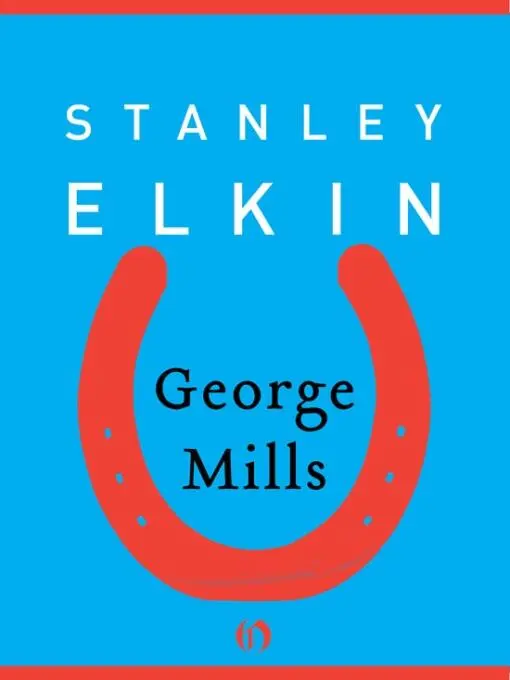
- Название:George Mills
- Автор:
- Издательство:Open Road Integrated Media LLC
- Жанр:
- Год:2010
- ISBN:нет данных
- Рейтинг книги:3 / 5. Голосов: 1
-
Избранное:Добавить в избранное
- Отзывы:
-
Ваша оценка:
George Mills: краткое содержание, описание и аннотация
Предлагаем к чтению аннотацию, описание, краткое содержание или предисловие (зависит от того, что написал сам автор книги «George Mills»). Если вы не нашли необходимую информацию о книге — напишите в комментариях, мы постараемся отыскать её.
George Mills — читать онлайн бесплатно полную книгу (весь текст) целиком
Ниже представлен текст книги, разбитый по страницам. Система сохранения места последней прочитанной страницы, позволяет с удобством читать онлайн бесплатно книгу «George Mills», без необходимости каждый раз заново искать на чём Вы остановились. Поставьте закладку, и сможете в любой момент перейти на страницу, на которой закончили чтение.
Интервал:
Закладка:
“Marco,” she said, her eyes wide, terrorized, the irises fleeing inside her head. “ Marco! ” she screamed. “ Marco! Marco! ”
“Polo,” Mills answered.
“Marco,” she called, lowering her lids.
“Polo.”
“Marco.”
“Polo.”
They called the challenge and response from the old game and it seemed to soothe her heart that, blind and maddened as she was, she was not alone in the water.
6
Itold her, I don’t know the matter with me. I suppose I love the neighborhood. I’m no native son, I didn’t even grow up there, but I — most folks — recognize home when I see it. Something old shoe in the blood and bones, at ease with the brands of lunch meat in the freezers and white bread on the shelves. At one with the barber shops, the TV and appliance repair. The movie houses in my precincts still do double features. Those that don’t do evangelists, I mean, those that don’t sell discount shoes or ain’t political headquarters or furniture stores by now, the little marquees fanned out over the front of the buildings like a bill on a cap. We still have bakeries, and there are mechanics in the gas stations who can break down your engine in the dark. I root for our neighborhood banks, the local savings and loans, you know?
Stable, we’re a stable neighborhood. How many areas are there left in the city — the city? Missouri? the country? the world? — that still have a ballroom and live dance bands that play there three nights a week? And even the discos bleed an old romantic box step, the generations still doing the stable dances under the revolving crystal. We have a saying in South St. Louis—“We’re born out of Incarnate Word and buried out of Kriegshauser.” The stable comings and goings of hundreds of thousands of people.
They cross the river from Illinois and come from far away as west county to eat the immutable old ice creams and natural syrups at Crown’s, less flavor, finally, than the cold and viscid residuals of produce and sweetness themselves. A kind of Europe we are.
I knew all this back in ’47 when I first saw this section of town, recognizing at first glance that what the cop was walking was a beat, the grooved stations of vocation carved like erosion into the pavement, the big dusty shop windows with their brides and grooms and graduating seniors in their dark marzipan robes balanced on the topmost layer of the cake as if they were going to stand there forever. Something already nostalgic in the framed portraits in the photographic studio window, in the crush of the sun on the low two- and three-story commercial buildings up and down Gravois and Chippewa Avenues, something daguerreotype, a thousand years old, mint and lovely as a scene on money. I was nineteen but the Millses were a millennium. Here was somewhere I could hang my hat, here was a place I could bring our history.
I found three rooms in one of the blood brick apartment buildings on Utah, and there I began my life as a free man.
Where do we go wrong? How does joy decline? What rockets us from mood to mood like a commuter? So that, years later, in Mexico, that stable neighborhood of restlessness and revolution, I perfectly understood Mrs. Glazer’s valedictory. She could have been speaking for all of us.
She was in the hospital by then. Dr. Gomeza had withdrawn from the case. And she was no longer a patient, not in the sense that what she had was treatable, not in the sense that what she had had ever been treatable.
“I don’t live here anymore. I feel like something in a warehouse. Oh, Mills,” she said, “it’s not so bad to die.
“Weather. I’ve never liked weather. Too cold in the winter, in the summer too hot. Wood too damp to build a fire and the picnics rained out.
“The bad hands and heavy losses and clothes off the rack that never quite fit. Shoes pinch and the hairdo sags and the roast’s overdone. The news is bad in the paper and one’s children fail. I’m disappointed when the show isn’t good I’ve heard so much about, and hats never looked right on me.
“My cats are run over. Moving men chip my furniture and the help steals. You can never get four people to agree on a restaurant.
“Wrong numbers, mismanaged mail and wasted time. Car pools and jury duty. Pain, fallen expectations and the fear of death.
“Who would fardels bear, Mills? The proud man’s contumely?
“Mary is jealous of Milly’s skill at piano, Sam’s salary was too low years. No one loved me enough, and I never had all the shrimp I could eat.”
Mostly all I could do was sit on the side of the bed and hold her. Like people in a waiting room we looked, Mrs. Glazer swaddled as a sick kid. Worn out, embraced as infant, loomed over, dipped in a dark dance.
Because I was twenty-seven years old before I ever entered the Delgado Ballroom, my shirt size determined years, my waistline fixed and what length pants I wore. No youth but callow still, the city hick, a sort of pleasantry. (You will understand that I played softball with what I still called “the men” on Sunday mornings in the schoolyards and parks, everyone, me too, in a yellow T-shirt and baggy baseball trousers, beer on the sidelines and packages of cigarettes and the equipment in someone’s old army duffel.) We bloom late into our mildness, or some do, our character only a deference, a small courtesy to the world.
We played softball — slow pitch, the high and lazy arc of the big ball so casual the game seemed to go on over our heads. Softball is a pitcher’s medium, slow pitch especially. I thought the pitchers rich, or anyway leaders, privileged, gracious. They gave us our turn, permitted us to stand beneath the big, deceptive, graceful ball, shaking into our stance like dogs throwing off water, seeking purchase, hunching our shoulders, planting our feet, hovering in gravity as the softball hovered in air. Neutral gents, those pitchers neither smiled when they struck us out nor frowned when we connected. Good sports acknowledging nothing, neither the hoots of their opponents nor the pepper encouragements of their mates. Captains of cool benevolence, trimmer than the beefy Polacks and Krauts, all those swollen, sideburned others who were always talking.
In that league if you weren’t married you were engaged. Engagements seemed to generate themselves almost spontaneously. There wasn’t, except for myself, a fellow who wasn’t already, or who wouldn’t within the year become, a fiancé. Every girl on the bus wore a ring. Rings, or at least high school graduation pins, were an article of clothing, a piece of style, as much a part of ordinary human flourish as a cross on a chain. They were serious people, with their scouts’ eyes peeled for the sexual or domestic talent. It was a world of starter sets, registered taste, the future like a lay-away plan.
Those pitchers, I’m thinking of those pitchers, the men chosen to get the blessings. Maybe because I didn’t grow up there, maybe because when I came they were already doing their lives. Maybe it’s having to come from behind (who came from behind history itself; oh, Greatest Grandfather, why didn’t you rise up and smite Guillalume and the merchant? why didn’t you kill Mills’s horse when you had the chance?) which blights possibility and poisons will.
What I wanted to tell her about was the Delgado Ballroom — soft romance’s dark platform, that marble clearing, that courtyard of the imagination, that dance hall of love. No playground or rec room, no nightclub or fun house. Consecrate as confessional, the priests came there, marriages were performed, girls confirmed, classes graduated.
I saw it first in the daytime when it had that odd, off-season calm of deserted amusement parks, unoccupied classrooms, restaurants with the chairs bottom up on the tables, all the wound-down feel of an energy absent or gone off to catch different trains. Maybe I was moving a piano. (This was what I knew of the high life, my stage door connection to the extraordinary, who brought cargoes of sand to the carpeted shores of the country clubs and filled the deep ashtrays there. George Mills, high placed as a head waiter, situate as a man in an honor guard. George Mills, the Velvet Rope Kid.) Or buffing the dance floor. Or installing the Coke machine. It was darker in the morning than it would have been at night, the windowless room cool as a palace. The manager gave me two passes. “Here,” he said. “Bring your girl.”
Читать дальшеИнтервал:
Закладка:
Похожие книги на «George Mills»
Представляем Вашему вниманию похожие книги на «George Mills» списком для выбора. Мы отобрали схожую по названию и смыслу литературу в надежде предоставить читателям больше вариантов отыскать новые, интересные, ещё непрочитанные произведения.




Обсуждение, отзывы о книге «George Mills» и просто собственные мнения читателей. Оставьте ваши комментарии, напишите, что Вы думаете о произведении, его смысле или главных героях. Укажите что конкретно понравилось, а что нет, и почему Вы так считаете.