Stanley Elkin - George Mills
Здесь есть возможность читать онлайн «Stanley Elkin - George Mills» весь текст электронной книги совершенно бесплатно (целиком полную версию без сокращений). В некоторых случаях можно слушать аудио, скачать через торрент в формате fb2 и присутствует краткое содержание. Год выпуска: 2010, Издательство: Open Road Integrated Media LLC, Жанр: Современная проза, на английском языке. Описание произведения, (предисловие) а так же отзывы посетителей доступны на портале библиотеки ЛибКат.
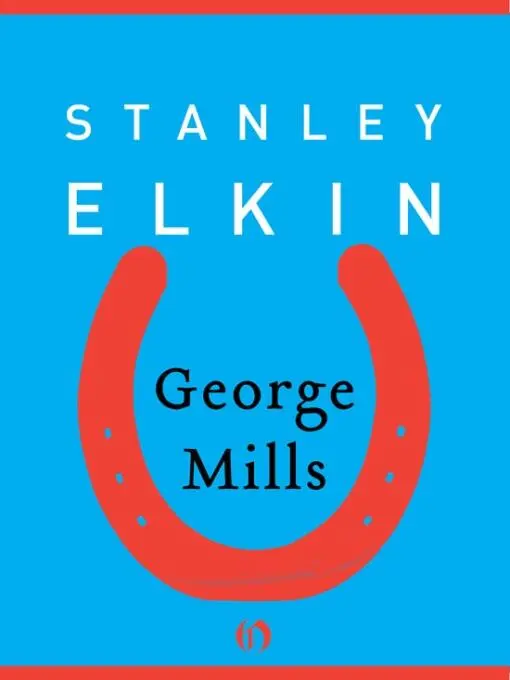
- Название:George Mills
- Автор:
- Издательство:Open Road Integrated Media LLC
- Жанр:
- Год:2010
- ISBN:нет данных
- Рейтинг книги:3 / 5. Голосов: 1
-
Избранное:Добавить в избранное
- Отзывы:
-
Ваша оценка:
George Mills: краткое содержание, описание и аннотация
Предлагаем к чтению аннотацию, описание, краткое содержание или предисловие (зависит от того, что написал сам автор книги «George Mills»). Если вы не нашли необходимую информацию о книге — напишите в комментариях, мы постараемся отыскать её.
George Mills — читать онлайн бесплатно полную книгу (весь текст) целиком
Ниже представлен текст книги, разбитый по страницам. Система сохранения места последней прочитанной страницы, позволяет с удобством читать онлайн бесплатно книгу «George Mills», без необходимости каждый раз заново искать на чём Вы остановились. Поставьте закладку, и сможете в любой момент перейти на страницу, на которой закончили чтение.
Интервал:
Закладка:
“What for? Why’d he do that?”
“He saw my condition,” she said.
“Are you tired?” Mills asked. “Do you want me to take you back?”
“Not at all.”
They passed the church where the priest who had been to Chicago heard confessions in English. And stopped for a light on the corner where the nightclub was situated. It was on a narrow street with much traffic. A boy came up to the driver’s window and offered to watch their car.
“No,” Mills said. “We’re not parking.”
“No,” the boy said, “till the light changes.”
“Maybe we ought to start back,” Mills said when they were driving again. “It’s pretty late.”
“No,” she said, “I’m enjoying my joy ride.”
“You had a long trip yesterday. All the way from a different country.”
“If you’re tired I’ll drive.”
“No,” Mills said. “That’s all right.”
“Let me. I feel like driving.”
“You’d better not.”
“Pull over. If you’re afraid you can go back in a cab.”
“Please, Mrs.”
“I want to,” Mrs. Glazer said. “My pill is wearing off and I’m beginning to feel uncomfortable. It would distract me.” She was kneading her thighs and legs with her hands, taking her flesh and squeezing as if she would wring water from it. “If only I could get the knots out,” she said.
“I’m turning back,” Mills said.
“I told you no,” Mrs. Glazer said. “I don’t want to. If you insist on driving you may, but I won’t go back. I was crazy more than a decade, shut up when I could have been traveling. What’s the good of being rich anyway? I never got anything for my money but the best care. In the end I simply grew out of my madness anyway. Now I’m dying. That watchman saw it with a flashlight. I don’t want the best care. That’s why I came to this place. That’s why I chose you to bring me. Perhaps it will be like the last time. Perhaps I’ll grow out of my cancer too. Don’t you dare turn back.”
“You’re the doctor,” Mills said gloomily.
“I am,” she said, “yes. Don’t sulk, Mills. Look at the countryside.” They had left the city and entered the desert.
“It’s the idea of the pain,” Mills said when they had driven perhaps five more miles.
“Did you say something?”
“It’s the idea that somebody only three feet away has pain. It fills up the space. It’s all you can think about so it’s all I can think about too. I can’t stand it if I know my wife has a headache. I get mad at her for telling me.”
“I’ll take my pill,” she said.
“You took one before we left the motel. It isn’t four hours.”
“What do you think will happen? Do you think I’ll become addicted? Turn around,” she said. “There’s nothing here.”
In the city, children were sleeping on the sidewalks. They lay solitary, curled as dogs on the pavement. A small girl lay on her back, her arms thrown out behind her head. She looked like someone floating in a pool toy.
“God is good,” Mrs. Glazer said.
“Sure.”
“He really is. He’s a genius. He creates the poor and homeless and gives them a warm climate to sleep it off in. Shall we wake them? Shall we give them money?”
“They’re street kids. They’d have their knives in me as soon as I shook their shoulder.”
“I want you to go back,” she said. “Give them twenty pesos each.”
Mills left the motor running. He woke the children and put money in their hands while Mrs. Glazer sat in the back seat and looked on through the rolled and dusty windows.
It was how they spent their first days in Mexico. Mills gave Mrs. Glazer’s money away. Considerable sums. As much, he estimated, as the rental car would cost, or his motel room. Often as much as a hundred pesos to an individual beggar. They crossed themselves before their benefactress’s deputy with beggars’ gratitude, conferring the lavish, sinister blessings of the down-and-out. It was not his money. It was not their benediction. And he had a sense of proxy encounter, a delegate notion of agented exchange. At first he followed their responses in a dictionary, nervously had them repeat themselves when he did not understand, and scrupulously relayed their thanks in English equivalencies, rendering the tone and degree of already hyperbolized requital, hoping to suggest to the woman that the poor and homeless were on to her.
“The starving woman thanks you on behalf of her five starving children, and wishes you to know that every bite of their first meal in four days will be dedicated to the honor of your gracious self.”
“Hmph,” Judith Glazer said.
“The legless cripple is profoundly moved by your generosity, and says that he will direct the nephews who carry him to his post every morning and pick him up again in the evening to take him up the steps and into the church so that he may light candles for your continued health and good fortune.”
“Tell him,” Mrs. Glazer said evenly, “don’t try to thank me.”
“The impaired wino sends his and his Saviour’s compliments, and resolves to pledge himself to a new life in partial repayment for the three dollars.”
She had him take her into poorer and poorer sections of the city, abandoning the busy street corners and entrances to the fashionable shops and restaurants, the hotels and museums where beggars congregated to groan their appeals against the chipper discourse of the rich, driving with her into the narrow barrios, the blighted box board and charred, tar paper slums, places where the beggars had only each other to importune, raising the ante of their already stretched humility to outright, outraged fantasy.
And now she had him lower the car windows. And now she had him open the doors.
They looked on the big, late-model American car with as much astonishment and fear as if it had been a tank. Children backed against the jagged, chicken wire frames they used as doorways and called their adults to witness the strange new avatar, the queer incarnation, sudden in the roadless, streetless jumble of singed, mismatched shacks as a visitation of angels or government.
Seeing it was only a lone man, a lone woman, they lost their alarm and began to push forward.
“This is crazy,” Mills said. “Let’s get out of here.”
“Sound the horn,” Mrs. Glazer said. “Let them know we’re here.”
“They already know we’re here.”
Mrs. Glazer raised herself from where she was slumped in the back seat and leaned forward. She reached over Mills’s shoulder and pressed the horn.
“Oh boy,” Mills said.
“Don’t get out. They can come forward and you can hand the money out to them.”
When Mills didn’t move she reached for her purse and undid the clasp. Hands and arms like the feelers of sea creatures groped toward her through the car’s opened doors. Mills, frightened, pulled out his pesos and started to cram them into the first hand he saw. “No,” she said, “just one note. Just one! Here,” she said, “give me.” She pulled the notes out of his fist and, selecting the smallest denomination, pushed it into one of the outstretched hands. Then, inspired, she smiled, dropped the rest of the money into her lap, and took some loose change from her purse. She held out a handful of coins to them, ten-centavo pieces, twenty. “For all of you,” she said. “ Para todos. Para todos de usted. ” She sat back in her seat, lightly tapping the thick pile of bills in her lap, her gold and diamond rings loosely spinning on her thin fingers. She looked on serenely while the Mexicans talked to each other in whispers. Then, with great effort, she moved out of the car toward them, holding out the last of her change, perhaps six or seven cents.
Читать дальшеИнтервал:
Закладка:
Похожие книги на «George Mills»
Представляем Вашему вниманию похожие книги на «George Mills» списком для выбора. Мы отобрали схожую по названию и смыслу литературу в надежде предоставить читателям больше вариантов отыскать новые, интересные, ещё непрочитанные произведения.





Обсуждение, отзывы о книге «George Mills» и просто собственные мнения читателей. Оставьте ваши комментарии, напишите, что Вы думаете о произведении, его смысле или главных героях. Укажите что конкретно понравилось, а что нет, и почему Вы так считаете.