Stanley Elkin - George Mills
Здесь есть возможность читать онлайн «Stanley Elkin - George Mills» весь текст электронной книги совершенно бесплатно (целиком полную версию без сокращений). В некоторых случаях можно слушать аудио, скачать через торрент в формате fb2 и присутствует краткое содержание. Год выпуска: 2010, Издательство: Open Road Integrated Media LLC, Жанр: Современная проза, на английском языке. Описание произведения, (предисловие) а так же отзывы посетителей доступны на портале библиотеки ЛибКат.
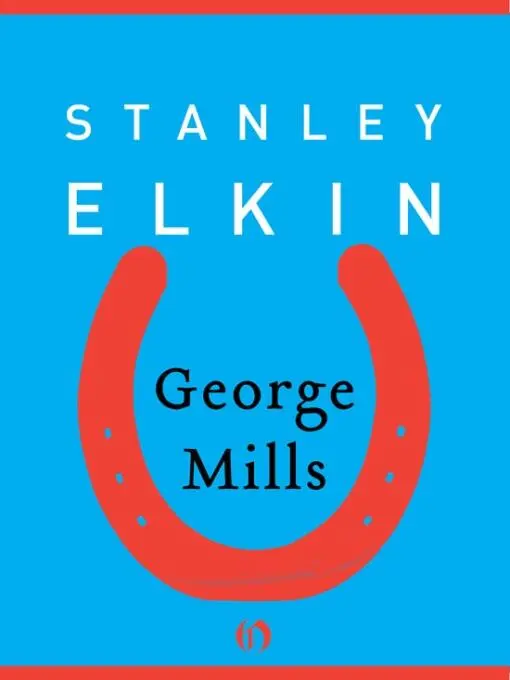
- Название:George Mills
- Автор:
- Издательство:Open Road Integrated Media LLC
- Жанр:
- Год:2010
- ISBN:нет данных
- Рейтинг книги:3 / 5. Голосов: 1
-
Избранное:Добавить в избранное
- Отзывы:
-
Ваша оценка:
George Mills: краткое содержание, описание и аннотация
Предлагаем к чтению аннотацию, описание, краткое содержание или предисловие (зависит от того, что написал сам автор книги «George Mills»). Если вы не нашли необходимую информацию о книге — напишите в комментариях, мы постараемся отыскать её.
George Mills — читать онлайн бесплатно полную книгу (весь текст) целиком
Ниже представлен текст книги, разбитый по страницам. Система сохранения места последней прочитанной страницы, позволяет с удобством читать онлайн бесплатно книгу «George Mills», без необходимости каждый раз заново искать на чём Вы остановились. Поставьте закладку, и сможете в любой момент перейти на страницу, на которой закончили чтение.
Интервал:
Закладка:
Soon everyone at the table was calling out the names of dead relatives as if they were favorite tunes they wanted played on the piano. They asked him questions which the boy would answer in the vaguest and most general way. Kinsley didn’t even allow him to alter his voice. Though he was a young man one moment and an old woman the next, everything was delivered within the familiar, given octaves of his normal speaking voice. It was astonishing to him how effective he seemed to be.
They had nothing to say. The physical and supernatural planes might be synchronous and contiguous, but the dead, by dying, had created a breach which could not be mended, only smoothed over there in the semidark, glossed by politeness and the trivial courtesies. They were like people lined up to talk to each other over the long-distance telephone on the occasion of national feast days or the junctures and set pieces of private commemorative.
“How are you, son?”
“Fine. I’m fine.”
“We miss you.”
“I miss you, too.”
“Mother couldn’t come with me.”
“How is Mother?”
“Not real well. She still can’t get over that you were taken from us. She sorrows so.”
“Tell Mother not to sorrow.”
He didn’t even need the coaching and background information Kinsley had supplied him with, passing the time of day with these people as he had with dozens of strangers. Indeed, the aloofness and love which dovetailed nicely on their synchronous and contiguous planes seemed precisely the tone to take by survivor and ghost alike.
Sometimes — this happened less frequently than he would have thought — a client was dissatisfied with his generalities and tried to get him to be more specific, even to trap him.
“Bob, is that you?”
“Yes,” George said.
“What was the name of that cat you found?”
“I don’t recall.”
“You don’t recall? You paid more attention to that cat than you did to your brothers and sisters.”
“I don’t remember any cat. It was too long ago.”
“Too long ago? It was only last year.”
“It was when I was alive. I don’t remember any cat.”
Then they both cried.
It was the same even when his mother called on him. He gave her no more than he had given the others. Evidently it was enough. Only for George it was not enough. One night he volunteered information, then asked his question.
“I met someone you know. Bennett Prettyman?”
“It was very sad about Bennett.”
“He thinks you’re lovely. He says you’re very beautiful. He wanted you to stop by with George and see his show. I think he was sweet on you, Mother.”
“Poor Bennett,” his mother said.
“Were you sweet on him, too?” George asked.
“Of course not, Janet,” his mother said.
“Sometimes,” George said, “I don’t know how I think up what to say.”
“It’s because you’re inspired,” Kinsley told him. “You’re a true vehicle, George. It’s no fake. You have real powers. The spirits guide you. They wouldn’t let you misrepresent them.”
He told Reverend Wickland what Kinsley had said. (He was still seeing Wickland, spilling the beans.)
“He thinks it’s real,” George told him, “that I’m not even faking when I say I’m their wife or daughter or fiancee killed in the war.”
“Let’s have a seance,” Wickland said.
“I’m working tonight.”
“Not tonight, now.”
“It’s not even dark in here.”
“Not here, outside. In the air. On the bench. I’m going to show you your sister.”
They went to the small square where George had stood with his parents over two years earlier. The palm might have been a statue of itself, a memorial like a doughboy or Civil War cannon. No longer strange nor quite yet familiar, George suspected it had the ability to proclaim the seasons, something shifted in the configuration of its pods or missing from its leaves, its long bark wrappings, its careful shadow legible as a sun dial. He regretted that he had not observed it more closely.
Wickland was seated on the little bench.
“You don’t play here much,” he said.
“No,” George said, his back to the reverend. He was browsing the hoarding.
“No. Who would there be to play with?”
The boy wheeled about swiftly. “Is my—?” Wickland was alone on the bench. “Oh.”
“No, not yet,” he said. “By and by. There’s got to be a buildup. Didn’t those other swamis tease you a bit before the main event? Let’s just chat.”
“We’ve already chatted,” George said.
“Anyone would think you’d been close to your sister,” Wickland said.
“I just want to see if you can do it.”
Wickland shrugged. “Jack Sunshine may be a little miffed you didn’t throw in with him when you turned professional. He puts it out you’re a midget.”
George laughed. “He thinks about midgets a lot.”
“His father was one.”
“Really?” George said. “No kidding.”
“Jack was born in Cassadaga,” Wickland said.
“He did what I do!” George said suddenly.
“Jack? I don’t think so. For a while, I suppose, he may have assisted, but—”
“ No, ” George said impatiently, “not him, not Jack, the father. He was a control. He did what I do!”
“Larry?”
“Right. Larry. He was a control. He was with the circus. Then he came here to Cassadaga. He met the mother here. I don’t know how he managed the courting. He did what I do. I mean I guess it would be pretty tough if you’re supposed to be this disembodied control and then you fall in love with one of your customers and you have to explain that the next time she sees you you’ll be just like everyone else, only shorter. But he must have figured out something to tell her, because they were married and had Jack!”
“You see it very clearly,” Wickland said.
Yes, he thought. He’d told Wickland what he’d told Kinsley, that he didn’t know how he thought up what to say. Calling him Jack like that. The other stuff. Kinsley said he was inspired, that spirits guided him, that he was a true vehicle, that he had powers. Yes, he thought. Yes.
“I do,” he said, “yes. Once you told me his father was a midget then that explained why—”
“Why?”
“It explains why he’s so sour on — Wait. I did see it clearly. Only I didn’t see all of it. What could he say? I mean if she was here to get comforted by visiting some dead person, then it would be pretty hard to take that the fellow who was tricking you one minute was in love with you the next. So she couldn’t have known he was a control. She didn’t do business with him. She just thought he was — She thought he was just—
“Maybe he’d seen her around town, maybe sitting right here on this bench, and he told her that that was why he was here himself, that he’d lost someone very dear to him too, and still wasn’t over it, but almost was, nearly was, and just wanted to get in contact one last time to say good-by because the departed may have died suddenly or gone out of town and there’d been no real chance to say farewell by the book, which is what Kinsley says is all a lot of them really want. Sure,” George said, “and I know from other stuff he’s told me that there used to be more repeat trade than there is today. Probably the roads weren’t as good, the distance to De Land would have been greater back then, so they had to have somewhere to stay, to put up.” He indicated the little neighborhood of a town. “Wait. I know. Some of these places must have been boarding houses before they ever got to be haunted houses, and he knew, Jack’s father did, that she’d be around for a while and they started seeing each other, but only during the daylight hours because he couldn’t let her know that he was in the business. Not after what he’d told her he couldn’t. So then maybe he told her he’d seen whoever it was that he’d come to see because she still couldn’t tell him. Not if she liked him she couldn’t, because then she wouldn’t have any excuse to stay on, and if he told her first that was the equal of saying he liked her without really saying it. Because he was, you know, shy, being so little and all, and would naturally be afraid of saying it straight out. So that was the way they courted, asking each other if they’d seen the spook yet, and Larry, Jack’s father, gradually working up his nerve to tell her well, yes, as a matter of fact he had, needing the nerve because he was afraid she’d say ‘Well, aren’t you the lucky little man?’ or something even meaner.
Читать дальшеИнтервал:
Закладка:
Похожие книги на «George Mills»
Представляем Вашему вниманию похожие книги на «George Mills» списком для выбора. Мы отобрали схожую по названию и смыслу литературу в надежде предоставить читателям больше вариантов отыскать новые, интересные, ещё непрочитанные произведения.





Обсуждение, отзывы о книге «George Mills» и просто собственные мнения читателей. Оставьте ваши комментарии, напишите, что Вы думаете о произведении, его смысле или главных героях. Укажите что конкретно понравилось, а что нет, и почему Вы так считаете.