Stanley Elkin - George Mills
Здесь есть возможность читать онлайн «Stanley Elkin - George Mills» весь текст электронной книги совершенно бесплатно (целиком полную версию без сокращений). В некоторых случаях можно слушать аудио, скачать через торрент в формате fb2 и присутствует краткое содержание. Год выпуска: 2010, Издательство: Open Road Integrated Media LLC, Жанр: Современная проза, на английском языке. Описание произведения, (предисловие) а так же отзывы посетителей доступны на портале библиотеки ЛибКат.
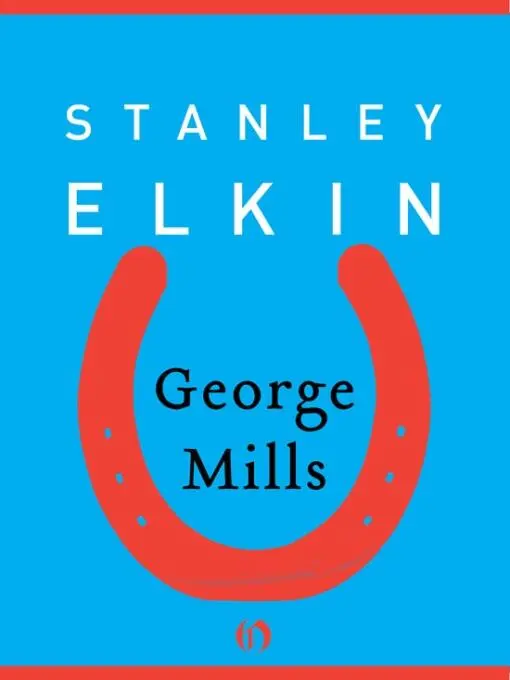
- Название:George Mills
- Автор:
- Издательство:Open Road Integrated Media LLC
- Жанр:
- Год:2010
- ISBN:нет данных
- Рейтинг книги:3 / 5. Голосов: 1
-
Избранное:Добавить в избранное
- Отзывы:
-
Ваша оценка:
George Mills: краткое содержание, описание и аннотация
Предлагаем к чтению аннотацию, описание, краткое содержание или предисловие (зависит от того, что написал сам автор книги «George Mills»). Если вы не нашли необходимую информацию о книге — напишите в комментариях, мы постараемся отыскать её.
George Mills — читать онлайн бесплатно полную книгу (весь текст) целиком
Ниже представлен текст книги, разбитый по страницам. Система сохранения места последней прочитанной страницы, позволяет с удобством читать онлайн бесплатно книгу «George Mills», без необходимости каждый раз заново искать на чём Вы остановились. Поставьте закладку, и сможете в любой момент перейти на страницу, на которой закончили чтение.
Интервал:
Закладка:
He stopped. “Slide up that roll top, will you, George? It ain’t locked. It ain’t even stuck. There’s a gun inside, but don’t touch it, it’s loaded.”
But he didn’t, wouldn’t. He thanked Mr. Prettyman and said he had to be going. He didn’t want not to hear the report when the gun went off.
They were at dinner table — he, Wickland, his mother and his father.
“No Mills,” his father, tipsy, was saying, “ever pushed his kid into a career, or stood in his way once his mind was made up. He wants to go into songwriting or the pictures, I say let him. I give him a dad’s honest blessing and step out of his way.”
George was trying to remove the bones from his fish. His father, who had been observing the boy’s efforts for some minutes, was inspired to proceed. “Or a career in the surgery profession,” he said. “Or banking, or law. Politics, anything. How about it, George? You thinking of replacing Mr. Roosevelt? You don’t have to be coy. We’re family. I have the honor to include you, Reverend.”
“Thank you,” Wickland said. “Who’d like more iced tea? You, George? Your glass is empty.”
“Yes,” the boy said, “if there’s extra.”
“Certainly. How about you, Mrs. Mills?”
“I’m fine, thanks.”
“The pitcher’s cooling in the fridge, George. Why don’t you bring it out for all of us?”
“Of course,” his father said before George could get up, “of course he might always join his pop in the fallen candy wrapper trade, the chewing-gum-under-the-bench profession, the lawn upkeep calling.”
It had been like this for a week, since Prettyman had told him why the mediums were so interested in him. Though no one had spoken to him directly since the funeral, several had approached his father. There was even something courtly about it, his father had said, as if they were asking for his hand in marriage.
“He might even choose the ministry,” his father said, looking directly at Wickland. “His mother might like that. She might like that very much. Course he might have to move out, live with, you know, his order, but you’d always see him at church.”
“Please, George,” his mother said.
“Now Nancy, you know how proud you’d be. Our loss would be the haunts’ gain.”
For all his sarcasm, his father wanted him to do it. Chiefly it was the extra money, but the boy understood, too, that in a crazy way it had something to do with the honor. He’d winked at him when the boy had relayed Kinsley’s offer. “Lord,” he’d said, “not only have I risen above my station by janitoring and fetching for crooks, but I got One in the family myself now. We’re coming up in the world, George.”
It was a sort of joy his father felt, and though the boy couldn’t identify its source — he hadn’t been around long enough, his father had said, had still to understand the terms of his life, its service elevator condition — he recognized exaltation when he saw it. He’d seen it often enough on the faces of his instructors in the past year or so. As always, it terrified him.
“I’ve seen my sister,” he said suddenly.
But he hadn’t. Not then, not yet. Immediately he regretted what he’d said. He had meant to warn his father. He’d tried to warn him for days, to knock him awake with his knowledge. But the man was too exhilarated, as tone deaf to implication as he was, evidently, to actual sound.
“George,” he said, “they’re crooks. They’re crooks, George. They don’t do real harm or they’d have to shut down. They’re crooks but white collar. Like salesmen, like priests, like anybody alive in the business of making people feel good. Because don’t kid yourself, kid, comfort is an industry. It always was. The king’s wizards and jesters, and the king himself. And all the rest of us too most likely, all us hired hands, on the job, on duty, on call, dishing out concern and comfort and busting our butts to remind the next fellow that it could be worse, that he could be us!
“I won’t lie to you, George. I won’t tell you that plenty of honorable folks before you have done such things, though plenty have. But here, in Cassadaga, on the front lines of grief, you’d be with the rascals, you’d be with the knaves and villains. I say it makes no difference. Knaves and villains never did anything to anybody but take their money. What’s that? We hung on a thousand years without any.” His father looked at him. “Oh, I heard you,” he said. “That’s only Wickland. And I know what bothers you,” he said. “You’re scared of the sincerity, what stands behind it, or could. You’re scared these guys are who they say they are, you think they might be able to deliver.”
“Yes,” George said.
“You got so much faith, you give doubt so much benefit, take this on faith: there ain’t no one, there ain’t no one ever, been able to deliver the goods. And I don’t care,” his father said, “—didn’t I say I heard you? — who Wickland shows you!
“Relax,” he said, “let’s think about the practicals of this thing. We got to decide which one of these figure flingers and ghost brokers to go with. Bone says he’ll give you three dollars a night. That’s about the same bid we got from Ashmore and Sunshine and that woman, Grace Treasury, too. In my judgment it’d be a mistake to go with any of those. Kinsley offered a dime less, but they’re all within pennies of each other. There must be a blue book value, or fixed rates, like meters in taxis.”
“What do you think?”
“I’d have to say Kinsley,” his father said.
“He wants me to work naked.”
His father shrugged.
“I don’t understand,” George said.
“Kinsley’s the one your mother goes back to. She’s been to them all but goes back to Kinsley. The man must have something. If she keeps going back then Kinsley’s the best.”
“I couldn’t do it,” George said. “Supposing I had to be my own sister? Supposing Mother came in and I had to be Janet?”
So his father instructed him, too.
“Supposing you did? It’s Kinsley she goes back to, not his control. You think she doesn’t know, that those other customers don’t know, that whoever it is comes through those curtains or crawls out from underneath that table isn’t just some haunt house stooge? You think she could ever believe in anyone who calls himself Dr. N. M. M. Kinsley?
“It’s the faculty, the power, of which Kinsley is only some petty instrumentality, like the wall outlet or light socket are the petty instrumentalities of the generators, dynamos, dams and racing waters. It’s the power, and if they use controls it’s because they’re not fools, or anyway not fools enough — you were the one who was supposed to take his clothes off, not Kinsley — to go into that room naked without any insulation or just plain honest grounding between themselves and the customers.
“Which is another reason for Cassadaga incidentally. Because all the mediums and their controls are just so much interference and insulation between the madness of grief and loss, and the comfortable luxury of talking out loud to the dead.”
He went with Kinsley. (He’d had his twelfth birthday months ago.) Not only did he not work naked — Kinsley himself had had other ideas about it now — but was required to wear clothing which, in that hot climate, was not even stocked in the stores. He was dressed as a schoolboy. He wore corduroy knickers and a bright argyle pullover over his plaid wool shirt. He wore a peaked tweed cap like a golfer’s and carried his books in a strap.
He was already seated when the others arrived. Kinsley didn’t bother to explain the presence of the boy. He simply introduced him as George Mills, pronouncing the name solemnly, even gravely. Then he proceeded with the seance, warming them up in the early stages with an account of the physical and supernatural planes, their synchronous and contiguous attributes. When Kinsley asked if there were any disembodied spirits among them, George raised his hand, and Kinsley called on him.
Читать дальшеИнтервал:
Закладка:
Похожие книги на «George Mills»
Представляем Вашему вниманию похожие книги на «George Mills» списком для выбора. Мы отобрали схожую по названию и смыслу литературу в надежде предоставить читателям больше вариантов отыскать новые, интересные, ещё непрочитанные произведения.


Обсуждение, отзывы о книге «George Mills» и просто собственные мнения читателей. Оставьте ваши комментарии, напишите, что Вы думаете о произведении, его смысле или главных героях. Укажите что конкретно понравилось, а что нет, и почему Вы так считаете.