Stanley Elkin - George Mills
Здесь есть возможность читать онлайн «Stanley Elkin - George Mills» весь текст электронной книги совершенно бесплатно (целиком полную версию без сокращений). В некоторых случаях можно слушать аудио, скачать через торрент в формате fb2 и присутствует краткое содержание. Год выпуска: 2010, Издательство: Open Road Integrated Media LLC, Жанр: Современная проза, на английском языке. Описание произведения, (предисловие) а так же отзывы посетителей доступны на портале библиотеки ЛибКат.
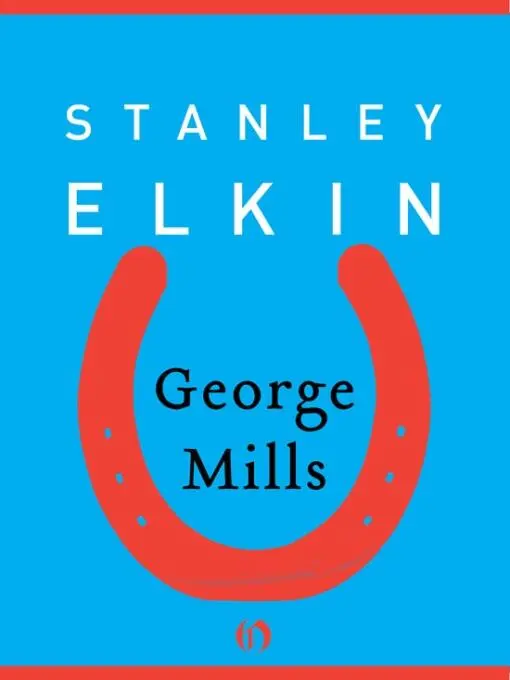
- Название:George Mills
- Автор:
- Издательство:Open Road Integrated Media LLC
- Жанр:
- Год:2010
- ISBN:нет данных
- Рейтинг книги:3 / 5. Голосов: 1
-
Избранное:Добавить в избранное
- Отзывы:
-
Ваша оценка:
George Mills: краткое содержание, описание и аннотация
Предлагаем к чтению аннотацию, описание, краткое содержание или предисловие (зависит от того, что написал сам автор книги «George Mills»). Если вы не нашли необходимую информацию о книге — напишите в комментариях, мы постараемся отыскать её.
George Mills — читать онлайн бесплатно полную книгу (весь текст) целиком
Ниже представлен текст книги, разбитый по страницам. Система сохранения места последней прочитанной страницы, позволяет с удобством читать онлайн бесплатно книгу «George Mills», без необходимости каждый раз заново искать на чём Вы остановились. Поставьте закладку, и сможете в любой момент перейти на страницу, на которой закончили чтение.
Интервал:
Закладка:
He hadn’t seen his sister yet. Reverend Wickland hadn’t yet shown her to him, but at this time his relationship with their landlord was the most important thing in his life. Only Wickland (and his mother of course, though his mother’s silence the boy took for granted; she had, he supposed, nothing to say) did not bother to instruct him, all the others coming at him like coaches with a pupil of genius, one talented at piano, say, or blessed with a great, undeclared voice — George’s had only recently begun to change — their attitude — the coaches’, the mentors’—not only feigned but even the limits of their sternness fixed, established by custom and principle and the laws of cliché. Even George knew this, wondering at the seemingly boundless gift adults had for the servile vicarious and fawning reflexive. Without understanding such investment and at the same time peeved that his docile, silent mother hadn’t seemed to make it. Taking his case to Wickland.
“They keep bothering me.”
“Bothering you?”
“Telling me stuff.”
“They have a lot to say.”
“They tell me about their powers. They like to talk about the stuff they have to fake.”
“I see,” Wickland said.
“In Milwaukee one time my dad took me to see wrestling. There was a wrestler who was crazy. He was big, a real mean ugly guy. The guy he wrestled was big too, but normal, you know? The mean guy wouldn’t fight fair. Everybody booed him. I booed him too. Sometimes the crazy guy would poke his fingers in the regular guy’s eyes or pull his hair or choke him. The referee didn’t always see this and that’s when we booed. My father said it was fake, that they rehearsed all this junk, that probably they were even friends. He said the crazy guy sent the normal guy birthday presents. One guy was supposed to act mean and the other decent, my father said. He said it’s all fixed, that they already know who’s going to win. He said the good guy would do something terrific just when it looked like he was in his worst trouble. Only he didn’t. The bad guy licked the good guy. My father said that that was fixed, too, that they did that to make it more exciting. The bad guy could have beat the good guy anyway. He was so much bigger than the normal guy even though the normal guy was big too. He could have licked him anyway. He didn’t have to pull hair or bite or choke or do any of that stuff.”
“That’s right.”
“It didn’t have to be fixed.”
“No,” Wickland said.
“He could do the job. You could see he could do the job.”
“Yes.”
“I asked my father why they’d go to all that trouble. They had to rehearse. I mean why would the normal guy have to rehearse losing if he had to lose anyway? If just being shorter and fifty pounds lighter and, you know, normal, was all he ever needed to lose? Why did it have to be fixed?”
“You should listen to your father.”
“He said they did it to make it more exciting.”
“You should listen to your father.”
“He said it’s all fixed. That even the championship is fixed.”
“I don’t follow wrestling,” Wickland said. “I’m certain he’s right. You should listen to your father.”
“They believe in it and fix it, too,” George said.
“You should listen to your father,” Wickland said.
He did listen to him. To the long story of Greatest Grandfather Mills and his adventures in Europe, to the stories of subsequent Millses in the male, unbroken, centuries-long Mills line — the women shadowy figures, like his mother, like the woman he would one day marry — wondering why his father never spoke of his own life, if anything had ever happened to him worthy of even being related. He did listen to him. He listened to all of them — to Kinsley and Sunshine and Madam Grace Treasury and all of them, making a fourth at their seances, a silent partner at their consultations.
He listened to all of them and watched Bennett Prettyman.
He was the largest of Cassadaga’s large men, that meaty fraternity of flesh Mills would all his life associate with what seemed most rival to it. “I don’t know why,” Kinsley had once told him, “spirit runs so much to size and bulk. It would seem that the bigger someone is — the more space he takes up — the more room his soul would have. It could afford to stay home you’d think, and not go flying off to look for trouble somewheres else.” Wickland, too, had mentioned it. “Perhaps,” he’d said, “the radical nubbin requires something solid by way of atmosphere. Would man be man if he didn’t have a whole universe to rattle around in?”
George Mills could not vouch for his soul or what Wickland called “the radical nubbin,” but he was prepared to swear that Bennett Prettyman did not rattle. Indeed, he made no noise at all, was quiet as photograph, silent as sky.
“I’m a lullaby,” he said in that low, soft, almost timbreless, cooing, asibilant voice like that of a baby given vocabulary. “I don’t know how I do it. Shut your eyes. Listen. Here I come.” George was seated in Prettyman’s office, a large, square, lean-to-like room with a concrete floor like the floor of a garage. Prettyman was in his swivel chair at a roll top desk across the room from him. “Go on,” he said, “shut them. It heightens the effect.” The boy shut his eyes. “Are they shut?” he heard Prettyman ask.
“Yes, sir,” George said.
“Well open them,” the man said. “How do you expect to see me in the dark?”
Prettyman was standing inside George’s spread knees. “You ain’t no Indian boy,” Prettyman said. “Indian boys’ hearing is honed by the dark. You never heard me come up. I was already standing here when I asked if your eyes were shut. Well, sure,” he said, “you figure there must be rubber casters on my chair. Go look for yourself if that’s what you think.”
“That’s not what I think,” George said.
“Go on, satisfy yourself. Sit right down in it. There ain’t any trick, but a doubting Tom always got to test for himself if the knots is loose or the handcuffs is real.”
George got up and crossed the room, conscious of the hooflike claps his shoes made on the cement. He pulled the chair out from the desk. Its wooden legs scraped the hard flooring. He sat and the chair creaked.
“Haw!” Prettyman exploded gruffly. He was standing behind the startled boy’s left shoulder.
“I didn’t hear you,” George said.
“I was with you every step of the way,” Bennett Prettyman said. “And don’t think I walked tippy toe or under cover of your footsteps either, or that I’m wearing crepe soles or maybe sponge or velvet. That’s an idea lots of them get. Lay it to rest, lay it to rest.” He tugged at his pants pleats and exposed dark, hard bluchers. “See?” he said. “Heavy-duty work shoes. Course, that don’t prove nothing. I could still be standing on top of powder puffs. You think? You think so?” He raised his shoes, exposing the soles for George’s inspection. They were cleated. “Haw!” he barked. “I suppose you want to touch them to feel if they’re metal. Here, I’ll save you the trouble.” He stamped his left foot on the ground heavily and pulled it shrilly across the cement floor. When Prettyman stepped back, George could see the ten-inch slash the big man had made in the concrete. “Haw,” he laughed, and leaned toward the boy, his face red and his huge shoulders shaking, silently breathless. “But something important as conversion is worth more than a few flashy card tricks, ain’t it? You don’t give your heart just cause the fella fooled you with the green pea and the walnut shell. Open that top drawer.”
George pulled at the drawer. “It’s locked,” he said.
“It ain’t locked. I don’t lock it.”
Читать дальшеИнтервал:
Закладка:
Похожие книги на «George Mills»
Представляем Вашему вниманию похожие книги на «George Mills» списком для выбора. Мы отобрали схожую по названию и смыслу литературу в надежде предоставить читателям больше вариантов отыскать новые, интересные, ещё непрочитанные произведения.

Обсуждение, отзывы о книге «George Mills» и просто собственные мнения читателей. Оставьте ваши комментарии, напишите, что Вы думаете о произведении, его смысле или главных героях. Укажите что конкретно понравилось, а что нет, и почему Вы так считаете.