Stanley Elkin - George Mills
Здесь есть возможность читать онлайн «Stanley Elkin - George Mills» весь текст электронной книги совершенно бесплатно (целиком полную версию без сокращений). В некоторых случаях можно слушать аудио, скачать через торрент в формате fb2 и присутствует краткое содержание. Год выпуска: 2010, Издательство: Open Road Integrated Media LLC, Жанр: Современная проза, на английском языке. Описание произведения, (предисловие) а так же отзывы посетителей доступны на портале библиотеки ЛибКат.
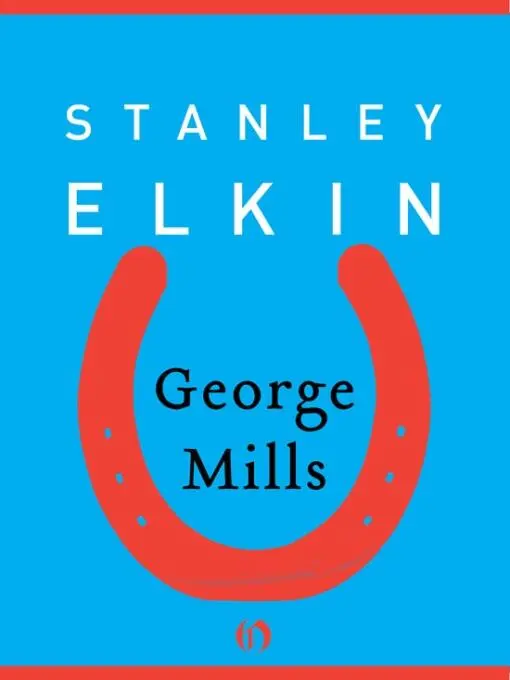
- Название:George Mills
- Автор:
- Издательство:Open Road Integrated Media LLC
- Жанр:
- Год:2010
- ISBN:нет данных
- Рейтинг книги:3 / 5. Голосов: 1
-
Избранное:Добавить в избранное
- Отзывы:
-
Ваша оценка:
George Mills: краткое содержание, описание и аннотация
Предлагаем к чтению аннотацию, описание, краткое содержание или предисловие (зависит от того, что написал сам автор книги «George Mills»). Если вы не нашли необходимую информацию о книге — напишите в комментариях, мы постараемся отыскать её.
George Mills — читать онлайн бесплатно полную книгу (весь текст) целиком
Ниже представлен текст книги, разбитый по страницам. Система сохранения места последней прочитанной страницы, позволяет с удобством читать онлайн бесплатно книгу «George Mills», без необходимости каждый раз заново искать на чём Вы остановились. Поставьте закладку, и сможете в любой момент перейти на страницу, на которой закончили чтение.
Интервал:
Закладка:
“But one day he just did. He said it. And she said ‘I did too, Larry,’ and that was that.”
“Was it?” Wickland said.
“Well sure,” George said. “Oh, you mean what would he do now? I mean about telling her he was in the business. He’d still have to tell her. You’re right, she’d have to know. He had to come up with something fast because he had to go to work that night. He didn’t have the excuse anymore that he was just going around the corner to the seance, and she’d be free, too, of course, so whatever he told her he’d have to tell her right off. Yes, I see. But he couldn’t. He’d just told her he’d said good-by to the specter. There wasn’t anything he could say that could put all those lies he’d told her in a good light. I mean he was so small. He was already at all the disadvantage he could afford. There was nothing he could say. Unless…” Yes, he thought again. I do have powers. It’s all these psychics. Maybe they’re carriers. “Unless she already knew. Sure,” George said, “she knew. But not that he was a control. These were the olden days. Controls were lowered on ropes from the ceilings or rose from the cellars like organs in theaters. That was the old style. They didn’t have sound effects or trick lighting. They didn’t sit up on chairs like I do. So she already knew. But he wasn’t a control. He was the medium. And she wasn’t a customer. You don’t fall in love with the customers. Most of the time you don’t even respect them. You certainly don’t let them know you’re human!”
Even to himself he didn’t sound like any kid who’d ever lived. He’d picked up their lingo, the conversational Urgent they spoke. He used to be the only kid in Cassadaga. Now there were none.
“Why couldn’t they already have been married?” Wickland asked.
“That’s so,” George said angrily, “they could.” He kicked at one of the fallen palm pods. “ Damn, ” he said, “they could.” And he wondered what he was going to say next, then he was saying it, his voice raised in that High Urgent that had no proper names in it, the trees and people and animals pronoun’d and anonymated into the clairvoyant’s confrontational style. “No,” he said, “no they couldn’t. You said he was born here. She was pregnant. You don’t make a big move like that until after the baby is born. They weren’t married when they came. When they came they— They? There wasn’t any they to it. They didn’t come. He did, the midget. Because he was a midget. A midget and a medium both. Where else could he go? He came! She was already here! Or in De Land!
“He said he had letters. She must have saved them. Of course. She would have had letters and some would even have been marked Personal, because people who are upset want to make sure that their mail gets through and probably they figure that if they’ve put down Personal and drawn a line under it they’ve warned the authorities and the busybodies at the circus that they mean business. Maybe they even think there’s something official about it, that it’s an actual aid in sorting the mail and seeing that it goes where it’s directed, like sticking on the extra postage that buys special handling. So that wasn’t why she saved it. If all she wanted was letters that said Personal on the envelope she could have had a hope chest full of them. Haven’t I read enough mail down here in Cassadaga to know that people will say anything if they’ve pencil and paper and a few cents for stamps? That they address letters to the dead or particular saints or even to God Himself because they’ve heard and even believe that we’re this clearing house for the extraordinary? It wasn’t the Personal that made her keep this one out of all the crazy correspondence that had come her way. It was what was inside. Not the expression of sympathy, because every last letter she ever got would have started with that. That would have been as regulation as the salutation. Even the madmen who wished her an even worse life than the one which had already been visited upon her would first have showered her with their declarations of pity, waiting until all that was out of the way before ever taking up the matter of reproach, blasting her with what would not even occur to them was ill-nature and ill will and citing her ‘condition’ as evidence that a retributive Lord not only existed but was at all times on His toes, no procrastinative, Second Coming Lord who put off till tomorrow what could just as easily be done today, but an eager beaver early bird God who didn’t care to wait till even today, who did His stuff retroactively, smiting you if He had a mind to in the cradle, in the womb. So it wasn’t the sympathy. Maybe she even skipped that part. Probably she wasn’t interested until she came to the stuff about the writer’s credentials, and maybe she was relieved when she saw that it wasn’t a doctor this time because she’d heard from the doctors before, so interested in her ‘case,’ so sure a particular pill or course of some special serum or amazing, recently discovered diet was just the thing to fix her up. Doctors were quacks, and reverends were worse, because when all was said and done the reverends were usually on the same side as the madmen and believed that the Lord had made her what she was, and that rather than flaunt it she would do better either to hide it away or send it on tour as a warning to others. Proceeds to charity.”
“Yes,” Wickland said. “Proceeds to charity is a good touch.”
“But a professor, ” George said, “a professor was different. She had never even seen a professor. She knew about them though. They were the ones who followed truth as if it was a river in New Guinea, who looked for it to come out only where the river itself comes out.” He’s making me say these things, Mills thought. He puts these words in my mouth. “And this one was going to get to the bottom of things. Or no, if all he had promised was just to get to the bottom of things, she’d probably have disposed of this letter as she’d disposed of the others. What he really said was that together they would get to the bottom of things. He needed her help. Which already was not only twice as much as what the others had asked for but something she could actually give.
“But I don’t think that even then she would have taken it upon herself to write back ‘Sure, come on down.’ She would have wanted certain things cleared up first, certain nagging doubts put to rest that this time had nothing whatever to do with the age-old question ‘Why me?’ For one thing, she’d have wanted to know what a lusus naturae was before they went any further.
“ ‘My dear lady, lusus naturae is Latin for freak. I myself am a lusus naturae. ’
“So,” George said, “not only a professor but a fellow lusus naturae as well! And one, furthermore — though she’d noted this before it still touched her — who signed his name to his mail and provided a return address. What could she do but write back?
“ ‘What sort of lusus naturae? ’
“ ‘I am a tiny fellow, dear lady, a midget.’
“So not only a professor and fellow lusus naturae but a lusus naturae who for all his smallness stood at the upper levels and very heights of lusus naturae respectability.
“Until the letters — sure he has letters, of course he has letters — made quite a tidy correspondence, thick as a book perhaps, or a packet of love letters. Which is what they were. Probably she never even got the chance to write the one that said ‘Sure, come on down.’ Or their letters crossed in the mail, his, the one that said he was on his way, the one in which he proposed. They might even have been married by the time hers had been returned to sender.
Читать дальшеИнтервал:
Закладка:
Похожие книги на «George Mills»
Представляем Вашему вниманию похожие книги на «George Mills» списком для выбора. Мы отобрали схожую по названию и смыслу литературу в надежде предоставить читателям больше вариантов отыскать новые, интересные, ещё непрочитанные произведения.

Обсуждение, отзывы о книге «George Mills» и просто собственные мнения читателей. Оставьте ваши комментарии, напишите, что Вы думаете о произведении, его смысле или главных героях. Укажите что конкретно понравилось, а что нет, и почему Вы так считаете.