Gao Xingjian - Soul Mountain
Здесь есть возможность читать онлайн «Gao Xingjian - Soul Mountain» — ознакомительный отрывок электронной книги совершенно бесплатно, а после прочтения отрывка купить полную версию. В некоторых случаях можно слушать аудио, скачать через торрент в формате fb2 и присутствует краткое содержание. Год выпуска: 2001, Издательство: Harper Perennial, Жанр: Современная проза, на английском языке. Описание произведения, (предисловие) а так же отзывы посетителей доступны на портале библиотеки ЛибКат.
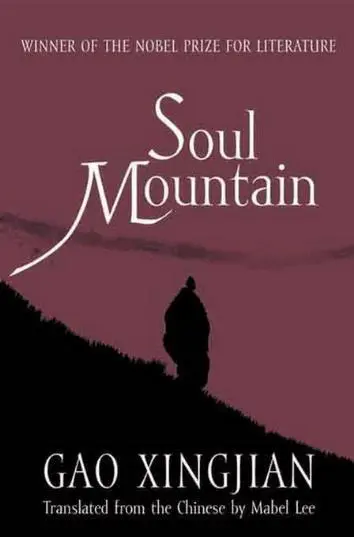
- Название:Soul Mountain
- Автор:
- Издательство:Harper Perennial
- Жанр:
- Год:2001
- ISBN:нет данных
- Рейтинг книги:5 / 5. Голосов: 1
-
Избранное:Добавить в избранное
- Отзывы:
-
Ваша оценка:
Soul Mountain: краткое содержание, описание и аннотация
Предлагаем к чтению аннотацию, описание, краткое содержание или предисловие (зависит от того, что написал сам автор книги «Soul Mountain»). Если вы не нашли необходимую информацию о книге — напишите в комментариях, мы постараемся отыскать её.
.
Bold, lyrical, and prodigious,
probes the human soul with an uncommon directness and candor and delights in the freedom of the imagination to expand the notion of the individual self.
“Chinese literature [of the future] will have to contend with the creative energy and the daring of Gao Xingjian.”
— “It is a relief to come to a book that celebrates the pleasures of literature with such gusto and knowingness.”
— “His largest and perhaps most personal work…Gao has created a sui generis work, one that, in combining story, reminiscence, meditation and journalism, warily comes to terms with the shocks of both Maoism and capitalism.”
—
Soul Mountain — читать онлайн ознакомительный отрывок
Ниже представлен текст книги, разбитый по страницам. Система сохранения места последней прочитанной страницы, позволяет с удобством читать онлайн бесплатно книгу «Soul Mountain», без необходимости каждый раз заново искать на чём Вы остановились. Поставьте закладку, и сможете в любой момент перейти на страницу, на которой закончили чтение.
Интервал:
Закладка:
“Of course! The political committee person in the Wild Man investigation squad I mentioned is a military man and he had two guards in the car with him. Heavy rain had fallen all night and the road had washed away. The following day, there was a heavy fog. That was when they came face to face with the Wild Man!”
“They didn’t capture it?”
“Their headlights only had a range of two or three metres and by the time they got out of the car with their rifles the creature had run off.”
I shake my head to indicate that it was a pity.
“They’ve recently established a Wild Man Study Association and a former propaganda department chief of the party committee of the area is personally leading it. They have photographs of the Wild Man’s footprints as well as hair from the Wild Man’s body and head.”
“I’ve seen all of this,” I say. “I saw an exhibition which was probably organized by the Wild Man Study Association and I have seen enlarged photographs of the footprints of the Wild Man. They have also published a book of Wild Man material ranging from records of the Wild Man in ancient texts to foreign accounts of the Yeti and Big Foot, including a number of eyewitness reports.” I indicate that I approve of all this. “In a local newspaper, I’ve even seen the photograph of a Wild Man’s foot which had been cut off.”
“What was it like?” He leans forward to interrogate me.
“It was like a dried bear’s paw.”
“That’s not right,” he says, shaking his head. “A bear’s paw is a bear’s paw, the Wild Man’s foot is longer than a bear’s paw and is similar to a human foot. Why did I first tell you about the teeth of Ancient Ape Man? In my opinion, the Wild Man is an Ape Man which did not evolve into man. What do you think?”
“It’s hard to be certain,” I say, yawning from the effects of the alcohol.
He starts to weary and also yawns, he is quite tired from a whole day of meetings and eating.
The following day the cadres resume their meetings. The driver comes to tell me that the road hasn’t been repaired and that I’ll have to stay put for another day. I seek out the section chief and say, “You’re all very busy with meetings and I don’t want to disturb you. Are there any retired cadres here who know about the history of the county? I can go and chat with them.”
He thinks of someone, an acting county magistrate of the former Guomindang period who has returned after being released from a labour camp. “This old man knows everything, he’s an intellectual. When the county committee established the county record compilation group they always got him to check and verify materials.”
In a damp muddy lane, I call at various homes and eventually come to his.
This gaunt old man with piercing eyes invites me to sit in the main room. He coughs incessantly and keeps offering me tea one moment and melon seeds the next. I can tell he is agitated because he can’t work out why I am here.
I tell him I want to write a historical novel which has nothing to do with the present and that I have come especially to seek his advice. At this point he relaxes, stops coughing, and his hands stop moving things about. He lights a cigarette, sits up straight with his back against the wooden chair and finally begins to talk confidently.
“This was part of the state of Peng during the Western Zhou period, then during the Spring and Autumn period it belonged to the state of Chu. By the Warring States period it was territory contested by the states of Qin and Chu. The population was decimated during the wars and although that history is now remote the area remains sparsely populated, for when the Manchus came through the Pass the county’s total population of 3000 was cut down to one-tenth by the slaughter. In addition, from the time of the Red Turban Uprising in the Mongol Yuan Dynasty, local bandits have been rife.”
It is not clear if he thinks the Red Turbans are local bandits.
“It was in the second year of the Kangxi Emperor’s reign in the Qing Dynasty that Li Zicheng’s Ming Dynasty forces were finally crushed. But later on, in the first year of the reign of the Jiaqing Emperor, this area was overrun by the White Lotus Sect; and later still it was attacked and occupied by Zhang Xianzhong and the Nian Army. There was also the Taiping Army and then in the Republican period there were hordes of bureaucrat bandits, local bandits and soldier bandits.”
“So this place has always been a bandit hide-out?” I ask.
He smiles but doesn’t respond.
“In times of peace, people came from other places, or were born here and grew up here and the population multiplied and even prospered. It is recorded in historical texts that King Ping of Zhou came here to collect folk songs which means that in 700 BC folk songs were in abundance.”
“That’s too long ago,” I say. “May I ask you to talk about your personal experiences? For example, what sort of havoc was wreaked by the bureaucrat bandits, local bandits and soldier bandits during the Guomindang period?”
“With bureaucrat bandits, I can give an example, one of these, who was in charge of two thousand men, rebelled. They raped several hundred women and abducted two hundred adults and children for ‘leaves’: leaves is bandit jargon for flesh vouchers or ransom notes. Rifles, ammunition, cloth and electric torches were required to redeem someone — one person was usually worth one or two thousand silver yuan , and there was a deadline. People had to be hired to take the ransom in baskets to a designated spot and if the families were as much as half a day late, even the vouchers for kidnapped children were torn up and only an ear would be redeemed. As for local petty bandits, they just carried out murder and robbery and then absconded.”
“What about times of peace and prosperity, have you seen any of these?” I ask.
“Peace and prosperity… ” He thinks for a while then nods. “Yes, there were such times and for the temple festivals on the third day of the third month this county had nine opera stages with painted rafters and carved pillars and there would be ten or so opera troupes performing non-stop day and night. After the revolution of 1911, during the fifth year of the Republic, this county had boys and girls in the same school and even large-scale sporting competitions where girls competed wearing shorts. By the twenty-sixth year of the Republic customs changed radically and from New Year’s Day to the sixteenth day of the New Year, scores of gambling tables were set up at every intersection. In one night one big landlord lost one hundred and eight local temples, so you can calculate the area of the fields and forests involved! There were more than twenty brothels. Signs were not put up but this was the business they carried out and people from far and near within a radius of several hundred li all came, and guests were received day and night. Thereafter came the battles between the warlords Jiang, Feng and Guan, and then the War of Resistance when the Japanese carried out further mass destruction.
After that the gangsters took over and they were rampant just before the People’s Government was established. At the time, the town of Chengguan’s population of 800 had 400 members belonging to the Green Gang. They infiltrated every stratum of society from the secretaries of the county government down to the destitute. And they would stop at nothing — kidnapping brides, robbery, and selling widows. Even petty thieves had to pay homage to the gangster boss. At the weddings and funerals of big families there would be hundreds of beggars at the gate and if the beggar boss wasn’t located and bought off there would be no holding them at bay. Most of the Green Gang were youths in their twenties, whereas the members of the Red Gang were a bit older. The bosses of the local bandits were mainly members of the Red Gang.
Читать дальшеИнтервал:
Закладка:
Похожие книги на «Soul Mountain»
Представляем Вашему вниманию похожие книги на «Soul Mountain» списком для выбора. Мы отобрали схожую по названию и смыслу литературу в надежде предоставить читателям больше вариантов отыскать новые, интересные, ещё непрочитанные произведения.




Обсуждение, отзывы о книге «Soul Mountain» и просто собственные мнения читателей. Оставьте ваши комментарии, напишите, что Вы думаете о произведении, его смысле или главных героях. Укажите что конкретно понравилось, а что нет, и почему Вы так считаете.