Mircea Cărtărescu - Blinding - Volume 1
Здесь есть возможность читать онлайн «Mircea Cărtărescu - Blinding - Volume 1» весь текст электронной книги совершенно бесплатно (целиком полную версию без сокращений). В некоторых случаях можно слушать аудио, скачать через торрент в формате fb2 и присутствует краткое содержание. Год выпуска: 1996, ISBN: 1996, Издательство: Archipelago, Жанр: Современная проза, на английском языке. Описание произведения, (предисловие) а так же отзывы посетителей доступны на портале библиотеки ЛибКат.
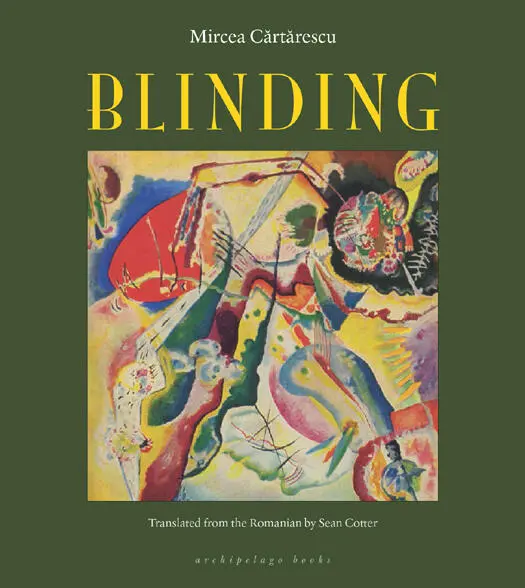
- Название:Blinding: Volume 1
- Автор:
- Издательство:Archipelago
- Жанр:
- Год:1996
- ISBN:9781935744856
- Рейтинг книги:3 / 5. Голосов: 1
-
Избранное:Добавить в избранное
- Отзывы:
-
Ваша оценка:
Blinding: Volume 1: краткое содержание, описание и аннотация
Предлагаем к чтению аннотацию, описание, краткое содержание или предисловие (зависит от того, что написал сам автор книги «Blinding: Volume 1»). Если вы не нашли необходимую информацию о книге — напишите в комментариях, мы постараемся отыскать её.
was one of the most widely heralded literary sensations in contemporary Romania, and a bestseller from the day of its release. Riddled with hidden passageways, mesmerizing tapestries, and whispering butterflies,
takes us on a mystical trip into the protagonist’s childhood, his memories of hospitalization as a teenager, the prehistory of his family, a traveling circus, secret police, zombie armies, American fighter pilots, the underground jazz scene of New Orleans, and the installation of the communist regime. This kaleidoscopic world is both eerily familiar and profoundly new. Readers of
will emerge from this strange pilgrimage shaken, and entirely transformed.
Blinding: Volume 1 — читать онлайн бесплатно полную книгу (весь текст) целиком
Ниже представлен текст книги, разбитый по страницам. Система сохранения места последней прочитанной страницы, позволяет с удобством читать онлайн бесплатно книгу «Blinding: Volume 1», без необходимости каждый раз заново искать на чём Вы остановились. Поставьте закладку, и сможете в любой момент перейти на страницу, на которой закончили чтение.
Интервал:
Закладка:
Time passed quickly in the bustle of bars on Obor. No one talked about anything but the bombing, the way that a few years earlier they’d talked for months only about the earthquake and the fall of the Carlton block, which acquired the melodramatic proportions of the sinking of the Titanic, by means of the ridiculous waltz played on every accordion. Little by little, the tall glasses of liquor turned rosy, and the color passed into the whites of the eyes of those on the smoke-blackened benches. As evening began, the trams crisscrossed in the piaţa, clanging deafening bells. Tataie and the girls left the bar at five in the afternoon and walked along Mihai Bravu, winding into the lonely slums, where flocks of children played ball on the street or poked through the mud, until they came to Rădiţa’s house, where they spent the night. Nenea and Uncle Florea were on the Russian front, and Rădiţa, who had a small shop no one entered, in spite of the beautiful cases full of porcelain dolls, had been left alone, scared, crying night after night, waiting from morning to evening for word from the front that her husband was dead. They listened to the radio for a while, but they couldn’t get any information from the propaganda programs. The country was occupied by the Germans, or at least that was the reality behind the beautiful words. They slept piled into two beds, without undressing, and the next day they went back to Tântava, where the girls would stay until the war was over.
In March of the next year, it snowed wet and unusually large flakes over the roughly three hundred houses in the village, “lamb snow,” as they called it. People were annoyed, because they had to wear their heavy clothes and wool hats again, when they had thought they would move on to lighter wear. They were also afraid a frost would catch the budding trees and there would be no fruit in the summer. Maria was standing in the oven, stirring a hanging pot. The oven was made of clay, with a great yellow fire, a wood floor and a sooty window as big as a hand. The back was lined with reeds, which wild bees filled with black honey in the summer. Above was the chimney, where the smoke rose from ashen twigs that were almost always damp and full of caterpillars and spiders. In the oven, with her face hot from the fire and watching the smoky arabesques in shafts of light, Maria felt like she was inside a rounded, tender belly. It smelled like mămăligă and mouthwatering stew. She was just stirring some mămăligă when she heard the dog, Roşu, barking like he was possessed. The dog, swith fur the color of fire, had its own strange and moving story. For a time, there were always Germans in the village. They would come on their motorcycles for a beer at the bar in the center of town, next to the footbridge where Băcanu Village started … People didn’t love them or hate them; they became used to them. Only in the years that followed, when the German soldiers were replaced by Russians, did the villagers begin to miss them and speak of them fondly. The Germans had treated the locals well. They paid for what they drank and ate, down to the last penny, and they played with the children and gave them chocolate. The charm of their blue eyes would stay with the Tântavans, in contrast to the Russians, who behaved like wild beasts. Rapes and robberies came one after another with the Russians, and not even the movies with dumb, evil German characters, nor the propaganda for Soviet heroes, nor the slogans like
Stalin and the Russians
Brought to us our freedom
nor the new national anthem with
Our people will always be the brothers
Of our Soviet liberators
would change their conviction, often repeated, if under their breath: “The Germans, you know, they was what they was, but they was good people. But God save you from an angry Russian …”
A German officer (Maria remembered his name as Klaus) had been billeted for a while with the Badislavs. He stayed in the room on the other side of the hall, lying on the bed almost all day and reading, under the shawls and coats that hung from the beam. One day he came out wearing one of Babuc’s wool hats, and the children fell over laughing. And this same Klaus got into the habit of playing in the yard with Roşu, one of the two dogs — the other was old, Roşu’s mother —; he taught him to fetch a stick he’d throw as far as the shed, to shake, and to do other silly things. When he was leaving for his native Bavaria, the German begged Tătica for the dog. Out of gratitude, Tătica gave the dog to him, and Klaus put Roşu in his sidecar. And wouldn’t you know but the dog came back a year later, trailing a collar with a German inscription, which the villagers much admired, standing surprised around him. When the dog saw Tătica, he went mad with joy, hopping and whimpering, even though he was weak, his ribs showing, and he pawed the ground with aching feet. The village told this story for a long time.
And now the dog was barking more frantically than Maria had ever heard, until he couldn’t breathe. She came out of the oven door, and the snowflakes immediately froze her face, which was red from the fire. At the gate was a poor beggar, who seemed to have come from some hospital, since his head was completely covered in dirty, almost black, bandages. Only his eyes showed, and even they were hazy through the ceaseless snowfall. His clothing was no different from any other beggar’s who had passed through the village. Still, his crooked figure, as much as Maria could see through the snow-capped fence, had something wrong with it, something of a person from somewhere else, or possibly (Maria crossed herself on the roof of her mouth) not even a person. Framed by the dilapidated house across the street, his body looked like one of the demons painted in the village church, the ones from the terrifying Last Judgment, with broken hips and more vertebrae in his neck than seemed natural. His body’s proportions were bizarrely perverted, and he was twitching as if he were being beaten by a gale. The girl clutched her jacket and crossed the yard along the trodden path. Passing the quince trees, she brushed against them and covered herself with frozen puffs, miniscule crystals one over the other, sparkling like sequins.
Now they were face to face, with the fence between them, almost as high as their chins. Maria quickly said the words that usually got rid of beggars: “I don’t have anything. How should I have what to give you? Move on, go ask someone else, get out!” But the person under the bandages began to giggle and said quietly, “Maria, don’t you recognize me?” And then he put his hands to his mouth like a trumpet, leaned back, and moving his fingers quickly on invisible valves, let out a wild solo, imitating the swing of the brass instrument so well that the girl immediately knew who was standing there. The mummy, blinking his yellow eyes, launched into a drum solo, rumbling and hissing with his mouth, doing the bass and the small drums, making the brushes and tom-toms and maracas, speeding up and huffing, until he hit the cymbals with all his power, almost making them real in the crystalline, frozen air, and then he bent suddenly at the waist, in a bow. “Cedric, crazy Cedric,” laughed Maria, “what in God’s name are you doing here? What’s with the get up?” Vasilica appeared from the barn, smelling not at all unpleasantly of bull and warm dung. “My oh my, it’s Cedric …” she rolled her eyes toward the heavens like a martyr, but at the same time she remembered flogging him mercilessly in the musky smell of his hot room. She would have done it again, now and then, she almost admitted to herself, as she had said to herself often enough in bed at night, wrapped in a wet excitation. She had liked wearing the black, svelte uniform, and the complete power she had had over the male who kissed her boots, who writhed and screamed with every lash, intoxicated her now, in memory, as much as she refused to admit it.
Читать дальшеИнтервал:
Закладка:
Похожие книги на «Blinding: Volume 1»
Представляем Вашему вниманию похожие книги на «Blinding: Volume 1» списком для выбора. Мы отобрали схожую по названию и смыслу литературу в надежде предоставить читателям больше вариантов отыскать новые, интересные, ещё непрочитанные произведения.










Обсуждение, отзывы о книге «Blinding: Volume 1» и просто собственные мнения читателей. Оставьте ваши комментарии, напишите, что Вы думаете о произведении, его смысле или главных героях. Укажите что конкретно понравилось, а что нет, и почему Вы так считаете.