Péter Nádas - Parallel Stories
Здесь есть возможность читать онлайн «Péter Nádas - Parallel Stories» весь текст электронной книги совершенно бесплатно (целиком полную версию без сокращений). В некоторых случаях можно слушать аудио, скачать через торрент в формате fb2 и присутствует краткое содержание. Год выпуска: 2011, Издательство: Farrar, Straus and Giroux, Жанр: Современная проза, на английском языке. Описание произведения, (предисловие) а так же отзывы посетителей доступны на портале библиотеки ЛибКат.
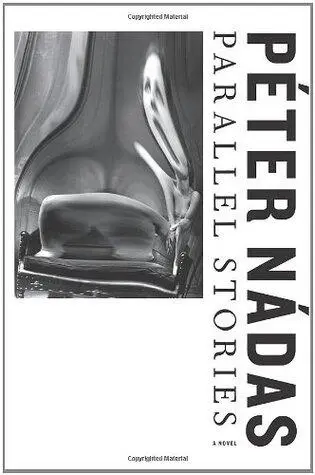
- Название:Parallel Stories
- Автор:
- Издательство:Farrar, Straus and Giroux
- Жанр:
- Год:2011
- ISBN:нет данных
- Рейтинг книги:5 / 5. Голосов: 1
-
Избранное:Добавить в избранное
- Отзывы:
-
Ваша оценка:
Parallel Stories: краткое содержание, описание и аннотация
Предлагаем к чтению аннотацию, описание, краткое содержание или предисловие (зависит от того, что написал сам автор книги «Parallel Stories»). Если вы не нашли необходимую информацию о книге — напишите в комментариях, мы постараемся отыскать её.
Three unusual men are at the heart of
: Hans von Wolkenstein, whose German mother is linked to secrets of fascist-Nazi collaboration during the 1940s; Ágost Lippay Lehr, whose influential father has served Hungary’s different political regimes for decades; and András Rott, who has his own dark record of mysterious activities abroad. The web of extended and interconnected dramas reaches from 1989 back to the spring of 1939, when Europe trembled on the edge of war, and extends to the bestial times of 1944–45, when Budapest was besieged, the Final Solution devastated Hungary’s Jews, and the war came to an end, and on to the cataclysmic Hungarian Revolution of October 1956. We follow these men from Berlin and Moscow to Switzerland and Holland, from the Mediterranean to the North Sea, and of course, from village to city in Hungary. The social and political circumstances of their lives may vary greatly, their sexual and spiritual longings may seem to each of them entirely unique, yet Péter Nádas’s magnificent tapestry unveils uncanny reverberating parallels that link them across time and space.This is Péter Nádas’s masterpiece — eighteen years in the writing, a sensation in Hungary even before it was published, and almost four years in the translating.
is the first foreign translation of this daring, demanding, and momentous novel, and it confirms for an even larger audience what Hungary already knows: that it is the author’s greatest work.
Parallel Stories — читать онлайн бесплатно полную книгу (весь текст) целиком
Ниже представлен текст книги, разбитый по страницам. Система сохранения места последней прочитанной страницы, позволяет с удобством читать онлайн бесплатно книгу «Parallel Stories», без необходимости каждый раз заново искать на чём Вы остановились. Поставьте закладку, и сможете в любой момент перейти на страницу, на которой закончили чтение.
Интервал:
Закладка:
What do you mean, even this invitation.
Nothing, the way I see it, you cannot give up anything, and at your age that’s as it should be. At your age I couldn’t give up anything either. Even today, I can barely give up anything. A little feeling, a little love, today I hardly ask more than that from anyone, she said with a tense, constrained smile as she took out her key.
She could have said that she nevertheless needed the emotions denied her.
They had to take a few more steps to reach the garden gate.
Their footsteps made the only sound; the street was deserted.
But I’ve admitted it. How else can I put it — I’m terribly confused. I’m confused because of you, and I’m confused about my engagement. What else may I confess to you. That’s just what I’m asking, Karla, what should I do, what should I do against my passion, said Imola, suddenly plaintive and conciliatory, her voice stimulating her emotions to the point where self-pity almost made her burst into tears.
Claiming to have a migraine, I’d only make myself ridiculous.
In their language, this meant that during this short time she had managed to fall head over heels in love with Baron von der Schuer, a ridiculous and disheartening development.
More precisely, this is how she was defending herself against Karla’s senseless attack. Karla was looking at her with genuine annoyance and a certain aversion — though her performance, in the psychological meaning of the word, was not senseless. She hadn’t really fallen head over heels in love with the man, yet she could not bear anyone keeping her from getting to know him more intimately. She wanted to see the peculiar similarity that linked him to Mihály, to the sculptor, or to all other men. At the sight of these grown men she almost fainted in little-girl astonishment. She did not understand a word of the situation. Which is why she so readily revealed her emotional vulnerability. This required great mental strength but it helped to jolt her temper to a new place. Her urge to weep was prompted by genuine, devastating fury. She was ready to hate Karla, and she did hate her for trying to keep her from doing something.
She simply had to see whether this man would be good for her.
Not that she needed anyone besides Mihály.
Whether he would fit her.
It was the same as when her domineering older sisters or enchanting stepmother discovered secret wishes of hers. Except that Mihály included all the others within him. Quickly, she had to confess her interest in another man, confess anything, so that she might stealthily reach her original goal.
Of course, my dear, one cannot do anything against oneself, the baroness said airily and opened the garden gate.
There stood before them, in the depth of the shady garden, a spacious, well-cared-for house built in the old German style, its walls covered with red and yellow climbing roses, with two large ground-floor terraces giving onto a thick green lawn. The overall impression was somewhat somber and uninviting.
Silence reigned within its walls.
In the basement, their lunch was waiting for them on the large stove in the dim kitchen; this Sunday, Baroness Thum’s housekeeper had gone on a full-day excursion with the League of German Girls, which she would not have wanted to miss for anything. Not only was she an enthusiastic and active member of the league but, as part of her secret commission, she was charged with keeping an eye on the baroness’s affairs. She had a secret key to the Chinese writing cabinet in which the baroness kept her antique godemiché . She had to report not only to Kaltenbrunner’s office but also to the office of Admiral Canaris, which monitored persons involved in militarily important scientific research.* For some time, the girl hadn’t understood what was in that serious-looking box; she kept returning to it, almost daily, to stare at it, scrutinize it, take it out and hold it in her palm. It couldn’t be that this pretty little something resembled that other thing, because she couldn’t imagine what use this mysterious something could be and for whom.
Maybe it was part of the baroness’s science.
Or a very valuable work of art, though it seemed useless.
Whenever the baroness was away for several days on some scientific mission, her housekeeper would take it down to her room in the basement and in the dark, carefully listening for any suspicious noise, very cautiously introduce the object, guiding it inside. Afterward, she would wipe it clean on the sheet and each time solemnly promise herself never to do it again.
Now the baroness herself was supposed to heat up the food, send it up in the dumbwaiter to the ground-floor dining room, where the antique table from the dining hall of a cloister had been set for two. They had planned to eat lunch and then spend the rest of the day together, just the two of them; they’d have been happy to wash dishes together, but everything turned out differently.
After about forty minutes of dead silence, they both appeared in the living room, cheerful and well put together, ready to set out again.
While they had rested in their rooms on an upper floor, darkened by closed shutters, and afterward while quickly dressing with practiced movements, they each reevaluated the internal proportions of their own emotional turmoil and that of the other woman, trying to get at the possible cause.
Barefoot and in her slip, rubbing one sole against the other, Baroness Karla took a few minutes to plunge into the proofs of her popular educational booklet. The galleys were lying on the pearl-inlaid Chinese writing cabinet. She worried that because of this little booklet that damn Schuer would not appoint her to be the head of their sister institute in Rome. He thought she shouldn’t have accepted such a professionally dubious assignment from the Education Office of the SS. And later, in Lützow Street, they indeed would reedit the text so that it lost all its scientific ambition and credibility.
The dark little inn with its blood-red little rooms where her admirer usually took her after concerts was, oddly enough, located in this same street, not far from the Education Office’s headquarters but on the other side of the street.
In fact, what bothered Baron von der Schuer was that Baroness von Thum zu Wolkenstein, easily at home in office intrigues, had again outwitted him, gone behind his back again, again gained an advantage; a few days earlier they had found themselves in an intense argument about it.
But the Herr Professor gave his approval in writing, forgive me for reminding you of this, but with that approval I believe we both met the office’s requirement.
Because you, Frau Professor, and not for the first time, presented me with a fait accompli.
I reported to the Herr Professor well within the required time, and I requested permission for the publication in writing.
When my secretary told you I’d be away for thirty-six hours.
I demand that the Herr Professor retract this humiliating allegation, which is completely baseless.
I suppose the strictly confidential purpose of my trip remained no secret for the Frau Professor, either.
The Herr Professor now speaks of confidential matters of which I neither had nor could have had any knowledge.
In that case, the Frau Professor would not have known where I was going with Assistant Professor Mengele and Professor Butenandt,* or how long we’d be away.
How might I have known that, Herr Professor.
That is what I’m asking you, Frau Professor.
I ask you, Herr Professor, please, do not try to evaluate the reliability of your secretary by cross-examining me, and mainly by not trusting in my cooperation, because that would be very unfair to me.
I have no reason to confirm or deny the claims of the Herr Professor’s secretary.
Читать дальшеИнтервал:
Закладка:
Похожие книги на «Parallel Stories»
Представляем Вашему вниманию похожие книги на «Parallel Stories» списком для выбора. Мы отобрали схожую по названию и смыслу литературу в надежде предоставить читателям больше вариантов отыскать новые, интересные, ещё непрочитанные произведения.











Обсуждение, отзывы о книге «Parallel Stories» и просто собственные мнения читателей. Оставьте ваши комментарии, напишите, что Вы думаете о произведении, его смысле или главных героях. Укажите что конкретно понравилось, а что нет, и почему Вы так считаете.