Péter Nádas - Parallel Stories
Здесь есть возможность читать онлайн «Péter Nádas - Parallel Stories» весь текст электронной книги совершенно бесплатно (целиком полную версию без сокращений). В некоторых случаях можно слушать аудио, скачать через торрент в формате fb2 и присутствует краткое содержание. Год выпуска: 2011, Издательство: Farrar, Straus and Giroux, Жанр: Современная проза, на английском языке. Описание произведения, (предисловие) а так же отзывы посетителей доступны на портале библиотеки ЛибКат.
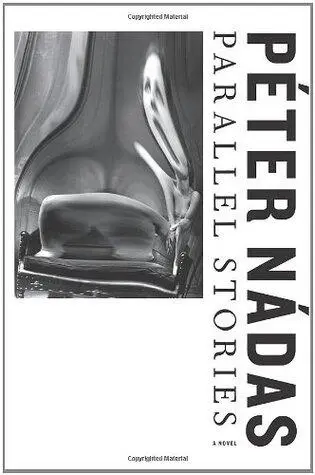
- Название:Parallel Stories
- Автор:
- Издательство:Farrar, Straus and Giroux
- Жанр:
- Год:2011
- ISBN:нет данных
- Рейтинг книги:5 / 5. Голосов: 1
-
Избранное:Добавить в избранное
- Отзывы:
-
Ваша оценка:
Parallel Stories: краткое содержание, описание и аннотация
Предлагаем к чтению аннотацию, описание, краткое содержание или предисловие (зависит от того, что написал сам автор книги «Parallel Stories»). Если вы не нашли необходимую информацию о книге — напишите в комментариях, мы постараемся отыскать её.
Three unusual men are at the heart of
: Hans von Wolkenstein, whose German mother is linked to secrets of fascist-Nazi collaboration during the 1940s; Ágost Lippay Lehr, whose influential father has served Hungary’s different political regimes for decades; and András Rott, who has his own dark record of mysterious activities abroad. The web of extended and interconnected dramas reaches from 1989 back to the spring of 1939, when Europe trembled on the edge of war, and extends to the bestial times of 1944–45, when Budapest was besieged, the Final Solution devastated Hungary’s Jews, and the war came to an end, and on to the cataclysmic Hungarian Revolution of October 1956. We follow these men from Berlin and Moscow to Switzerland and Holland, from the Mediterranean to the North Sea, and of course, from village to city in Hungary. The social and political circumstances of their lives may vary greatly, their sexual and spiritual longings may seem to each of them entirely unique, yet Péter Nádas’s magnificent tapestry unveils uncanny reverberating parallels that link them across time and space.This is Péter Nádas’s masterpiece — eighteen years in the writing, a sensation in Hungary even before it was published, and almost four years in the translating.
is the first foreign translation of this daring, demanding, and momentous novel, and it confirms for an even larger audience what Hungary already knows: that it is the author’s greatest work.
Parallel Stories — читать онлайн бесплатно полную книгу (весь текст) целиком
Ниже представлен текст книги, разбитый по страницам. Система сохранения места последней прочитанной страницы, позволяет с удобством читать онлайн бесплатно книгу «Parallel Stories», без необходимости каждый раз заново искать на чём Вы остановились. Поставьте закладку, и сможете в любой момент перейти на страницу, на которой закончили чтение.
Интервал:
Закладка:
He returned fire as he fell and could still see the car speeding away in the snow despite a damaged rear wheel.
But now he did not see how he could go on.
And he had accomplished so much in the camp with his incredible caution and implacably calm nature.
For a long time he had been considered the master of life and death in the Pfeilen camp. When he had been first called up, near the end of the Great War, he had completed his training as a medic, having seen typhoid fever, dysentery, tuberculosis, all manner of injuries and mutilations. In times of need, SS officers had him operate on them instead of prisoner doctors or, especially, the two SS surgeons, since one was an alcoholic whose hands shook terribly if he did not have something to drink every hour, and the other was probably a morphine addict with similar problems in getting his required dope — where to get it and how many milligrams to inject. But now, despite everything he had done, Kramer had to go to the south gate because of Peix.
At first they entrusted him only with disgusting, septic operations, out of convenience and because the two surgeons feared infection. Kramer became a specialist in purulent inflammations; every morning he had to open and expertly clean these terrible wounds by the dozen. After a year in the pathology section of Buchenwald, he knew no less about human anatomy than the learned physicians did. The pathology section was shared by the men’s and women’s camp — the only place where not only body parts of both men and women, kept in thick-walled glass vessels, came in contact on the same table but where prisoners of both sexes worked and ate together; some of them were well-known specialists. Life was comfortable and convivial; the men cooked for themselves, could bathe to their heart’s content and chat endlessly with their shaven-headed female colleagues. Kramer worked with an elderly Jewish pathological anatomist, a prosector, who had been the head of his department at the university in Prague. The furnishing, installations, and equipment of the two dissecting rooms met the requirements of the most modern medical technology. Every morning they had to select in the barracks, and then in the mortuary of the sick bay, the Krankenrevier , those bodies that showed some deformation of a hereditary character or bodily anomalies that might be considered exceptional. The corpses had to be those of Jews. Organs and limbs of scientific interest were severed and together with detailed, comprehensive autopsy reports were shipped to Berlin, to the famous Kaiser Wilhelm Institute for Anthropology, Human Heredity, and Eugenics in Dahlem, on Ihne Street. The addressee was always a certain Prof. Dr. Karla Baroness von Thum zu Wolkenstein, and two large red stamps were always affixed to the package. One stamp called attention to the fragile contents and the other to the urgency and speed with which the shipment, of great military importance, must reach its destination. On each occasion, its arrival was duly acknowledged by Karla Baroness von Thum zu Wolkenstein, whom the laboratory workers in the camp imagined to be the feminine version of the famous former pathologist from Prague: short, round, and bespectacled. Sometimes she addressed brief questions to her colleagues, and these questions revealed her attentiveness and expertise. Professor Nussbaum never mentioned that the baroness had been his student in Prague, but perhaps he did not even remember her. At other times, in exceedingly warm words, the baroness expressed joy regarding the excellent condition or the professionalism of the autopsy findings.
All the autopsy material had to be stored in the refrigerator until permission came from Ihne Street regarding the exceptional cases.
On very rare occasions, there were instructions to boil a corpse down to the skeleton and then preserve it in a benzene bath. Or not to boil it but rather to dissolve the softer tissue in chloride of lime; this was the longer procedure. In any case, a collegial and friendly relationship developed between the camp laboratory and Ihne Street which neither their respective situations nor their tasks could begin to justify.
Later, in Pfeilen, troublesome aseptic cases were also assigned to Kramer, such as hopeless orthopedic operations and amputations. By then, Obersturmführer Eisele, who in the chaos of the approaching collapse had lost all sense of self-discipline, had been absent for more than a week. Nobody missed him and probably nobody held it against him that lately, with the help of SS physicians, he had been selecting many of the sick to be taken to the north gate, to the open area covered with snow. From the guard tower they shot only those who tried to crawl away; the rest stayed until their turn came. According to the criminals in the camp, Eisele’s wife and two small children had been evacuated in a lightning-fast action, before dawn, from the officers’ quarters in a suburb of the town. Peix had relayed this news to Kramer by the next morning. They both knew what danger awaited them. From the viewpoint of the communist cells, Eisele’s constant use of Peix offered considerable protection, but Eisele had reasons to maintain a tight and passionate relationship with the criminals too. In every possible and impossible secret hiding place, in the mouth and anus of every living and dead person he had been searching for gold, and proved to be very good at it. If he could be made to disappear, just like that, along with his accumulated gold, there was a good chance the criminals would make their own move against the now-defenseless Kramer.
What they really wanted, however, was Peix, alive.
This was such a threat to life in the camp that, to avoid it, the four hundred prisoners were ready to continue their panic-filled silence in the dark barracks for a long time, but the loudspeaker started to crackle, then play music. If this can happen, anything may happen is what people usually say in such cases. It was once again the famous entrance of Countess Maritza from the Kálmán operetta,* blasting at the prisoners from early morning until late at night so they could not hear the sound of cannons.
Kramer has to perish alone.
Nothing more terrible than this could possibly happen in the camp, because it would leave Peix on his own, with no one to restrain him, to keep him from doing whatever he pleased.
Döhring, the commandant’s new deputy, the younger and crueler of the two Döhring brothers, would surely use Peix differently from the way his predecessor Eisele had done.
Kramer might have been the only person to whom it never occurred that for other people real hell meant Peix.
Everyone was terrified of Peix.
A few days sufficed for newcomers to become terrified by the beauty of this healthy, strong person. Many of them would start coughing at the sight of him.
Past the pine forest, in the middle of a plowed field, Eisele had ordered a long, wide burning pit to be dug, seven meters wide and four meters deep, and for more than a week the living and the dead had been burning in it. A nice footpath led to the pit from the north gate. They set the fire with gasoline, applied generously, and when hair, skin, and fat were happily blazing with eager little flames, they kept on feeding the fire. This was Eisele’s last deed, which does not sound too good but, as people in Pfeilen then said, it was necessary to prevent epidemics; the pit smoked and sizzled. Brains and spinal marrow oozed from skulls and spines opening in the heat at the wide bottom of the pit and very slowly began to glow. Brain and spinal marrow become flammable only at a very high temperature. The high temperature was created by the corpses’ own energies. Easily flammable fatty and hairy parts continually ignited the burning mass. Even if people had wanted to, the fire couldn’t have been put out. After a while, the liquid brains acted as perpetual kindling. Of this, however, nobody spoke in either of the two small towns nearby or in the camp itself; all of them, unequivocally and despite the confusion, inhaled the stench of burning human flesh and bones, and had the impression that the smell had a material-like substance, something sticky, and that they were also eating it. It was impossible not to inhale it. The smell and taste in one’s saliva became a little like those of cheap church candles made of tallow. People coughed cautiously whenever the wind blew across the low pine forest, because after a cough one would have to inhale more deeply. Although they had grown used to everything, the knowledge that burning human flesh was what their sense organs were experiencing in this peculiar way and that tomorrow, in all probability, they too would be burning brought tears to their eyes and literally deprived them of air. Acrolein, which is nothing but unsaturated aldehyde, mildly polymerized at high temperatures, stinks like this; it irritates the mucous membranes whether or not one knows what sort of chemical and physical processes are taking place.
Читать дальшеИнтервал:
Закладка:
Похожие книги на «Parallel Stories»
Представляем Вашему вниманию похожие книги на «Parallel Stories» списком для выбора. Мы отобрали схожую по названию и смыслу литературу в надежде предоставить читателям больше вариантов отыскать новые, интересные, ещё непрочитанные произведения.











Обсуждение, отзывы о книге «Parallel Stories» и просто собственные мнения читателей. Оставьте ваши комментарии, напишите, что Вы думаете о произведении, его смысле или главных героях. Укажите что конкретно понравилось, а что нет, и почему Вы так считаете.