Péter Nádas - Parallel Stories
Здесь есть возможность читать онлайн «Péter Nádas - Parallel Stories» весь текст электронной книги совершенно бесплатно (целиком полную версию без сокращений). В некоторых случаях можно слушать аудио, скачать через торрент в формате fb2 и присутствует краткое содержание. Год выпуска: 2011, Издательство: Farrar, Straus and Giroux, Жанр: Современная проза, на английском языке. Описание произведения, (предисловие) а так же отзывы посетителей доступны на портале библиотеки ЛибКат.
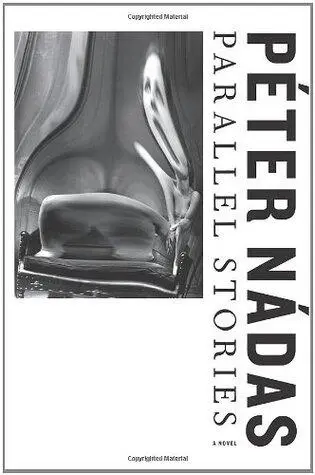
- Название:Parallel Stories
- Автор:
- Издательство:Farrar, Straus and Giroux
- Жанр:
- Год:2011
- ISBN:нет данных
- Рейтинг книги:5 / 5. Голосов: 1
-
Избранное:Добавить в избранное
- Отзывы:
-
Ваша оценка:
Parallel Stories: краткое содержание, описание и аннотация
Предлагаем к чтению аннотацию, описание, краткое содержание или предисловие (зависит от того, что написал сам автор книги «Parallel Stories»). Если вы не нашли необходимую информацию о книге — напишите в комментариях, мы постараемся отыскать её.
Three unusual men are at the heart of
: Hans von Wolkenstein, whose German mother is linked to secrets of fascist-Nazi collaboration during the 1940s; Ágost Lippay Lehr, whose influential father has served Hungary’s different political regimes for decades; and András Rott, who has his own dark record of mysterious activities abroad. The web of extended and interconnected dramas reaches from 1989 back to the spring of 1939, when Europe trembled on the edge of war, and extends to the bestial times of 1944–45, when Budapest was besieged, the Final Solution devastated Hungary’s Jews, and the war came to an end, and on to the cataclysmic Hungarian Revolution of October 1956. We follow these men from Berlin and Moscow to Switzerland and Holland, from the Mediterranean to the North Sea, and of course, from village to city in Hungary. The social and political circumstances of their lives may vary greatly, their sexual and spiritual longings may seem to each of them entirely unique, yet Péter Nádas’s magnificent tapestry unveils uncanny reverberating parallels that link them across time and space.This is Péter Nádas’s masterpiece — eighteen years in the writing, a sensation in Hungary even before it was published, and almost four years in the translating.
is the first foreign translation of this daring, demanding, and momentous novel, and it confirms for an even larger audience what Hungary already knows: that it is the author’s greatest work.
Parallel Stories — читать онлайн бесплатно полную книгу (весь текст) целиком
Ниже представлен текст книги, разбитый по страницам. Система сохранения места последней прочитанной страницы, позволяет с удобством читать онлайн бесплатно книгу «Parallel Stories», без необходимости каждый раз заново искать на чём Вы остановились. Поставьте закладку, и сможете в любой момент перейти на страницу, на которой закончили чтение.
Интервал:
Закладка:
The sliding door to the kitchen was generally closed, that of the maid’s room open, because that was where the clinic’s files would be kept, and this room became the receptionist’s permanent place.
Madzar built the furniture out of unpainted driftwood.
In the morning, more light came from the courtyard, in the afternoon from the street, and whether or not the sliding doors were open, at every hour of the day and in every minute of every hour intermingling lights moved and shifted the apartment around and changed its proportions.
The courtyard windows faced east, the street-front windows faced west, so from early morning until late evening the interior lived in a tension of lights emanating from opposite poles. When clouds blew quickly past or when the sky became clear or overcast, one could actually see the walls moving from and never returning to their original placement. Everything was in constant motion.
Psychoanalysis is a protracted, time-consuming, and unpredictable process in which both patient and therapist must cross over into a kind of eternity. In advance, they can only say they will repeat the ritual of their peculiar dialogue every week, but the end of the dialogue cannot be foreseen. You enter a castle with no exit. Everyone who has ever stepped inside receives a different image of the very same place. While one’s inner sense of space continually expands because of the treatment, and even if one learns nothing or very little of oneself, one gains a shockingly lively picture of the palpable surroundings.
As if it were not one and the same surroundings but three or four or countless different ones.
And this despite the fact that the patient arrives every week on the same day and at the same hour.
Mrs. Szemző was delighted to discover that, as she worked, her behavior and the tones of her voice involuntarily followed the events of light and shadow. This involuntary attention meant that she could not stick to a routine. Light became a factor that affected the proportions of inner and outer occurrences as well as the relationship between history’s past and present; with significant emphases it enriched, modified, and occasionally even directed Mrs. Szemző’s work.
Madzar also modified somewhat the height of the rooms.
This was a kind of architectural manipulation, Madzar later explained to Mrs. Szemző. I had to do something rather objectionable, but I couldn’t leave it as it was.
He raised the thresholds and covered the parquet floor with thick, matte, medium-gray linoleum.
I could raise the entire floor, he explained, but I won’t because it is laid very well. I’d rather just cover it. That way I’ll reduce the feeling of dreariness in the building, show how low these spaces are, and give some explanation for the hovering sensation; footsteps will sound softly and safely, I’ll mute the sounds, there won’t be much noise. It will also help dim the light. I repeat, it’s empty manipulation and I’d have nothing but contempt for someone doing something like this. A bit of fakery, no better than the illusionism of our grandfathers.
Look into the hole, little boy, see the rabbit jump.
They laughed loud and long at this, as if getting even with an otherwise elusive enemy.
Although these enemies had botched everything and, if they could, would continue to botch the whole world, at least now the two of them had outwitted the whole gang of dilettantes.
Tearing Up Everything
When they reopened the shop in early January, there was hardly anything on the shelves. Merchandise was stacked in large cartons behind the counter; people were unpacking. Everything was new, shiny, and good-smelling.
Outside, snow had been falling quietly for days. On the ceiling and in the mirrors the concealed yellow lighting spots mingled with reflections of the white surfaces everywhere.
The young woman stood on the ladder while the older one, sleeves rolled up to her elbows, handed her wine and liquor bottles.
Only my eyes registered the fact that this older woman was one of the branded people: below the crook of her arm, on the inside, was a series of tattooed numbers in blue ink. First a letter, followed by a short horizontal line, a kind of dash, and then the number itself, maybe six digits. These numbers, by the way, could of course be seen only when the men who had them wore short-sleeved shirts or the women sleeveless summer dresses. A stranger’s arm would reach up for the strap in the streetcar, and one could see what sort of fate had befallen this fellow human being. As if this had not been enough, now suddenly his or her life was on public display, could become anyone’s prey. Some had the numbers removed surgically, but the wrinkly or shiny scar left by transplanted skin became a telltale mark.
The streetcar was moving along, its speed allowing gentle breezes to blow through it, and whoever noticed the numbers, if anyone did, preferred to look out the window at the street sweltering in the sunshine. Later on, disabled veterans died or disappeared from the city, I don’t remember when, and they no longer had special reserved seats either, but back in those days many of them were still around.
Some with a leg missing, some with an arm; where once there had been limbs, the shirtsleeves or pants were fastened with safety pins or flapped freely on the stumps. Jacket sleeves were pinned inside jacket pockets. There were wooden legs ending in shoes, crutches fastened to stumps or waists. And scars and wounds, deformities and missing limbs, traces of burns and frostbite on hideous, horrifying faces. None of this needed explanation. I could never decide what was more merciful, to stare as if I saw nothing or to turn away immediately. I preferred turning away.
My shame and disgrace endured because I could neither look nor turn away unnoticed.
They knew why I turned away or pretended not to see anything.
In our neighborhood one often had to perform this hopeless mental exercise. Lack of compassion is insulting, but I didn’t know what to do with my compassion since my aversion and disgust were much stronger.
The most I could do was turn away very, very slowly.
Almost every morning I saw a man of whom nothing remained but a torso and two arms. He propelled himself among people’s feet, on a board fastened on four rollers. My father wouldn’t have been much older than this person, if he had stayed alive, even if in this condition. The man would roll out of Szófia Street, braking with a hand wrapped in a thick leather glove, and I, when I saw him, could not imagine him as anyone but my father. The sidewalk slopes down sharply in front of the pharmacy. I had no idea where he came from. At this time in the morning, people were hurrying along. He always said the same two sentences. The person he addressed was always a man; he waited for a man.
On this side of the street he could let the board plop down off the sidewalk, but then on the other side someone would have to reach under and lift it onto the sidewalk.
He pushed forward a little, and while he rose and held himself aloft on his fists, he let the board roll out from under him and slip off the curb. With an additional push, he heaved his amputated thighs back onto the board and at the same time braked hard with a gloved hand lest he roll out to the middle of the street.
What remained of him was clean, strong, and orderly. It may not have been because of the physical exertion, but his forehead and neck were soaked with perspiration. From the depths, the handsome face looked up at the pedestrians, his long, straight, deep-brown hair furled out and away from his soaked forehead, and he’d ask if the man would help him back on the sidewalk on the other side.
Not even his emphasis changed.
Please, if you could help me, but only on the other side. An unfortunately disabled veteran thanks you in advance for your help.
Читать дальшеИнтервал:
Закладка:
Похожие книги на «Parallel Stories»
Представляем Вашему вниманию похожие книги на «Parallel Stories» списком для выбора. Мы отобрали схожую по названию и смыслу литературу в надежде предоставить читателям больше вариантов отыскать новые, интересные, ещё непрочитанные произведения.











Обсуждение, отзывы о книге «Parallel Stories» и просто собственные мнения читателей. Оставьте ваши комментарии, напишите, что Вы думаете о произведении, его смысле или главных героях. Укажите что конкретно понравилось, а что нет, и почему Вы так считаете.