Susan Barker - The Incarnations
Здесь есть возможность читать онлайн «Susan Barker - The Incarnations» весь текст электронной книги совершенно бесплатно (целиком полную версию без сокращений). В некоторых случаях можно слушать аудио, скачать через торрент в формате fb2 и присутствует краткое содержание. Год выпуска: 2014, Издательство: Doubleday, Жанр: Современная проза, на английском языке. Описание произведения, (предисловие) а так же отзывы посетителей доступны на портале библиотеки ЛибКат.
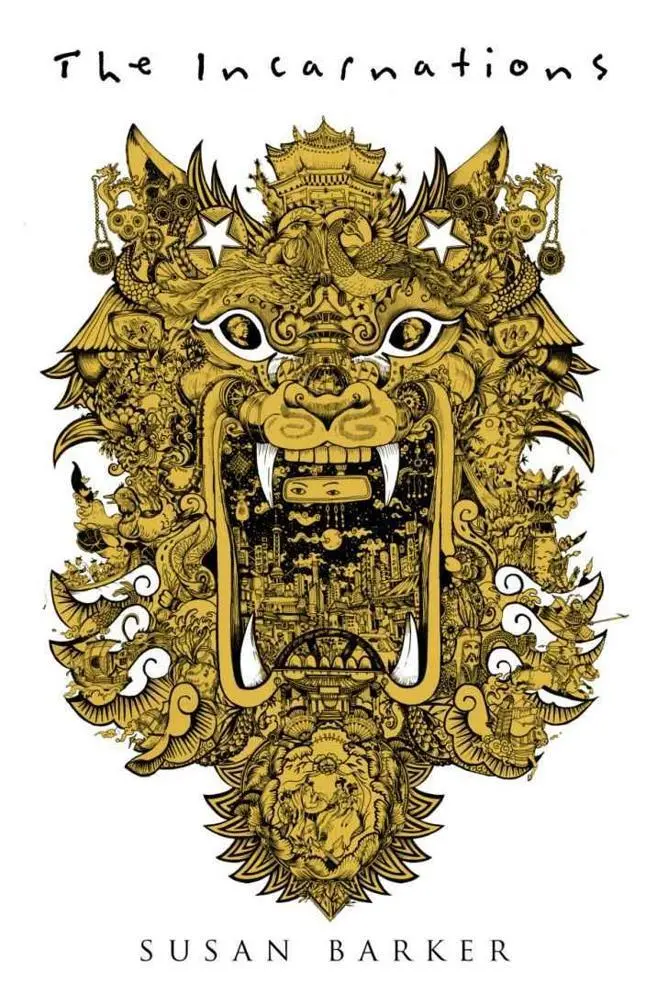
- Название:The Incarnations
- Автор:
- Издательство:Doubleday
- Жанр:
- Год:2014
- ISBN:нет данных
- Рейтинг книги:5 / 5. Голосов: 1
-
Избранное:Добавить в избранное
- Отзывы:
-
Ваша оценка:
The Incarnations: краткое содержание, описание и аннотация
Предлагаем к чтению аннотацию, описание, краткое содержание или предисловие (зависит от того, что написал сам автор книги «The Incarnations»). Если вы не нашли необходимую информацию о книге — напишите в комментариях, мы постараемся отыскать её.
I dream of sixteen concubines, plotting to murder the sadistic Emperor Jiajing.
I dream of the Sorceress Wu lowering the blade, her cheeks splattered with your blood.
I dream of you as a teenage Red Guard, rampaging through the streets of Beijing.
I am your soulmate, Driver Wang and now I dream of you.
You don't know it yet, but soon I will make you dream of me…
A stunning tale of a Beijing taxi driver being pursued by his twin soul across a thousand years of Chinese history, for fans of David Mitchell.
The Incarnations — читать онлайн бесплатно полную книгу (весь текст) целиком
Ниже представлен текст книги, разбитый по страницам. Система сохранения места последней прочитанной страницы, позволяет с удобством читать онлайн бесплатно книгу «The Incarnations», без необходимости каждый раз заново искать на чём Вы остановились. Поставьте закладку, и сможете в любой момент перейти на страницу, на которой закончили чтение.
Интервал:
Закладка:
‘You bath in your own home?’ I ask.
‘Every night,’ you say. ‘Let’s have a bath now.’ And you turn on the hot tap and strip.
The water is cleaner and hotter than in the communal baths, and we steep at opposite ends of the wooden tub, speechless with pleasure. Submerged in water, I hug my knees to my chest, conscious of how skinny I am. The Three Years of Natural Disasters, and the food shortages that ensued, stunted my growth. The hundreds of meals I went without during those hardscrabble years have left me as underdeveloped as a child. One look at your healthy, womanly body, however, flushed a radiant pink, tells me you were never kept awake at night by a growling stomach. You smile at me through the rising steam, then surprise me by wistfully saying, ‘Moon, you have such lovely long hair. Can I wash it for you?’
I turn my back to you, slide up the tub and sit between your legs. You unbraid my hair and comb it out with your fingers. You lather up a bar of soap.
‘Your hair is like silk. .’ you praise, fingers massaging my scalp. ‘So lustrous and soft.’
‘Why don’t you grow your own hair?’ I ask, thinking of your short bob, cut to the earlobes.
‘No way,’ you laugh. ‘Long hair is bourgeois .’
I hear the shudder in your voice, and I say, ‘Well, in that case, I ought to cut mine short like yours.’
‘Don’t you dare!’ you joke in a warning tone. ‘Don’t touch a strand!’
I slide down the tub and slip underwater, swishing my hair about to rinse out the soap. How strange and contradictory you are, I think, to admire my hair and condemn it at the same time.
After a meal of pork dumplings, cooked for us by your servant, we go to spend the evening in your bedroom. The room has a bed, a desk and chair, a white bust of Chairman Mao and no character to speak of. Though you must sleep there every night, the room has a bare and utilitarian air, as though purged of your girlhood things to prepare for life in the Liberation Army barracks. I sit by the record player and flip through the collection of vinyl. ‘The East is Red’. ‘Ode to the Motherland’. ‘The Night-soil Collectors are Coming Down the Mountain’. Revolutionary anthems with rosy-cheeked workers holding their hoes and scythes aloft on the cardboard sleeves.
‘You can listen to any record you like,’ you say.
‘Um. . that’s okay.’
Sensing my boredom with your record collection, you ask hesitantly, ‘Do you want to hear a different kind of music?’
I look up from ‘Raise the Red Flag for the Soldiers, Peasants and Workers’. ‘All right.’
You go to your bed and grope under your bedding for a screwdriver. You then use the screwdriver to pry up a loose floorboard and reach beneath to pull out a battered cardboard box.
‘A servant was cleaning out a store cupboard a few years ago,’ you say, ‘and found some of my mother’s things. My father said they were decadent trophies of the Nationalist era and threw them out. But I sneaked out in the night and got them out of the bin.’
You tilt your chin and say defensively, ‘My mother died when I was six. This is all I have of her.’
You pull the lid off the cardboard box and lift out a scarlet qipao, embroidered with golden flowers. I gasp and stroke the qipao, my fingers enjoying the sensation of pure silk.
‘This was my mother’s dress,’ you say. ‘Here is a photograph of her when she was twenty.’ You show me a black and white photo of a beautiful woman, posing with her hand under her chin. She has an enigmatic smile on her lips and a white gardenia in her hair.
‘Your mother looks like a movie star,’ I sigh.
You modestly brush my compliment aside, though I can tell you are pleased. ‘Of course,’ you say sternly, ‘my mother would never doll herself up like a woman of loose morals if she was alive today. This photograph was taken in the Nationalist era, when women were exploited and oppressed by the shackles of beauty.’
‘Yes,’ I agree. ‘Thanks to Communism, women are now emancipated from the tyranny of lipstick and hair-curlers.’ Though, gazing at your lovely mother, I can’t help but think that lipstick and hair-curlers weren’t all bad.
There’s one more object in the cardboard box: a record with not a worker, peasant or soldier on the sleeve but a glamorous woman with her hair in the stiff waves of a permanent and the same hand-under-chin pose as your mother.
‘This is a love song from Hong Kong, where my mother grew up. She used to play it to me when I was little. I listen to it sometimes, when my father and stepmother aren’t home. .’ Another hard and defensive stare. ‘It helps me remember her.’
You lower the record on to the turntable and drop the needle in the groove. There is hissing and crackling, then a singer warbling in Cantonese to a big band. The melody is joyful, but with a hint of melancholy. You translate the lyrics for me.
‘“I will make you mine. . I will love you until the end of time. .” The song is about a shop girl in love with the mail boy.’
Though it’s just a simple love ballad, it sends shivers down my spine and I realize it’s been years since I heard a song without a militant marching-band beat, rallying the masses to fight for the Socialist motherland. It has been years since I heard a woman singing of love for a man who is not Chairman Mao.
I take a deep, steadying breath. This record is from Hong Kong, the prison island where the British devils have enslaved our Chinese brothers and sisters. A Marxist — Maoist analysis of this song would most certainly reveal its hidden anti-Communist agenda, that the song intends to lure us from the path of socialism by corrupting us with bourgeois longings for romantic love. Oblivious, you sway to the music, your eyes shut.
‘Zhang Liya. .’ I say, in a quiet but urgent tone, ‘maybe we shouldn’t be listening to this anti-Communist Hong Kong music. .’
You snap out of your trance and there’s a warping sound as you stop the music, dragging the needle across the vinyl. You snatch the record from the turntable and shove it back into the sleeve. You seem shaken and upset.
‘Thank you, Yi Moon,’ you say. ‘I will stop listening to this Hong Kong record. I will overcome my sentimental attachment to my mother’s things. I will destroy these shameful, decadent possessions first thing tomorrow.’
You put another record on the turntable, and the strident marching beat of ‘The Night-soil Collectors are Coming Down the Mountain’ fills the room. You avoid my eyes, and I know that you won’t destroy your mother’s things tomorrow. You will continue to hide them under the floorboard and cherish them with all your heart.
Later, under thick bedcovers on your coal-heated bed you ask, ‘Do you miss your father?’
Our heads share a pillow, and your breath is warm and tickling on my cheek. At the mention of my father, my heart clenches with the fear he has died in the labour camp. But I don’t speak this fear. I open my mouth and a well-rehearsed, politically correct answer comes out.
‘He’s no longer a father to me,’ I say. ‘Only when Class Enemy Yi Liang has been fully rehabilitated as a loyal citizen of the People’s Republic of China will I accept him as a father again.’
You are silent and doubtful in the darkness. Then you ask, ‘What was he like? Before he went away?’
When I was a child, my father read folktales to me. He gave me calligraphy lessons in the courtyard, writing on stone with a long brush dipped in a pail of water. He taught me to ride a bicycle, holding the saddle from behind (‘Keep on pedalling, Little Moon! I’m here to catch you if you fall!’). He named me Little Moon because I was born with a ‘face as bright and round as the moon’.
Читать дальшеИнтервал:
Закладка:
Похожие книги на «The Incarnations»
Представляем Вашему вниманию похожие книги на «The Incarnations» списком для выбора. Мы отобрали схожую по названию и смыслу литературу в надежде предоставить читателям больше вариантов отыскать новые, интересные, ещё непрочитанные произведения.





Обсуждение, отзывы о книге «The Incarnations» и просто собственные мнения читателей. Оставьте ваши комментарии, напишите, что Вы думаете о произведении, его смысле или главных героях. Укажите что конкретно понравилось, а что нет, и почему Вы так считаете.