Susan Barker - The Incarnations
Здесь есть возможность читать онлайн «Susan Barker - The Incarnations» весь текст электронной книги совершенно бесплатно (целиком полную версию без сокращений). В некоторых случаях можно слушать аудио, скачать через торрент в формате fb2 и присутствует краткое содержание. Год выпуска: 2014, Издательство: Doubleday, Жанр: Современная проза, на английском языке. Описание произведения, (предисловие) а так же отзывы посетителей доступны на портале библиотеки ЛибКат.
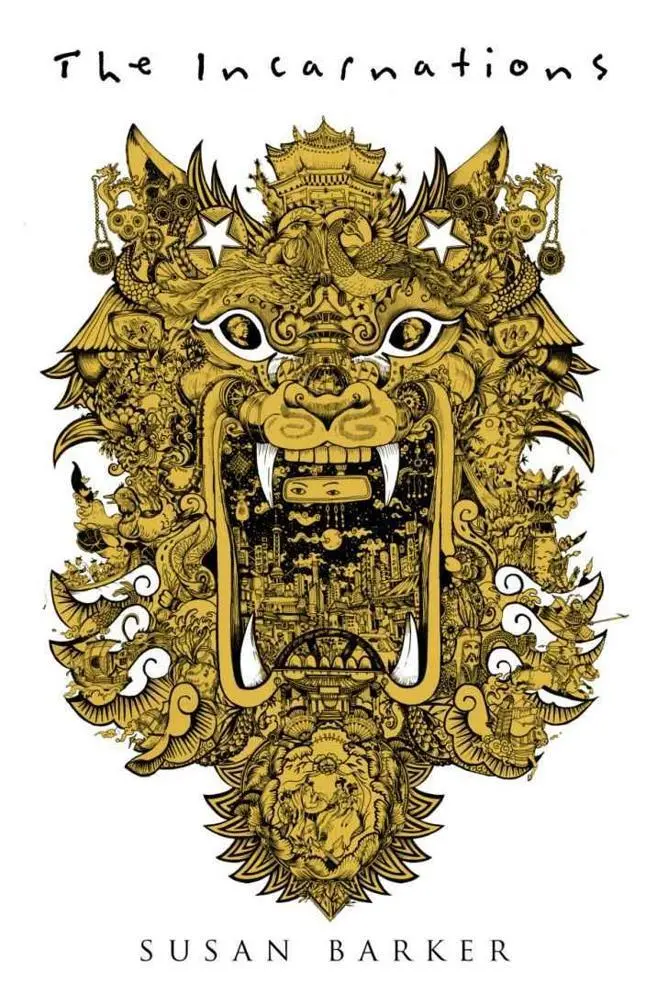
- Название:The Incarnations
- Автор:
- Издательство:Doubleday
- Жанр:
- Год:2014
- ISBN:нет данных
- Рейтинг книги:5 / 5. Голосов: 1
-
Избранное:Добавить в избранное
- Отзывы:
-
Ваша оценка:
The Incarnations: краткое содержание, описание и аннотация
Предлагаем к чтению аннотацию, описание, краткое содержание или предисловие (зависит от того, что написал сам автор книги «The Incarnations»). Если вы не нашли необходимую информацию о книге — напишите в комментариях, мы постараемся отыскать её.
I dream of sixteen concubines, plotting to murder the sadistic Emperor Jiajing.
I dream of the Sorceress Wu lowering the blade, her cheeks splattered with your blood.
I dream of you as a teenage Red Guard, rampaging through the streets of Beijing.
I am your soulmate, Driver Wang and now I dream of you.
You don't know it yet, but soon I will make you dream of me…
A stunning tale of a Beijing taxi driver being pursued by his twin soul across a thousand years of Chinese history, for fans of David Mitchell.
The Incarnations — читать онлайн бесплатно полную книгу (весь текст) целиком
Ниже представлен текст книги, разбитый по страницам. Система сохранения места последней прочитанной страницы, позволяет с удобством читать онлайн бесплатно книгу «The Incarnations», без необходимости каждый раз заново искать на чём Вы остановились. Поставьте закладку, и сможете в любой момент перейти на страницу, на которой закончили чтение.
Интервал:
Закладка:
Socialist Flower smiles uncertainly. She holds the bottle over my head, not sure what to do.
‘We are disciplining Moon for laughing at Comrade Po during today’s lesson in “Recalling with Bitterness the Exploitation of the Peasant Classes by Evil Landlords”,’ explains Long March. ‘Moon’s laughter is evidence of her counter-revolutionary views.’
‘Moon’s too timid to raise her hand, never mind laugh at a speaker in class,’ you say scornfully. ‘Leave her alone now. You’ve splashed blood on her already. You’ve gone far enough.’
Frustration twists Long March’s pretty face into ugliness. ‘But Liya,’ she says sharply, ‘Yi Moon is a class enemy and must be punished!’
‘I said, “Leave her alone,”’ you repeat.
Silence. They let me go, and I wipe frantically at my mouth and chin. Long March fumes as though she wants to snatch the bottle from Socialist Flower and smash it over your head. But she doesn’t dare protest. Your father is a high-ranking Party official, chauffeured to Zhongnanhai every morning in a black car that glides through the streets of Haidian. One word to your father and higher Communist powers would come down on Long March like a People’s Liberation Army boot stamping on a cockroach. You command respect and obedience from every student in our school. But power hasn’t corrupted you. Recognizing that Long March’s pride has been wounded, you say in a conciliatory tone, ‘Go on ahead, Long March. Go and start the Youth League meeting without me. You can lead the meeting tonight.’
Long March nods, placated to be put in charge. ‘Capitalist parasite,’ she hisses at me.
And our classmates walk away. They turn the corner of Vinegar Makers Alley, and we are alone. I stammer my thanks and you lean on the handlebars of your bike and regard me with your clear, strong gaze. Your short hair frames a striking face, with high cheekbones and eyes as determined as those of a heroine in a propaganda poster. Every year you are cast as the revolutionary lead in the school play, but this is as much down to your birthright as your good looks. Before he became a Party official, your father fought the Nationalists, then served as a commander in the Korean War (sacrificing his right eye during hand-to-hand combat with an American soldier in Pyongyang). Some people are born to stand out from the crowd and lead, I think, gazing at you in admiration. You gaze back as though thinking the opposite of me.
‘Pig’s blood,’ you say. ‘You better rinse your clothes in cold water when you get home.’
Pig’s blood . Nausea turns my stomach, and I wipe again at my blood-smeared mouth.
‘Long March goes too far,’ you admit. ‘I’ll speak to her. I’ll ask her to stop these attacks.’
‘Why does she hate me so much?’ I ask.
I expect you to say it’s because Long March is a staunch Communist and vigilant with class enemies. But instead you say, ‘Long March is an unhappy person. People who are unhappy often hurt others.’
I consider this, and then say dismally, ‘But I am unhappy. I don’t go around bullying people.’
‘That’s because you haven’t had the chance.’
Then you are gone. Pedalling up Vinegar Makers Alley to catch up with your friends, leaving me with the pale wisps of your strange remark lingering in the freezing air.
When I get home, I go straight to the communal standpipe in our courtyard and crouch by the spluttering tap to wash the blood from my hands and face. I strip off my jacket and throw it in the bucket underneath. Shivering in my vest, I plunge my hands in the near-frozen water to scrub out the blood before my mother catches me. But my timing is bad, and she emerges from our room with a bowl of carrots to be rinsed.
‘Why are you washing your jacket, Moon?’ she asks.
‘I spilled red paint in art class,’ I say. ‘We were painting political slogans and I knocked the paint pot over.’
The wrinkles deepen around my mother’s concerned eyes. ‘Little Moon,’ she says, ‘tell me the truth. What happened? Are your classmates picking on you again?’
I stare into the bucket, watching the blood eddying in the water. My mother puts down the soil-muddy carrots, places her hand on my shoulder, and asks, ‘Do you love Chairman Mao with all your heart?’
I nod. Of course I do.
‘Well, Moon, you must let your love of Chairman Mao shine out. When those girls recognize that love, shining for Chairman Mao in your heart, they will leave you alone.’
I nod. ‘Okay, Ma.’
My mother smiles a drained, tired smile. Since my father was sent to Qinghai, her belief in Chairman Mao and the Party has become very devout. It’s not enough, she says, to be revolutionary merely in action. It’s not enough to take up a spade and toil for sixteen hours a day when the Party conscripts you to dig a reservoir by the Ming Tombs. It’s not enough to spend every waking hour chasing sparrows, rats, mosquitoes and flies when the Party tells us the Four Pests must be eradicated. It’s not enough to melt our pots and pans in backyard furnaces when the Party tells us our national iron production must overtake the West’s. To be revolutionary merely in action is not enough. If you don’t love Chairman Mao in your heart of hearts, the Party will find out, like they found my father out. They will arrest you and send you away to Qinghai.
My mother squats down and gently nudges me from the bucket. ‘Let me wash that for you, Moonbeam,’ she says. ‘Go indoors and warm up by the stove.’
My mother plunges her arthritic hands into the pig’s-blood-tainted water and scrubs. Shivering, I stand up, and as I cross the courtyard to our room, I see Granny Xi glaring at me out of her window. After my father was convicted as a rightist, Granny Xi organized a petition, calling on the Residents’ Committee to evict us. Though the petition was signed by the other families in the courtyard, we haven’t yet been served an eviction notice. Offended that we are still here, our neighbours refuse to look at my mother and me. Granny Xi glares right at us, though. She makes her hatred of class enemies known.
The next morning I wake at six, wash and get dressed. Mother serves breakfast, then scolds my lack of appetite as I struggle to eat her rice porridge (‘Think of all the starving children in America!’). At seven I say goodbye and leave. But instead of going to the Beijing No. 104 Middle School for Girls, I go to the local junk yard and wait until my mother leaves for her cleaning job. Then I return to our room and daydream the rest of my day away.
I don’t go to school for three days. I know that Teacher Zhao will send a letter to my mother, and I will be caught. But whatever punishment lies in wait is worth the respite from my classmates’ hate.
There is a knocking on our door in the evening. Mother stiffens and lowers the woollen sock she is knitting, and we exchange nervous looks. Since father was sent to the labour camp, no one has come to visit us. A knocking in the night can only be bad news.
‘Who is it?’ my mother calls anxiously.
‘Zhang Liya. I have come to speak to Yi Moon.’
My mother leaps up and throws open the door, as though to keep you waiting for even a second would be a grave discourtesy.
‘Zhang Liya!’ she cries. ‘What an honour! Come in!’
My mother trips over her feet as she fetches you a chair, then apologizes profusely for the chair’s wobbly legs. You sit down and Mother brings you a cup of tea, which you politely accept and sip beneath my mother’s astonished gaze. Though I am embarrassed by my mother’s bowing and scraping, I am just as stunned to see Zhang Liya, daughter of an eminent Communist official, in our dingy, cramped room of broken furniture and smoke-sooty walls. Sensing that you want to talk to me privately, my mother says brightly, ‘Excuse me, Zhang Liya, but I must go to the store to buy some eggs!’ And before we can point out that the shops closed hours ago, she grabs her coat and dashes out into the freezing night.
Читать дальшеИнтервал:
Закладка:
Похожие книги на «The Incarnations»
Представляем Вашему вниманию похожие книги на «The Incarnations» списком для выбора. Мы отобрали схожую по названию и смыслу литературу в надежде предоставить читателям больше вариантов отыскать новые, интересные, ещё непрочитанные произведения.






Обсуждение, отзывы о книге «The Incarnations» и просто собственные мнения читателей. Оставьте ваши комментарии, напишите, что Вы думаете о произведении, его смысле или главных героях. Укажите что конкретно понравилось, а что нет, и почему Вы так считаете.