Susan Barker - The Incarnations
Здесь есть возможность читать онлайн «Susan Barker - The Incarnations» весь текст электронной книги совершенно бесплатно (целиком полную версию без сокращений). В некоторых случаях можно слушать аудио, скачать через торрент в формате fb2 и присутствует краткое содержание. Год выпуска: 2014, Издательство: Doubleday, Жанр: Современная проза, на английском языке. Описание произведения, (предисловие) а так же отзывы посетителей доступны на портале библиотеки ЛибКат.
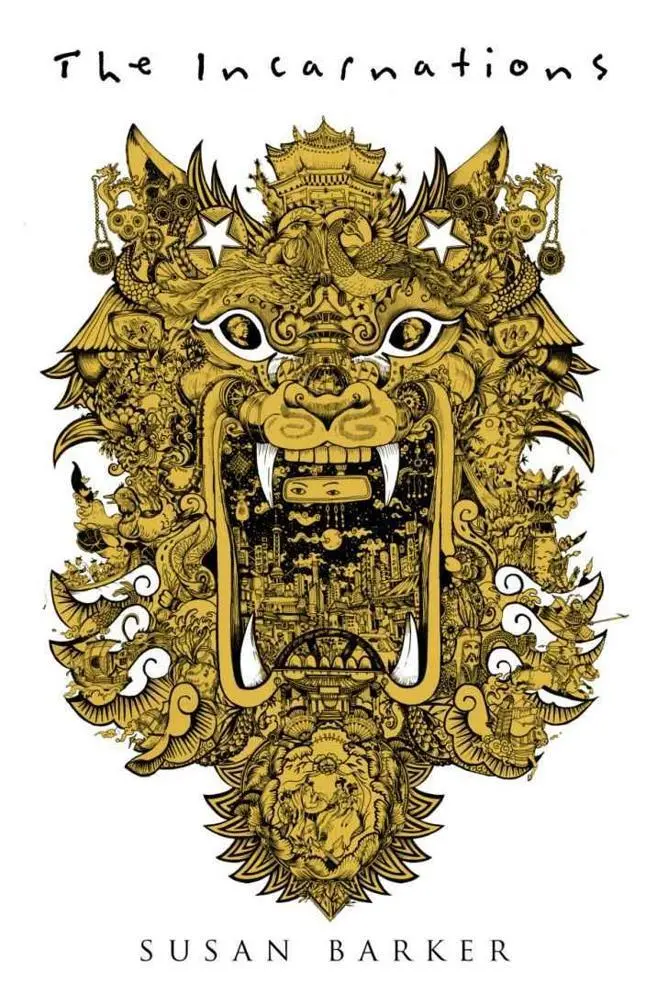
- Название:The Incarnations
- Автор:
- Издательство:Doubleday
- Жанр:
- Год:2014
- ISBN:нет данных
- Рейтинг книги:5 / 5. Голосов: 1
-
Избранное:Добавить в избранное
- Отзывы:
-
Ваша оценка:
The Incarnations: краткое содержание, описание и аннотация
Предлагаем к чтению аннотацию, описание, краткое содержание или предисловие (зависит от того, что написал сам автор книги «The Incarnations»). Если вы не нашли необходимую информацию о книге — напишите в комментариях, мы постараемся отыскать её.
I dream of sixteen concubines, plotting to murder the sadistic Emperor Jiajing.
I dream of the Sorceress Wu lowering the blade, her cheeks splattered with your blood.
I dream of you as a teenage Red Guard, rampaging through the streets of Beijing.
I am your soulmate, Driver Wang and now I dream of you.
You don't know it yet, but soon I will make you dream of me…
A stunning tale of a Beijing taxi driver being pursued by his twin soul across a thousand years of Chinese history, for fans of David Mitchell.
The Incarnations — читать онлайн бесплатно полную книгу (весь текст) целиком
Ниже представлен текст книги, разбитый по страницам. Система сохранения места последней прочитанной страницы, позволяет с удобством читать онлайн бесплатно книгу «The Incarnations», без необходимости каждый раз заново искать на чём Вы остановились. Поставьте закладку, и сможете в любой момент перейти на страницу, на которой закончили чтение.
Интервал:
Закладка:
You sit, hands in lap, in the wobbly-legged chair. Your deep-set eyes drift over the used tea leaves Ma has spread out to dry on newspaper (to brew second or third pots), and our damp underwear pegged on a line above the coal-burning stove, which leaks headachey fumes. Your gaze comes to rest on me.
‘Yi Moon, Teacher Zhao wants to know why you haven’t you been in school.’
‘Oh. .’ I say, flushing. ‘Stomach flu. .’ I am a clumsy liar, and I look down at my lap, flustered.
‘I spoke to Long March,’ you say, brushing aside my lie, ‘and Long March has given me her word that she won’t bully you any more. I spoke to Teacher Zhao too, and she has promised that if you are back at your desk tomorrow, you won’t be disciplined for missing school.’
I stare at you, speechless. How did you convince Teacher Zhao to bend the rules for another pupil? How can a fifteen-year-old have such power and sway?
‘You must go back to school, Yi Moon,’ you urge, ‘or you will make everything worse for yourself. .’
What could be worse than school? I think. But I nod and say, ‘Thank you, Zhang Liya. I will be back in class tomorrow.’
You nod back, satisfied. Then you stand and go to the door. Out in the courtyard, I watch you kick up the kickstand of your Flying Pigeon. Your eyes obscured in the darkness, I am suddenly emboldened enough to ask, ‘Zhang Liya, why are you being so kind to me?’
You look at me uncertainly. Then you wheel your bicycle out the gate, leaving my question unanswered in the night.
Back at school, everything is as you said. Teacher Zhao nods her salt-and-pepper head in approval when she sees me at my desk. Though I have no note from my mother, she doesn’t ask about my absence. Long March and her gang don’t ask either and go on braiding each other’s hair and singing ‘The East is Red’ before the morning bell. The day goes on and no one shoots me any hateful looks. No one ‘accidentally’ barges into me or trips me up. No one hisses ‘Stinking Rightist’ in the hall. There’s no opening of my desk lid to find a pot of glue poured over my books. It’s as though there’s an invisible circle around me that no one dares cross.
During the breaks from lessons, I roam the playground on my own then read in a corner of the library. Most girls would be miserable to be cast out by their classmates. Most girls would be forlorn. But after Long March and her gang’s long campaign of hate, I am relieved.
On Sunday morning, I am studying a history book about the Communists’ defeat of the Japanese devils in the War of Resistance against Japan, when there is a knock at the door. My mother puts down the handkerchief she is embroidering with ‘Long Live Chairman Mao’ and goes to answer. I hear your strong, distinctive voice, but don’t catch your words.
‘Wait a moment!’ my mother shrills in excitement. ‘I’ll ask her!’ She turns back into our dark hovel, skirt and apron flaring. ‘Zhang Liya wants to know if you’ll go on a bike ride with her!’
‘But I don’t own a bike.’
Bells are trilling outside. I put my homework aside and go to the door. In the courtyard you stand holding two shiny, brand-new Flying Pigeons by the handlebars. Your short hair is tucked behind your ears and you look military and tough in your father’s hand-me-down People’s Liberation Army jacket.
‘Which bicycle do you want, Moon?’ you ask. ‘The red one, or the blue?’
We cycle through Haidian, past Tsinghua University, to the ruins of the Old Summer Palace, torched by the British and French devils during the Qing Dynasty. We climb off our bikes and push them by the handlebars as we walk amongst the collapsed pillars and arches of the once-majestic palace, now desolate and overgrown with weeds. We trample through the withered grasses and you say sombrely, ‘These ruins symbolize how weak China was before Liberation. How fortunate we are that Chairman Mao taught our nation to stand up and be proud!’
I nod. I vehemently agree.
‘Chairman Mao would never have let the foreign devils ransack our palaces! He would have sent out the People’s Liberation Army, one million strong, to destroy them!’
You smile at this. The wind blows your short hair up from the roots, and your eyes shine with patriotic pride. ‘After high school I am going to join the army and fight to defend our motherland,’ you declare. ‘And when I can no longer fight, I will serve the people by becoming a Party official. I’m not going to university. I’d rather have adventures than learn from books.’
Though I have no desire to be a soldier or politician, I envy your ambition. I envy your confidence that your ambitions will be fulfilled. ‘What about you, Yi Moon?’ you ask. ‘What will you do after school?’
‘The government will assign me a job,’ I say quietly. ‘I will most likely end up as a cleaner like my mother.’
You frown at me, concerned. ‘Why are your ambitions so low?’ you ask. ‘You are very clever. You could study at Tsinghua if you wanted. You could be more than a cleaner. .’
I want to explain that I will never go to university because of my father. But I remember my mother’s advice: Before you so much as breathe, think about whether it could be misconstrued as a criticism about the Party . ‘Misconstrued’ because my mother and I have no criticisms. We support everything the Party does.
‘Ordinary workers are important,’ I say. ‘They serve the people and the motherland too. I will be proud to be a cleaner, and will work my hardest at the job.’
You nod, accepting that I will be content to mop floors for the rest of my life. And suddenly I am heavy of heart, for my future looks as bleak and hopeless as my life now.
At dusk we cycle to a noodle shop in Wet Nurse Alley, where the owner greets you like a visiting dignitary and immediately serves us two bowls of noodles with ground beef.
‘This costs a week of my mother’s wages,’ I gasp, reading the menu. ‘I can’t afford this!’
‘Don’t worry,’ you say casually. ‘My father has an account here. He has accounts in most places in Haidian.’
The delicious aroma of beef rises from the noodles. The last time I ate meat was during the Spring Festival, nearly a year ago, and I bury my head and chopsticks in the bowl, slurping up the noodles and broth. When the bowl is empty, I belch and wipe my mouth, and am ashamed to see that you have been watching me. How greedy I must have looked. Your own noodles are untouched.
‘We can’t be friends at school, Moon,’ you say. ‘You understand why, don’t you?’
I understand why. You are as red and glorious as our national flag, and I am as black as the grime under a convicted rightist’s fingernails. Of course I understand why. But I still feel slapped.
‘Then why be my friend at all, Liya?’ I ask. ‘Why bother with a friendship that must be kept secret?’
You widen your eyes in surprise at my question. ‘How could I not want to be your friend, Moon?’ you say. ‘When I am with you I’m so at ease. It’s as though I have known you all my life. .’
Your praise makes me blush, and I forgive you at once. Your request is understandable, and it’s selfish of me to take offence.
‘I understand, Liya,’ I say. ‘It’s important that you maintain your red status, so you can one day fight for Chairman Mao and our motherland. I don’t mind if we can’t be friends at school. I am lucky to get to be your friend at all.’
You smile at me, your deep-set eyes wells of gratitude. And I smile back, hoping that my understanding will last. Hoping resentment won’t creep back in.
The next weekend, when your father is away on Party business in Beidaihe and your stepmother visiting relatives in Tianjin, you invite me to stay at your home. You live in a courtyard like me, but whereas six families are crowded into our ramshackle building, the Zhang family have the entire property to themselves. You show me around, and I sigh with envy. The furniture in every room is elegant and skilfully crafted, and as well as portraits of Chairman Mao, delicate bird and flower paintings by a famous Hangzhou artist decorate the walls. But what I envy most is the privacy. Never do you have to listen to your neighbours rowing, or making noisy love, weeping or sneezing, or beating their kids in the next room. You even have your own private bathroom, with a flushing toilet, hot and cold running water, and a wooden bathtub — sparing you trips to the stinking public convenience and the lice-ridden communal bathhouse, crowded with other people’s naked bodies.
Читать дальшеИнтервал:
Закладка:
Похожие книги на «The Incarnations»
Представляем Вашему вниманию похожие книги на «The Incarnations» списком для выбора. Мы отобрали схожую по названию и смыслу литературу в надежде предоставить читателям больше вариантов отыскать новые, интересные, ещё непрочитанные произведения.






Обсуждение, отзывы о книге «The Incarnations» и просто собственные мнения читателей. Оставьте ваши комментарии, напишите, что Вы думаете о произведении, его смысле или главных героях. Укажите что конкретно понравилось, а что нет, и почему Вы так считаете.