Paul Theroux - Blinding Light
Здесь есть возможность читать онлайн «Paul Theroux - Blinding Light» весь текст электронной книги совершенно бесплатно (целиком полную версию без сокращений). В некоторых случаях можно слушать аудио, скачать через торрент в формате fb2 и присутствует краткое содержание. Год выпуска: 2006, Издательство: Mariner Books, Жанр: Современная проза, на английском языке. Описание произведения, (предисловие) а так же отзывы посетителей доступны на портале библиотеки ЛибКат.
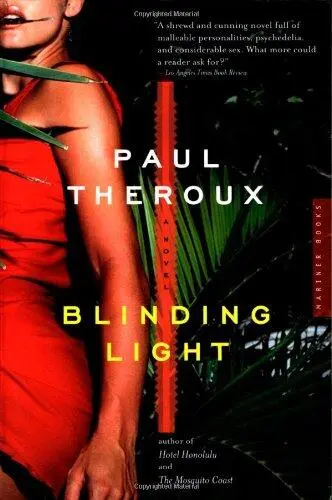
- Название:Blinding Light
- Автор:
- Издательство:Mariner Books
- Жанр:
- Год:2006
- ISBN:нет данных
- Рейтинг книги:5 / 5. Голосов: 1
-
Избранное:Добавить в избранное
- Отзывы:
-
Ваша оценка:
Blinding Light: краткое содержание, описание и аннотация
Предлагаем к чтению аннотацию, описание, краткое содержание или предисловие (зависит от того, что написал сам автор книги «Blinding Light»). Если вы не нашли необходимую информацию о книге — напишите в комментариях, мы постараемся отыскать её.
Blinding Light — читать онлайн бесплатно полную книгу (весь текст) целиком
Ниже представлен текст книги, разбитый по страницам. Система сохранения места последней прочитанной страницы, позволяет с удобством читать онлайн бесплатно книгу «Blinding Light», без необходимости каждый раз заново искать на чём Вы остановились. Поставьте закладку, и сможете в любой момент перейти на страницу, на которой закончили чтение.
Интервал:
Закладка:
“Do you love it?”
“I love it,” he said.
“Now do as I say.”
Then, after she had cared for him, searching his body in the most intimate way, she insisted that he please her — and he was unexpectedly gladdened as the moans crept from her throat, as she directed his hand or, opening her legs, seized his head with all her fingers and thrust it against her, smearing his face with her desire.
He loved his nights with her for her demands, and her fairness, for she encouraged him in his demands. Whole greedy nights of saying nothing, or muttering disconnected words in a darkness in which their hands spoke and everything was allowed, everything insisted upon. Or the opposite: talking all night, pressed together, kissing, telling each other their most elaborate fantasies. And the intensity of their singleminded desire kept them strangers to each other, communicating on the lowest frequencies, dwelling on their satisfactions, loving what they shared, and needing each other for their secrets.
Their secrets were safe — trust was what bound them together in the beginning, as they became ever more candid about their needs. At the same time, all this while, Ava remained a woman in white, the most skillful doctor at the hospital; and he began to work with greater confidence and with renewed imagination, the inaccessible writer in his up-island seclusion, smiling again. Yet still they remained strangers. Their lives were separate, only the act of sex joined them, they knew each other in the dark but nowhere else. They did not believe they had any future, and felt certain that all desire, fierce as it seemed, hot as it might burn, had an end in ashes that cooled and dispersed like the dust they were.
Steadman loved having her because he had so little else in his life. Charlotte was gone. He did not resent the divorce, but he questioned his own judgment: how could he have been so wrong about her? The girlfriends were gone, too. After his first struggles to be alone on the Vineyard, with his curt answers, his evasiveness, his lack of cooperation, he had actually succeeded in keeping people out of his life — and, at last, after the first years of his reclusiveness, keeping the press and interviewers away, they ceased to care. He had no new book. He slipped beneath the surface of events and seemed to sink. Except for the summer people who invited him to parties and were polite about his work, keeping their inquiries vague, there was no one. The summer people were his friends, though, and more than that: for a season they were his world. When they left around Labor Day he had remained on the Vineyard, wondering what to do with himself. Now he knew. He had Ava.
Of course everyone talked, for on the island, summer people and locals alike were passively nosy in the Vineyard manner, watchful while pretending not to care, and always alert for gossip. They were noted for their attention to detail and for their long and remorseless memories. They knew he was having an affair; they knew with whom. His car, her car, the groceries, his movements, even his moods, his happiness — it was all monitored and noted and whispered about. People were glad for him, for her too, for though she was a recent arrival and was hardly known, she was respected for her efficient doctoring. The islanders took an ignorant pleasure in commenting on how different the two people were, the wealthy risk-taking writer with local roots and the modest physician from off-island. Steadman was aware of those rumors and thought: If only they knew how reckless and greedy she was, how depraved and demanding, how lavish in bed, how she made a happy slave of him.
“Desire me,” she said. She was content, she almost crooned the words. “You don’t have to love me. Love is a burden. It’s a pain. It causes unhappiness. Just be my friend.”
He knew the deceptions of love and its meaningless language. He told her that it was also a delusion. It came, it went, and made you crazy. It was mainly about wanting to possess someone. Sex was something else: it promised nothing, it had no future, it was magic enacted entirely in the present. They did not expect the affair to last. They hardly met in the daytime, they made few plans, and Steadman assumed that the ashes of their desire, the useless fragments and residue of its end, were not far off.
She knew that without his saying so; she always seemed to know what he was thinking, and when he was sunk in silence, she knew what was in his mind.
“If I ever write anything more,” he said, “it will be about this — us — the feeling in the flesh, the two of us at our most monkey. How the truth can be drawn from sexual pleasure. Knowing that we are going to die. Everything that lies beyond love.”
The way he dismissed the delusions of hope and the self-deception of future plans and the farce of romance moved her. She said, “I’m glad we found each other. I want to be your friend. It’s purer. It’s much better. Friendship asks nothing, it gives everything, and friendship with desire is paradise.”
“I agree. Love doesn’t make you better. It excludes the whole world. For a brief period you have an adoring partner, and later an enemy. Love is like some horrible twisted religion the way it changes you. And afterward, when love ends, you’re lost.”
“Please don’t marry me,” she said one day outside the hospital, still smelling of disinfectant. She laughed with conviction: the words were like an aphrodisiac to them both.
“I promise. I will never marry you,” he said, and embraced her, kissed her, feeling beneath her loose clothes and her doctor’s smock, the girlishness of her eager body.
“Let’s be friends.”
“Yes, yes.”
“We have no future,” she said.
“None at all.”
From his marriage to Charlotte he had learned love, and you could not know love without knowing its opposite. He remembered now how his marriage had ended and the love soured and he had been cut loose — like one of those mute and damaged men released after a long spell in prison who find they cannot function in the crowded world of decent people, and turn to crime again, and get sent back to a cell to sulk. That was how dangerous he regarded loving. It was waywardness and weakness and failure.
“Friendship is so much better,” Ava was saying. “You have to love your lover, but you can be truthful to your friend. Love isn’t blind — it’s sickness, it’s surrender.”
The extravagant talk was the self-conscious reassurance of two people passionately attached and at pains to be kind to each other, aching for each workday to end, for night to fall so they could be together.
She, the stronger, more confident one, strengthened him. The manner in which she bucked him up made him long for her.
“This is what I want you to do to me tonight,” she would say, usually in public, a bar, a restaurant, the supermarket, a neutral place where they would hold hands, nothing more. And she would describe in the minutest detail where she wanted to be touched, and how, and what she would be wearing, and the way she wanted him to be dressed. It was her script for the evening, but it was not complete until she said, “And this is what I want to do to you.”
In these fevered dialogues, in her insistence on order and ritual, the stages of their lovemaking, she could be almost clinical, as if running through the phases of what would be a brilliant but tricky operation, the object of arousing her, bringing her to orgasm. But when the time came, what ensued was anything but tidy, and it was less like an operation than the rehearsal of a black mass.
“You have more germs in your mouth than in your ass, didn’t you know that?” she said, turning him over and tonguing him. And when she was done, she said, “Now it’s my turn for a black kiss.”
Читать дальшеИнтервал:
Закладка:
Похожие книги на «Blinding Light»
Представляем Вашему вниманию похожие книги на «Blinding Light» списком для выбора. Мы отобрали схожую по названию и смыслу литературу в надежде предоставить читателям больше вариантов отыскать новые, интересные, ещё непрочитанные произведения.







Обсуждение, отзывы о книге «Blinding Light» и просто собственные мнения читателей. Оставьте ваши комментарии, напишите, что Вы думаете о произведении, его смысле или главных героях. Укажите что конкретно понравилось, а что нет, и почему Вы так считаете.