Boris Fishman - A Replacement Life
Здесь есть возможность читать онлайн «Boris Fishman - A Replacement Life» весь текст электронной книги совершенно бесплатно (целиком полную версию без сокращений). В некоторых случаях можно слушать аудио, скачать через торрент в формате fb2 и присутствует краткое содержание. Год выпуска: 2014, Издательство: Harper, Жанр: Современная проза, на английском языке. Описание произведения, (предисловие) а так же отзывы посетителей доступны на портале библиотеки ЛибКат.
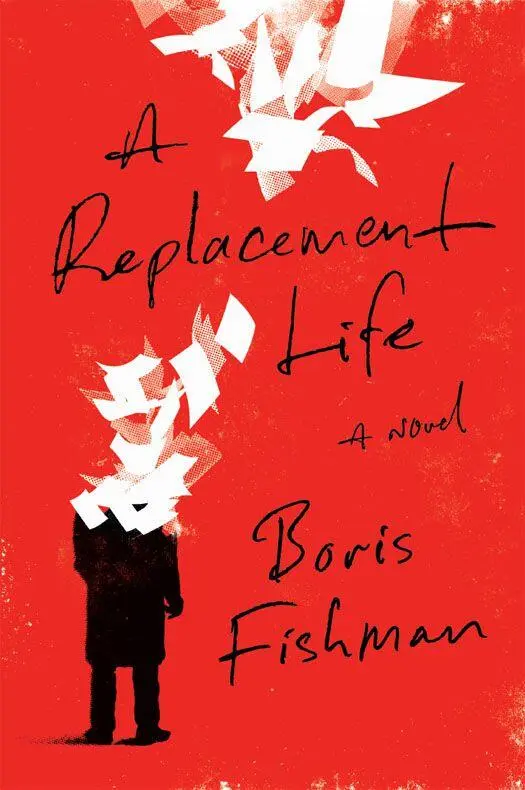
- Название:A Replacement Life
- Автор:
- Издательство:Harper
- Жанр:
- Год:2014
- ISBN:нет данных
- Рейтинг книги:3 / 5. Голосов: 1
-
Избранное:Добавить в избранное
- Отзывы:
-
Ваша оценка:
A Replacement Life: краткое содержание, описание и аннотация
Предлагаем к чтению аннотацию, описание, краткое содержание или предисловие (зависит от того, что написал сам автор книги «A Replacement Life»). Если вы не нашли необходимую информацию о книге — напишите в комментариях, мы постараемся отыскать её.
Yevgeny Gelman, grandfather of Slava Gelman, "didn't suffer in the exact way" he needs to have suffered to qualify for the restitution the German government has been paying out to Holocaust survivors. But suffer he has-as a Jew in the war; as a second-class citizen in the USSR; as an immigrant to America. So? Isn't his grandson a "writer"?
High-minded Slava wants to put all this immigrant scraping behind him. Only the American Dream is not panning out for him-Century, the legendary magazine where he works as a researcher, wants nothing greater from him. Slava wants to be a correct, blameless American-but he wants to be a lionized writer even more.
Slava's turn as the Forger of South Brooklyn teaches him that not every fact is the truth, and not every lie a falsehood. It takes more than law-abiding to become an American; it takes the same self-reinvention in which his people excel. Intoxicated and unmoored by his inventions, Slava risks exposure. Cornered, he commits an irrevocable act that finally grants him a sense of home in America, but not before collecting a price from his family.
A Replacement Life is a dark, moving, and beautifully written novel about family, honor, and justice.
A Replacement Life — читать онлайн бесплатно полную книгу (весь текст) целиком
Ниже представлен текст книги, разбитый по страницам. Система сохранения места последней прочитанной страницы, позволяет с удобством читать онлайн бесплатно книгу «A Replacement Life», без необходимости каждый раз заново искать на чём Вы остановились. Поставьте закладку, и сможете в любой момент перейти на страницу, на которой закончили чтение.
Интервал:
Закладка:
Slava had taken the first steps up to the station when he saw him. There was no way to miss Israel Abramson — literary aspirant, anti-clericalist, subject of Slava’s second letter — crossing Eighty-Sixth Street. In ninety-degree weather, in his Red Army uniform, faded but crisp, a few medals swinging gently in cadence with his wavering, stiff-jointed lurch.
Israel took the sidewalk the way he had taken Kharkov during the war: left foot, right shoulder, right foot, left shoulder. He walked through the busiest thoroughfare in Bensonhurst, six lanes if you counted the side arteries where cars pulled off to double-park, as if tugging himself through an empty field. A bus blazed by, messing his hair; he didn’t even look up. Slava’s heart slid from his chest. He set off after Israel, but at a distance. He didn’t want him to die, but he didn’t want to embarrass him, either.
Crossing Eighty-Sixth, Slava was nearly sideswiped himself, young men staring sunkenly from the windows of an aircraft carrier masquerading as an SUV. “Vot you doo, fahk!” shouted a leery face with smoked-out eyes as the car passed. “I keel you, ha!” As American yearlings, the parents had driven shit-brown Cutlasses and rusty blue Buicks, but now they were able to purchase nice cars for the children.
Israel waddled across Benson Avenue, then Bath, then Cropsey. They were nearly in the ocean before he turned. When he finally stopped, they were in front of a stone building identified by a modest sign out front: Temple Beth-El. Israel regarded unhappily the mountain of steps that led to its heavy wood doors. He leaned on the iron railing that climbed to the doorway, mopped his forehead with a handkerchief, and began his ascent. Left hand clutching the railing, the right foot jerked to the next step, dragging the right shoulder along. Then the left half of him. He paused on every other step, breathing hard.
Five minutes later — maybe longer; Slava was transfixed — Israel’s shaking fingers waved at the door, trying to hook the handle. He yanked, nearly toppling, and disappeared inside. Slava emerged from the shelter of a heat-addled spruce and followed, taking two steps at a time. Midway up, he slowed. It felt heartless to fly up after what it had cost the older man.
Shabbat shalom. Inside, Israel was nodding his way down the aisle as he dragged himself toward a small table where memorial candles burned. A man in a skullcap, who stood with the firmness of someone who belonged to the premises, watched Israel with a polite smile, several other worshippers whispering among themselves in a corner. “Shabbat shalom,” Israel said. “Shabbat shalom.” But it was only Thursday night.
Dust swam in the last light filtering through the stained-glass windows on the balcony level. The panels ran the length of the four walls, like a seating gallery. The ceiling was a soaring cupola. Slava had always thought that this was what churches looked like. He had never been inside a synagogue.
Israel pulled himself to the table with candles and turned to face the rabbi. The rabbi nodded, opened a bureau, and withdrew a tasseled white cloth lined with blue stripes. He walked up to Israel, opened it with the precision of a soldier unfolding a flag, and draped it gently over Israel’s head and shoulders. When the rabbi stepped away, Israel addressed the table. “ Dos ist for mayn wife ,” he roared in Anglo-Yiddish. The flame of the candle in his hand met the wick of another. Then he muttered something that Slava was too far away to hear. Israel stood for a minute or two, his head bent over the candles, the edges of the tasseled cloth threatening to slide into the flames.
When he was finished, he removed the cloth from his shoulders and began to join the ends neatly. The rabbi stood to the side; it was clear that he had tried to intervene before, without use. Shakily, Israel brought the upper ends in to his chest, as if embracing someone. Pinching two joined corners in his left hand, he ran his right between the edges of the sheet, then pinched the other two corners. His fingers shook. Holding the joined ends in both hands, he turned the cloth ninety degrees and brought it again to his chest. He repeated the folding pattern until the cloth was a simple blue and white square barely larger than his palm, like a flag for the fallen. He placed it gently in the rabbi’s hand, kissed him on the cheek, and began the journey toward the door, hauling it open with the whole of himself.
The rabbi had to call out to Slava a second time. Slava had concealed himself in a corner, where he was pretending to make a careful study of the columns and stained glass.
“Yes,” Slava answered. “Sorry, yes.”
The rabbi smiled. “I said, what brings you by? First time in a synagogue?”
“I saw an interior once from the door,” Slava said. “In Vienna.”
“The Vienna synagogue?” the rabbi said. He had a light, carefully trimmed beard.
“I don’t know,” Slava said.
“Big?” He opened his hands.
Slava nodded. The aid society, which would not leave the Gelmans alone, had organized a bus trip to a synagogue.
“Before the war in Vienna,” the rabbi said, “only a church could stand freely. So when they built that synagogue, they had to connect it to a residential building. And so they also had to make it look similar, I mean aesthetically. So in 1938, when the Nazis were trashing Jewish property, they skipped it. They thought it was a regular old apartment building. Isn’t that a story?”
Slava nodded, trying to think of a way to extricate himself. His mark was vanishing into the evening.
“You know that man?” the rabbi said, indicating the doorway.
Slava shrugged.
“Comes every week. I’ve tried to show him”—he gestured at the bureau that held the tasseled cloth—“but he likes it his own way. He’s seen more than I’ll ever see, so I leave him alone. Get him a book once in a while or some matzo. We did have his son’s bar mitzvah here. At the ripe old age of thirty-two!”
“Yuri?” Slava said.
“So you know him,” the rabbi said.
Shit. “I’m the grandson,” Slava blurted out. From one hole into a deeper. Never a dawdling organ, his heart throttled in his chest.
“I don’t understand,” the rabbi said.
“Two marriages?” Slava said, inventing.
“I had no idea,” the rabbi said, raising his eyebrows. “But I can see the resemblance, sure. Why were you hiding?”
“You know,” Slava said. “We worry. Crossing the road, things like that. He’s proud, though. Don’t want to embarrass him.”
“I’m Rabbi Bachman,” the rabbi said, approaching and extending his hand. “I should have introduced myself at the start. Wonderful to meet someone who knows Israel. I’d love to see you here with your grandfather some time. Maybe even”—he raised his hands to indicate that a man could hope for only so much—“a service?”
“What was he muttering after he was talking about his wife?” Slava said.
“I’m not sure ,” Bachman laughed. “He’s got a language all his own. If I were guessing, blessings. For his children and grandchildren. For you!” He laughed again. “For his son.” The rabbi shifted his feet. “I know they have a disagreement. Israel didn’t even come to the bar mitzvah. But he’s welcome here no matter what; I don’t see the point of pushing people away. Hey, I bet you speak Russian.”
Slava nodded carefully.
“I’ve had this idea,” Bachman said. “A Russian minyan. A service in Russian once a week. With commentary. I do the English, someone like you does the Russian. And brings the crowd, obviously. We’ll throw a little Hebrew in, too. Is that something you might be interested in? Talk to some people? Maybe start with your grandfather? The neighborhood’s changed a lot in the last decade.”
Читать дальшеИнтервал:
Закладка:
Похожие книги на «A Replacement Life»
Представляем Вашему вниманию похожие книги на «A Replacement Life» списком для выбора. Мы отобрали схожую по названию и смыслу литературу в надежде предоставить читателям больше вариантов отыскать новые, интересные, ещё непрочитанные произведения.









Обсуждение, отзывы о книге «A Replacement Life» и просто собственные мнения читателей. Оставьте ваши комментарии, напишите, что Вы думаете о произведении, его смысле или главных героях. Укажите что конкретно понравилось, а что нет, и почему Вы так считаете.