Boris Fishman - A Replacement Life
Здесь есть возможность читать онлайн «Boris Fishman - A Replacement Life» весь текст электронной книги совершенно бесплатно (целиком полную версию без сокращений). В некоторых случаях можно слушать аудио, скачать через торрент в формате fb2 и присутствует краткое содержание. Год выпуска: 2014, Издательство: Harper, Жанр: Современная проза, на английском языке. Описание произведения, (предисловие) а так же отзывы посетителей доступны на портале библиотеки ЛибКат.
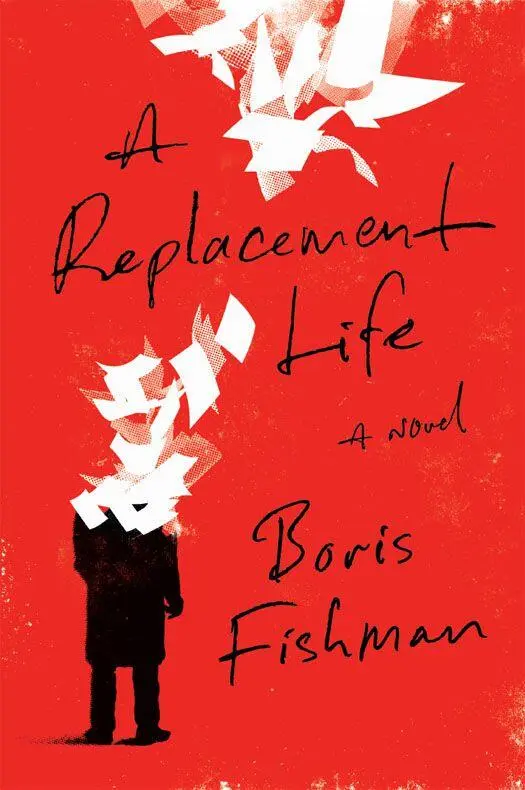
- Название:A Replacement Life
- Автор:
- Издательство:Harper
- Жанр:
- Год:2014
- ISBN:нет данных
- Рейтинг книги:3 / 5. Голосов: 1
-
Избранное:Добавить в избранное
- Отзывы:
-
Ваша оценка:
A Replacement Life: краткое содержание, описание и аннотация
Предлагаем к чтению аннотацию, описание, краткое содержание или предисловие (зависит от того, что написал сам автор книги «A Replacement Life»). Если вы не нашли необходимую информацию о книге — напишите в комментариях, мы постараемся отыскать её.
Yevgeny Gelman, grandfather of Slava Gelman, "didn't suffer in the exact way" he needs to have suffered to qualify for the restitution the German government has been paying out to Holocaust survivors. But suffer he has-as a Jew in the war; as a second-class citizen in the USSR; as an immigrant to America. So? Isn't his grandson a "writer"?
High-minded Slava wants to put all this immigrant scraping behind him. Only the American Dream is not panning out for him-Century, the legendary magazine where he works as a researcher, wants nothing greater from him. Slava wants to be a correct, blameless American-but he wants to be a lionized writer even more.
Slava's turn as the Forger of South Brooklyn teaches him that not every fact is the truth, and not every lie a falsehood. It takes more than law-abiding to become an American; it takes the same self-reinvention in which his people excel. Intoxicated and unmoored by his inventions, Slava risks exposure. Cornered, he commits an irrevocable act that finally grants him a sense of home in America, but not before collecting a price from his family.
A Replacement Life is a dark, moving, and beautifully written novel about family, honor, and justice.
A Replacement Life — читать онлайн бесплатно полную книгу (весь текст) целиком
Ниже представлен текст книги, разбитый по страницам. Система сохранения места последней прочитанной страницы, позволяет с удобством читать онлайн бесплатно книгу «A Replacement Life», без необходимости каждый раз заново искать на чём Вы остановились. Поставьте закладку, и сможете в любой момент перейти на страницу, на которой закончили чтение.
Интервал:
Закладка:
“From New Jersey, they have graced us with their presence,” Lyuba said. She was aiming for playfulness, but the words came out scornfully.
“What are you keeping them outside for?” Garik said. “You’re wasting air-conditioning. Come in, people, come in.”
“It’s Slava,” his mother said, as surprised to see him as the Rudinskys.
“He’s on this side of the door already,” Lyuba said coquettishly.
The person in question examined his grandfather with blazing eyes.
“I’m so happy you’re here,” cried Vera, and ran down the remaining stairs into the hallway. She began to relieve the Gelmans of their bags and setting out house shoes from the closet. Massed in the foyer, the Gelmans obediently began to shed their footwear.
“I’ve cleared the table from dinner already, I just have to set out the china,” Lyuba said.
Grandfather’s nostrils flared. He was always being invited for coffee and cake after a dinner to which he had not been invited.
Dumbfounded, Slava searched out Vera’s eyes, but she avoided him. “Why don’t we sit in the living room?” she announced, and ran into the kitchen to gather provisions. Slava followed her, though he could only stare.
Her hands were deep in a cabinet. She stopped rummaging and looked over at him. “Are you going to help or not?”
“You’re joking, right?” he said. The adults trooped past the kitchen doorway en route to the living room. Lyuba was about to come in, but Vera waved her away. “The good china,” Lyuba hissed from the doorway and winked at Slava, an accomplice.
“Why can’t you let them settle it themselves,” he said to Vera.
“Because they’re children, that’s why,” Vera said.
“I’m leaving,” he said.
“You’re not leaving,” she said. “Help me.” Her expression softened. “Please.”
“He’s charging people,” Slava exclaimed. “Behind my back.”
“I’m sure it’s for you.”
“I don’t want the money!” Slava yelled.
“What’s the matter in there?” they heard from the living room. Vera and Slava stopped to listen. Their bickering had given the adults a subject of conversation. Someone even laughed. “You see?” Vera said to him through her teeth.
The children appeared in the living room carrying two trays of gold-rimmed plates and teacups. Stiff with silence, the adults were wedged into a sofa and love seat, thighs against thighs. The appearance of the children gave them a subject.
“What’s for sale today?” someone asked.
“What does the tea cost?” a second added.
“Just like old times,” someone announced, because it wasn’t like old times at all.
“Today we have a special,” Vera said playfully. “Open house at V and S Alimenti. Free snacks and tea.”
“Hooray,” Slava’s mother said tentatively.
Slava wished violence on all of them. After he set his tray down, he reached into his jeans pocket and pulled out the white envelope. Stepping over Garik’s feet, he thrust it in his grandfather’s face. The conversation stopped. His grandfather looked up at him, fearful and mocking.
“I think this is for you,” Slava said. The white envelope hung between them like a poisonous sun. It anchored a galaxy of fat Russians.
“Can we skip business talk this one time, please?” Vera broke in. She snagged the envelope from Slava’s hands, folded it in half, and wedged it housewifeishly inside her décolletage. “Looks like I’m getting a shopping trip out of all this.” Everyone laughed.
“It’s so nice that you wanted to come,” Lyuba announced when everyone had settled down.
“We wanted to come?” Grandfather said.
“Vera said—” Slava’s mother began.
“Oh, what difference does it make!” Vera cried. “You me, me you… we’re together. We’re together for the first time in almost twenty years.”
“Well, everyone, you look the same,” Garik said, and again they laughed.
“What the fuck did we get ourselves into,” Lazar said, not much hilarity in his voice. He meant America.
“Do you know that some people just stayed in Italy,” Slava’s mother said. She pulled at her tunic.
“If I did it again, I’d stay in Italy,” Garik said. “Do you remember these two?” He pointed at Vera and Slava. “They’d be speaking Italiano by now.”
“But we’re doing well,” Lyuba interjected. “We have almost no mortgage on this house.”
“They have a Nissan Altima and a Ford Taurus,” Grandfather announced, pointing to his daughter and her husband.
“I’d stay all Japanese,” Garik sniffed. “I understand these things.”
“Well, of course, you’re in a taxi all day long.”
“It takes skill,” Garik reminded the older man.
“Wafers?” Vera intruded. “There are cookies and biscuits as well. And what about ice cream?”
While the adults talked, Slava counted. He had written twenty-two letters. Twenty-two times two hundred and fifty was fifty-five hundred. A third of the graves. Or was there a sliding scale? Five hundred for some, two hundred and fifty for others. Did Grandfather say, “Lazar, I charge five hundred. But you let my kid get at your pear-assed progeny, and we’ll make it two-fifty. Just do me a favor, don’t let him know. He’s fragile.”
No. It was Vera who’d done the bribing. She had called Grandfather like an equal: Come over, make peace, and we’ll buy a letter. Slava in this was a marionette. She knew that Slava wouldn’t deny her — was he so obvious, a panting dog? — and with him clearing the way, they would come. She ran circles around him. In public, at Stas and Lara’s, she was his shadow. In private, she achieved what needed achieving. She was as tough as Grandfather — tougher. That’s why he liked her: He saw a kindred spirit. Slava was writing the letters, sure, but the boy was flighty. Slava imagined Vera wearing Grandfather down on the price, the old man charmed by her enterprise. He didn’t want to condescend, however, and made her work for it. They went back and forth: Two hundred. Three hundred. Two-fifty.
Slava inspected Vera with a contemptuous wonder. She felt his eyes and swiveled to face him. Then she pulled out the white envelope and thrust it at him with the eyes of a parent. He took it.
By the time he rejoined the conversation, they were hollering like drunk people. And they were. Vera quickly realized her mistake — what biscuits? They needed cognac. They pulled out the best in the Rudinskys’ possession, a bottle of Rémy Martin VSOP someone had gifted a long time before. (Grandfather reminded them that it was he who had gifted it, it was him.) Thimbles were emptied, lemon wedges sucked down, thimbles emptied again. Gallantly, Garik asked to drink for Slava’s grandmother. The noise ebbed and they gazed mournfully into the crystal in their hands. “It’s nice crystal,” Grandfather said. Then they drank. Eventually, Slava excused himself. They became upset. He said he had a letter to write. Then the waters parted as if for a king.
12
Outside the Rudinskys’, Slava was beset by an urgent desire to flee — to Manhattan, to Arianna’s. Throughout the preceding month, he had retraced back toward Bensonhurst and Midwood every step that he had taken in the opposite direction two years before. It had happened imperceptibly. You do not notice exactly when day becomes night, but you notice night.
He strode toward the subway. The sun was descending, fluorescent bulbs clicking on and casting a pale blue glow over the pears and lettuces in the bodegas. The heavy-breasted women who supervised the discount-clothing emporia that lined Eighty-Sixth Street wheeled in the enticement racks from the sidewalk, and a grandmother who had been selling lepeshki from a foldout table on Bay Twenty-Second Street sang quietly to herself as she stacked the plastic bins into a shopping cart.
Читать дальшеИнтервал:
Закладка:
Похожие книги на «A Replacement Life»
Представляем Вашему вниманию похожие книги на «A Replacement Life» списком для выбора. Мы отобрали схожую по названию и смыслу литературу в надежде предоставить читателям больше вариантов отыскать новые, интересные, ещё непрочитанные произведения.










Обсуждение, отзывы о книге «A Replacement Life» и просто собственные мнения читателей. Оставьте ваши комментарии, напишите, что Вы думаете о произведении, его смысле или главных героях. Укажите что конкретно понравилось, а что нет, и почему Вы так считаете.