Boris Fishman - A Replacement Life
Здесь есть возможность читать онлайн «Boris Fishman - A Replacement Life» весь текст электронной книги совершенно бесплатно (целиком полную версию без сокращений). В некоторых случаях можно слушать аудио, скачать через торрент в формате fb2 и присутствует краткое содержание. Год выпуска: 2014, Издательство: Harper, Жанр: Современная проза, на английском языке. Описание произведения, (предисловие) а так же отзывы посетителей доступны на портале библиотеки ЛибКат.
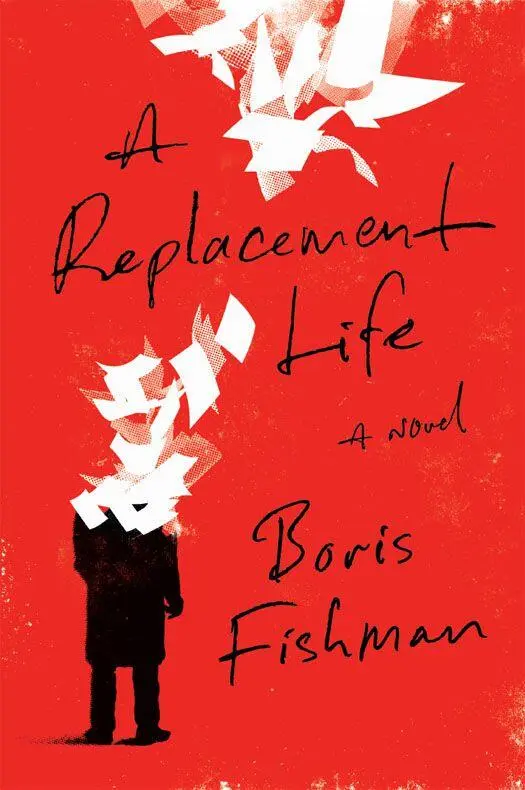
- Название:A Replacement Life
- Автор:
- Издательство:Harper
- Жанр:
- Год:2014
- ISBN:нет данных
- Рейтинг книги:3 / 5. Голосов: 1
-
Избранное:Добавить в избранное
- Отзывы:
-
Ваша оценка:
A Replacement Life: краткое содержание, описание и аннотация
Предлагаем к чтению аннотацию, описание, краткое содержание или предисловие (зависит от того, что написал сам автор книги «A Replacement Life»). Если вы не нашли необходимую информацию о книге — напишите в комментариях, мы постараемся отыскать её.
Yevgeny Gelman, grandfather of Slava Gelman, "didn't suffer in the exact way" he needs to have suffered to qualify for the restitution the German government has been paying out to Holocaust survivors. But suffer he has-as a Jew in the war; as a second-class citizen in the USSR; as an immigrant to America. So? Isn't his grandson a "writer"?
High-minded Slava wants to put all this immigrant scraping behind him. Only the American Dream is not panning out for him-Century, the legendary magazine where he works as a researcher, wants nothing greater from him. Slava wants to be a correct, blameless American-but he wants to be a lionized writer even more.
Slava's turn as the Forger of South Brooklyn teaches him that not every fact is the truth, and not every lie a falsehood. It takes more than law-abiding to become an American; it takes the same self-reinvention in which his people excel. Intoxicated and unmoored by his inventions, Slava risks exposure. Cornered, he commits an irrevocable act that finally grants him a sense of home in America, but not before collecting a price from his family.
A Replacement Life is a dark, moving, and beautifully written novel about family, honor, and justice.
A Replacement Life — читать онлайн бесплатно полную книгу (весь текст) целиком
Ниже представлен текст книги, разбитый по страницам. Система сохранения места последней прочитанной страницы, позволяет с удобством читать онлайн бесплатно книгу «A Replacement Life», без необходимости каждый раз заново искать на чём Вы остановились. Поставьте закладку, и сможете в любой момент перейти на страницу, на которой закончили чтение.
Интервал:
Закладка:
In Arianna’s bed an hour before, he only wanted to leave, but now, without her, he longed for her, as if he had a question and she could answer it. Had he just argued with her because he really disagreed or because he resented receiving instructions? If she claimed to find him interesting, why did she forget to ask his opinion? And when she did, she argued against him. In frustration, he chucked the loaf at the railing. It thudded to the ground, scattering the pigeons. They regrouped and stared at him resentfully. He gave them the middle finger and walked off toward the library.
The Yorkville branch of the New York Public Library swam in lazy yellow light. The children’s section was full of toddlers crawling on the mats and shrieking occasionally to protest their confinement while their mothers murmured over the baby-size tables. Slava found the reference librarian and asked for good books on the Holocaust in the East. Books with dates, numbers, street names. Books to make an invented claim letter read like a beautiful woman who could cook, too, if Israel Abramson were the judge.
“You sure you don’t want Baby Einstein?” the librarian said. He cast a destructive look in the direction of the hollering children. “Research project?”
“Fiction,” Slava said.
The librarian nodded. “That’s all the fashion now.”
Dusk was beginning to settle by the time Slava dialed Israel. Listening to the ring, he watched a man and woman work at a kitchen counter in an apartment across the courtyard, strains of brass in their stereo. Briefly, the music swelled, and she bumped his rear end with hers.
“Hello?” Israel said again.
Slava snapped to. “You’re wrong,” he said.
“Those were my son’s favorite words.”
“I’m sitting here with half the library, Israel. Minsk ghetto — formed date such-and-such.” Slava peered at his notepad. “July twentieth. A hundred thousand inmates. Largest ghetto in German-occupied territory in the Soviet Union. Et cetera.”
“Okay. Very good.”
“First of all, someone applying for restitution is not a historian. The people who wrote these books know how many inmates there were. The people in the ghetto didn’t get a fact sheet.”
“Okay, but they know when it started, they know where they lived.”
“You ever apply for anything, Israel, Yuri ever apply for a scholarship? You’re the guy reading the claims— every claim is going to say it started on July twentieth, we lived at such-and-such an address. But you can’t give him an address. They have records for that. You’ve got to — I don’t know— distract him. You’ve got to make him not care that there’s no address, that there’s actually no verifiable detail. That’s how they check facts, I told you. I know from someone who knows. Tell a story they’ll forget it’s a story. That’s our best chance.”
“Slavchik, my bird, we’re not trying to get into Harvard here. We want to have a boring little story about poor Jews in the Holocaust.” Israel cleared his nose. “Another old Jew, pity, let’s give him a penny. He starts reading Anna Karenina , he’s going to have questions. Babel is dead, my friend. All the best Jews got killed. It’s the boring Jews who got left. Let’s give them a penny. You follow?”
“You’re wrong,” Slava said. “I think.”
“You want to hypnotize him. You want to tell him a nice fairy tale.”
“Something like that.”
There was a pause. “I don’t know,” Israel said. “We’re following you now, Gogol. Do what you think.”
“By the way, Gogol was an anti-Semite,” Slava said.
“And you think Jews are a heap of luck?”
Slava hung up with the pyrrhic satisfaction of a child getting his way. The problem remained. For all the history he read, he couldn’t insert his grandmother into it. Pushing off the endless small-font paragraphs in the books the librarian had given him, he could smell the rain-soaked canvas of the trucks that transported prisoners to their workdays breaking concrete outside the ghetto, but he couldn’t smell her. What kind of brain was it that could run so effortlessly with one thing but not with another? He needed something to start him, but he couldn’t figure out what. No matter what notes Slava made on one of the legal pads he had stolen from the office, the exercise ended in him staring at the wall or at the couple across the courtyard.
Eventually, they left the kitchen. Probably to the dining room to have the dinner they’d made. And then to the bedroom in a buzzed glaze, half-dream, half-reality, the mellowness of body next to body, until they fell asleep, laughably early, the television chattering softly, the bed light carelessly on till the morning.
Around the courtyard, windows were blinking on. Arianna hadn’t called. Strange to be together every weeknight but apart on Saturday. Slava dialed her cell phone, but it rang until voice mail. The evening was his, just as he’d asked.
He pictured Arianna in the ghetto instead of Grandmother. Arianna in the midst of a dusty ghetto street flanked by flower beds outside the windows and small gardens in the backyard — homes, somehow, even if inside a ghetto. How effortlessly Arianna objected to having Grandmother’s money rerouted to Grandfather. (Did she object? She actually prohibited it — gently, chidingly: You can’t.) Not a glimmer of doubt passed over her face. But what if Arianna had eaten potato peels for breakfast and dinner (no lunch) for a year? If she had watched the pale skin come off her beautiful legs from wading in swamps day after day? Would she be of two minds then? Could she go sixty years without mentioning what had been taken, six years without complaining as her body undid itself? And if, in turn, Grandmother had been born in America, would she object in Arianna’s fashion? Here his imagination did not dare to go, a sacrilege to imagine so casually the undoing of so many deaths.
He had what Grandfather had said: a factory, a raid, bodies in a basement, a dead child, a bottle of milk. He had what the books in front of him said. He had what he had about Grandmother. The rest would have to find itself as he went. There was an extra layer of confusion in that his protagonist would have to be concealed as Israel Abramson, but that was just a name on top of the page. Was there a reason Israel couldn’t have a sister? Was the beauty of invention not that he very much could?
Please describe, in as much detail as you can, where the Subject was during the years 1939 to 1945.
Israel Abramson
It was after the four-day pogrom in July 1942 that I decided I would try to escape from the ghetto, come what may. In truth, it was my sister who decided.
Our job in the ghetto was to sort through the clothes of the murdered. Skirts here, pants here. After a while, the Germans wised up and made people undress first. By the end of ’42, the clothes had no holes or blood. You could still smell the people in the fabric, though: sweat and hay and sour milk and something else that must have been fear. It became ordinary to hold a dead person’s clothes in your hand, to see a dead body in the street. One time Sonya — that was my sister — saw an infant trying to get milk out of its mother’s breast, but the mother was dead, completely dead. And you had to walk by, keep going.
One day we were returning home from the warehouse where I sorted the clothes. It was me, Sonya, two other girls, and a guard in the back of the truck. When we were turning onto Komsomol’skaya, the guard leaned into me and said, “There will be a raid tonight. Don’t go home. Hide somewhere.” I said I couldn’t leave without Sonya, but he made clear the offer was only for me. I didn’t know what to do, but Sonya bulged her eyes and mouthed GO. “Now,” the guard said. So I jumped. I will always remember him. Herr Karitko. He was old. Thin, wrinkled face. Not tall. Maybe he liked boys. You had different kinds of Germans.
Читать дальшеИнтервал:
Закладка:
Похожие книги на «A Replacement Life»
Представляем Вашему вниманию похожие книги на «A Replacement Life» списком для выбора. Мы отобрали схожую по названию и смыслу литературу в надежде предоставить читателям больше вариантов отыскать новые, интересные, ещё непрочитанные произведения.










Обсуждение, отзывы о книге «A Replacement Life» и просто собственные мнения читателей. Оставьте ваши комментарии, напишите, что Вы думаете о произведении, его смысле или главных героях. Укажите что конкретно понравилось, а что нет, и почему Вы так считаете.