Andrea Canobbio - Three Light-Years
Здесь есть возможность читать онлайн «Andrea Canobbio - Three Light-Years» весь текст электронной книги совершенно бесплатно (целиком полную версию без сокращений). В некоторых случаях можно слушать аудио, скачать через торрент в формате fb2 и присутствует краткое содержание. Год выпуска: 2014, Издательство: Farrar, Straus and Giroux, Жанр: Современная проза, на английском языке. Описание произведения, (предисловие) а так же отзывы посетителей доступны на портале библиотеки ЛибКат.
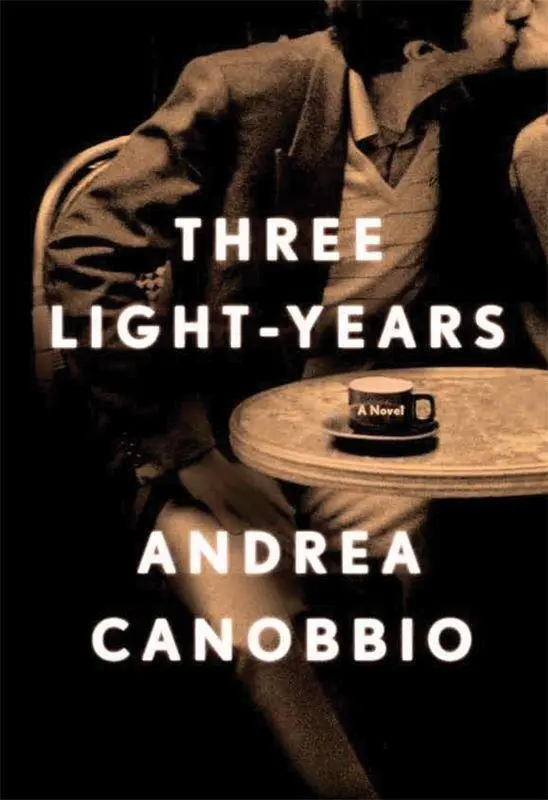
- Название:Three Light-Years
- Автор:
- Издательство:Farrar, Straus and Giroux
- Жанр:
- Год:2014
- ISBN:нет данных
- Рейтинг книги:4 / 5. Голосов: 1
-
Избранное:Добавить в избранное
- Отзывы:
-
Ваша оценка:
Three Light-Years: краткое содержание, описание и аннотация
Предлагаем к чтению аннотацию, описание, краткое содержание или предисловие (зависит от того, что написал сам автор книги «Three Light-Years»). Если вы не нашли необходимую информацию о книге — напишите в комментариях, мы постараемся отыскать её.
But a chance encounter with Cecilia’s sister, Silvia, shifts the precarious balance of the relationship between the two doctors. Claudio begins to see the difficulties inherent in his approach toward life — his weary “Why not?” rather than indicating a hunger for life and experiences, is simply a default setting; saying no would require an energy and focus he lacks. And just when Cecilia comes to the realization that she loves Claudio and is ready to commit to a genuine relationship, fate steps in once again.
In lucid, melancholy prose, supplely rendered into English by Anne Milano Appel, Andrea Canobbio sketches a fable of love poisoned by indecision and ambivalence in Three Light-Years, laying bare the dangers of playing it safe when it comes to matters of the heart.
Three Light-Years — читать онлайн бесплатно полную книгу (весь текст) целиком
Ниже представлен текст книги, разбитый по страницам. Система сохранения места последней прочитанной страницы, позволяет с удобством читать онлайн бесплатно книгу «Three Light-Years», без необходимости каждый раз заново искать на чём Вы остановились. Поставьте закладку, и сможете в любой момент перейти на страницу, на которой закончили чтение.
Интервал:
Закладка:
On the balcony he often recalled an incident that had occurred during a period when Marta was sad. He used to think it had happened after his father’s death, but recently he’d become certain he’d been mistaken. The day after the incident he’d had a fever, he remembered this, too, quite clearly.
She’d locked him out on the balcony by accident, when he went out to get a bottle of mineral water. And she hadn’t heard him calling her. Maybe because she’d gone to bed. And stayed in bed all afternoon. She didn’t realize she’d locked him out until eleven o’clock that night, when she turned on the light in the kitchen to make herself some herbal tea. He’d been outside on the balcony in just a T-shirt for seven hours, in the middle of winter. He smiled, remembering it. And they’d always laughed about it with each other. But what was so funny? He might have been twelve or thirteen. Out in the cold like a survivor from The Red Tent . He’d come down with bronchitis and Mercuri had hurried over to treat him.
Marta! How could he be angry with Marta? Hold a grudge against his mother over such a stupid thing? In fact he didn’t hold it against her. He’d even created an alibi for her: his father’s death. But in reality (he recalled) it had happened before , not after. And then another time she’d left him locked out of the house all afternoon. He kept ringing the doorbell, but Marta was in bed and didn’t hear it.
And yet, and yet … Two episodes of shirking her motherly responsibilities in eighteen years (if you considered the age of majority as the cutoff). Two incidents of probable blackout due to depression in eighteen years. He didn’t recall any others. But perhaps there had been some and he hadn’t noticed them or hadn’t wanted to notice. Those two he’d had no choice but to notice, Marta had forced him to be more alert. Maybe because usually he paid no attention? Maybe so that he would report the episodes to someone else? His father? Mercuri? Too complex, too convoluted, his mother wasn’t that convoluted, no one was that convoluted.
In any case, he didn’t hold it against his mother, and his mother had never been seriously depressed. No matter what Giulia thought.
Still, he remembered that afternoon and that frigid evening spent out on the balcony. He hadn’t dared break the windowpane, maybe he should have. Huddled against the French door to steal a little warmth, watching the lighted windows of the houses across the way. People moving about in a yellowish, sixty- or seventy-five-watt glow, getting ready to go to bed in that luminous space. Lowering the shutters, as though shutting their eyes and not seeing him. Acts of hostility toward him. If only he’d at least seen a woman undressing.
* * *
One evening, toward the end of July, my father moves his armchair outside, prepared to let his gaze wander along the perimeters formed by the dividing walls between the courtyards. Imagining him in that position has a strange effect on me, given that later on I saw him many times, as an old man, observe the same courtyards with a serene expression on his face. I have to erase that serenity and replace it with anxiety and dejection.
The block where Viberti, Marta, and Giulia’s apartment house is located is a group of buildings, four or five stories high, almost completely surrounded by walls on all sides, like a fortress. The balconies and windows are draped with rainbow flags against the war in Iraq. Only on the left does a low building break the line of the interior facades: at one time it was an old factory that made pudding molds, now it’s a supermarket. The center of the quadrangle is occupied by a garage, now converted into a gym, and a small storehouse with a red-tile roof, nearly falling apart, where generations of cats have lived. The remaining space is divided among the courtyards. The smallest even has a little garden with a very tall pine tree; the others are paved with concrete tiles.
My father knows them well, those tiles. Rough but slippery, awful on the knees and elbows. As a child he spent his afternoons spinning around the yard on his bicycle, leaning in at every curve like a motorcyclist and covering himself with scabs from the inevitable falls. As a boy, when the weather was nice, he liked to study in that wicker chair, watching the cats’ antics, the factory workers carrying the aluminum molds, the cars driving up the garage ramp, for hours as he reviewed his lessons. Rather than being a distraction, the courtyards’ panorama had become a mnemonic device: he would associate each courtyard with the paragraphs of a certain chapter or the assumptions of a theorem or the phases of a historical event. Now, each time he returns to the balcony, his eyes feel compelled to follow a specific order. Only after he’s done so can he let his gaze and his thoughts wander.
At one point he thinks he sees a shadow slip between two chimneys on the roof of the supermarket. The more closely he looks, the more he thinks he knows who it is. It’s Giulia’s husband. What is he doing on that roof? It’s not something that intrigues him or arouses his curiosity. He’s never been jealous of Giulia’s husband. He’s never been as fond of Giulia’s son as he’s been of Cecilia’s son, for example. Then, too, as a general rule, he’s always preferred to know as little as possible about other people’s business. As a general rule, it’s always best to know as little as possible about other people’s business. Not that it’s difficult to keep the things you accidentally come to know to yourself and pretend you know nothing. But even if you pretend not to know, you do know, and your life is invaded by the lives of others. You see someone slapping his son as you’re walking along the street. Then, each time you see him, you think about how many times he’s probably slapped his son in the meantime. Giulia’s husband walks unhurriedly to the storehouse, climbs over the tile roof, disappears on the other side. As if it were no big deal, as if he did it every day. He can even do it twice a day, as far as I’m concerned, Viberti thinks.
Can anyone see him on the balcony? Someone from the windows across the way? Someone who, like him, has lived in the same house for forty years and noticed his inconsequential move upstairs, who has realized that the boy on the second floor who was once locked out on the balcony has become the solitary adult on the fifth.
He’s angry, he feels let down. He’s only forty-three years old, but he feels Cecilia was his last chance to be happy with a woman, and, besides that, his last chance to have a child. He feels his loneliness will have to be filled by friends and other people’s families and by his work. He feels he’s always known this, that he’s always imagined he’d grow old alone and self-sufficient. He feels he will never make love with Cecilia.
The phone rings, it’s her. She tells him she was at a pizzeria with some colleagues a few nights ago, the children are away at summer camp, and she felt bad about never wanting to go out with him and she’d like to make up for it and invite him to a restaurant on the river. “All right,” Viberti says.
* * *
At a restaurant for the first time, sitting across from each other at a candlelit table. There’s a gentle sound of flowing water, creating silvery eddies along the riverbank. There are mosquitoes that bite only the feet, like fetishists. There is the clink of silverware against plates, the buzz of conversation. It’s very hot, but Cecilia is in a good mood and Viberti can’t keep up with her stories. She teases him because he’s eating normally: “I think I’ve only seen you with boiled zucchini, potatoes, and spinach.” She calls him Dr. Anorexic and Mr. Bulimic. “That’s not exactly true,” Viberti says defensively, flushing. He’d like to explain his nutritional approach to her, but she’s already moved on to something else.
Читать дальшеИнтервал:
Закладка:
Похожие книги на «Three Light-Years»
Представляем Вашему вниманию похожие книги на «Three Light-Years» списком для выбора. Мы отобрали схожую по названию и смыслу литературу в надежде предоставить читателям больше вариантов отыскать новые, интересные, ещё непрочитанные произведения.







Обсуждение, отзывы о книге «Three Light-Years» и просто собственные мнения читателей. Оставьте ваши комментарии, напишите, что Вы думаете о произведении, его смысле или главных героях. Укажите что конкретно понравилось, а что нет, и почему Вы так считаете.