Nasser Amjad - Land of No Rain
Здесь есть возможность читать онлайн «Nasser Amjad - Land of No Rain» весь текст электронной книги совершенно бесплатно (целиком полную версию без сокращений). В некоторых случаях можно слушать аудио, скачать через торрент в формате fb2 и присутствует краткое содержание. Год выпуска: 2014, Издательство: Bloomsbury Qatar Foundation Publishing, Жанр: Современная проза, на английском языке. Описание произведения, (предисловие) а так же отзывы посетителей доступны на портале библиотеки ЛибКат.
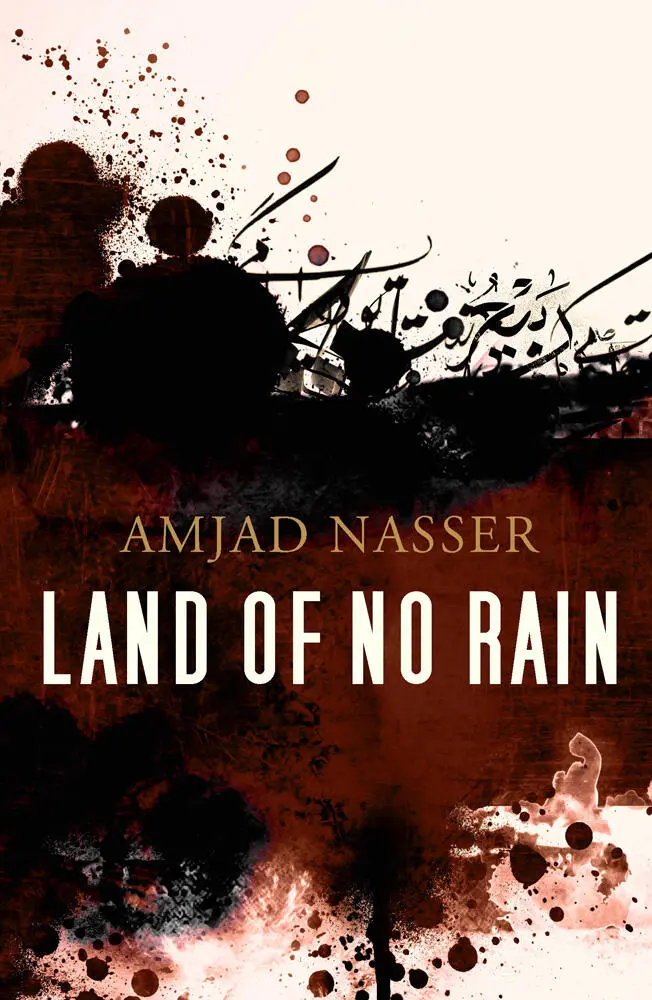
- Название:Land of No Rain
- Автор:
- Издательство:Bloomsbury Qatar Foundation Publishing
- Жанр:
- Год:2014
- ISBN:нет данных
- Рейтинг книги:4 / 5. Голосов: 1
-
Избранное:Добавить в избранное
- Отзывы:
-
Ваша оценка:
Land of No Rain: краткое содержание, описание и аннотация
Предлагаем к чтению аннотацию, описание, краткое содержание или предисловие (зависит от того, что написал сам автор книги «Land of No Rain»). Если вы не нашли необходимую информацию о книге — напишите в комментариях, мы постараемся отыскать её.
Land of No Rain — читать онлайн бесплатно полную книгу (весь текст) целиком
Ниже представлен текст книги, разбитый по страницам. Система сохранения места последней прочитанной страницы, позволяет с удобством читать онлайн бесплатно книгу «Land of No Rain», без необходимости каждый раз заново искать на чём Вы остановились. Поставьте закладку, и сможете в любой момент перейти на страницу, на которой закончили чтение.
Интервал:
Закладка:
Young Younis was walking beside you like an undersized shadow when you went into the diwan. You saw the sofas, the chairs and the wooden coffee-tables, some of them inlaid with mother-of-pearl. The room evoked old voices, the smells of coffee with cardamom, lemonade with rose water and incense brought from distant climes. Your father’s calligraphies were still staring down from the walls, some words legible and others illegible.
You remembered that you very much liked one of his works in particular; it was a design that bore the last half of a line of verse and read: Souls yearn for you for eternity . Your father had written it in the thuluth style, which was one of his favourites and in which he designed notable masterpieces.
His books were still in the wooden bookcase, looking down on you with their spines of gilt leather. The only new thing in the diwan was a black-and-white picture of him, taken by the Grandson’s private photographer, showing him in his workshop, engrossed in writing a large inscription in Kufic script.
When young Younis saw you looking at the picture, he said, ‘That’s your father, right?’
‘That’s right,’ you said.
‘You’re Younis, and I’m Younis, right?’
‘That’s right, and there’s a third one too, apart from us,’ you said.
‘Where’s he?’ he said.
‘It’s hard to see him,’ you said.
‘He’s a ghost, you mean?’
‘Maybe.’
With his round eyes, young Younis looked at the photograph and said, ‘My father put it here. It used to be downstairs.’
You know this picture well. It never used to hang in the diwan but, as young Younis said, in the workshop that took up the cellar of the summer house. Your father was wearing a khaki shirt and trousers, which were common in Hamiya, in fact the standard work clothes there. The military differed from the others in that they had ranks and regimental badges, but not in the colour of their clothes. Your father wasn’t a military man but at work he used to wear this uniform, without badges to show his rank or the service he belonged to. He wasn’t looking at the photographer, in fact he didn’t even seem to be aware of his presence. His right hand was holding a wooden pencil. His head and body were bent over, his eyes looking at the spot where the pencil rested on the sheet of paper. His shoulders were thin and hunched and slightly tense. Fragile, engrossed in his letters, he seemed to be in a trance. You could see the Kufic writing, as intricate as a maze, but it was hard to read it in the picture.
Your father wrote few words in his designs. Despite his devoutness, he wasn’t inclined to use Quranic verses, common sayings of the Prophet or long sentences. Some of his designs consisted of a single letter, such as nun, ba, kaf or alif , with a little decoration such as foliage in the empty spaces. Even with the ancient poems that he loved, many of which he knew by heart, he seldom put a whole line in one of his designs. Maybe he wanted to leave it to the eye of the beholder to wander in the void. As if to be incomplete was the way things really were. Kullu man alayhi faanin , ‘Everyone upon it is ephemeral’, one of them read. You hadn’t known how to read this early design of your father’s. Especially the word faanin , ‘ephemeral’. It wasn’t until you grew up that you realised it was connected with the word fanaa , ‘transcendence’. You remember that he refused to write in full that famous line of Mutanabbi’s, starting To the extent that people are resolute , when he wrote the inscription on the triumphal arch at the entrance to Hamiya. In the face of opposition from the Grandson’s aides, he broke the inscription off after the first seven words. If it had been his choice, he would not have written even those words, which he considered, as far as you remember from a discussion that took place in the Thursday salon, to be pretentious and boastful, a sycophantic suggestion by the Grandson’s retinue. You were surprised how little decoration and foliage there was in the calligraphies that hung on the walls of the diwan. Apparently the empty space that calligraphers avoid, either for fear of a void or because they lack ingenuity, did not frighten your father. In fact the empty space so evident in some of his works may have been quite deliberate. It had a presence that was clear and unsettling at the same time. You had seen most of these designs before but you had never thought about this aspect. During your long absence and in your wanderings through numerous countries you had seen the work of many calligraphers, most of whom resort to decorative foliage and filling in the background of the design or the inscription itself in a way that diverts the eye. You don’t recall many of your father’s opinions on the art of calligraphy, but you imagine he would have seen excessive decoration as aesthetic padding that distracted from contemplation of the secret hidden in the letter or the word. Calligraphy in its absolute union with the letter and the word, which were united in their turn in a higher secret, was what mattered to him, and besides that, manual craftsmanship. Perhaps that explains why your father preferred to be called a calligrapher rather than an artist. Maybe he saw in art a creativity and playfulness that he did not believe in. Creation was for God. As for playing with letters and words that had conveyed countless inexhaustible connotations over hundreds of years, by his standards that was an adolescent folly that humanity had not grown out of. Such talk might have been aimed at you. His criticism of you was along these lines and you knew this, and you would answer him in the same manner. But playing with words that say one thing and mean something else delighted your father and encouraged him to bring the best of them out of his lexical treasure trove. You were his favourite partner in this chess game of words and meaning.
It was young Younis who took you down to the cellar where your father had spent long hours in summer mixing inks, sharpening pencils, boiling tea, rubbing pieces of paper with organic substances or writing, often with a single stroke of his pen, a large letter in a design he was working on. Breathing fitfully, you went down the twelve steps that you knew by heart. Young Younis had gone ahead and was waiting for you at the cellar door. He stood upright and stuck out his chest, with his firm hands locked behind his back, like a soldier on parade.
Like the diwan, the cellar had been left as it was, as if your father, wearing his khaki shirt and trousers, might come in at any moment, after taking off his snow-white gown and his embroidered black cloak in his bedroom, keeping only his white skullcap on. You felt that strongly. You could almost hear his breathing as he came down the twelve steps to the cellar. You could smell the faint scent of musk, the smell of his trimmed beard after Friday prayers. There were several designs, complete or incomplete, on the cellar walls, on the workbench and on the bookshelves. On the edge of the workbench there was a round ashtray made of brass and engraved with five-petalled flowers, with four grooves around the rim to hold cigarettes, and a dark green patch in the base.
You noticed that under the bench there was a pair of green plastic slippers that he apparently used when he was washing before prayers or when moving around the cellar. You took off your sandals and put the slippers on. They were your size. You remembered that you, your father and your brother Sanad all took the same size: 43. You remembered your brother, who had moved to the Land of Palm Trees and Oil. You used to filch his favourite shoes when the male hormones started to kick in. He would go crazy when he had an appointment and couldn’t find his shoes. He knew you had got to them first and he would have to change his trousers to match the colour of the only other shoes that were available.
Читать дальшеИнтервал:
Закладка:
Похожие книги на «Land of No Rain»
Представляем Вашему вниманию похожие книги на «Land of No Rain» списком для выбора. Мы отобрали схожую по названию и смыслу литературу в надежде предоставить читателям больше вариантов отыскать новые, интересные, ещё непрочитанные произведения.





Обсуждение, отзывы о книге «Land of No Rain» и просто собственные мнения читателей. Оставьте ваши комментарии, напишите, что Вы думаете о произведении, его смысле или главных героях. Укажите что конкретно понравилось, а что нет, и почему Вы так считаете.