Joseph McElroy - Women and Men
Здесь есть возможность читать онлайн «Joseph McElroy - Women and Men» весь текст электронной книги совершенно бесплатно (целиком полную версию без сокращений). В некоторых случаях можно слушать аудио, скачать через торрент в формате fb2 и присутствует краткое содержание. Год выпуска: 1987, Издательство: Knopf, Жанр: Современная проза, на английском языке. Описание произведения, (предисловие) а так же отзывы посетителей доступны на портале библиотеки ЛибКат.

- Название:Women and Men
- Автор:
- Издательство:Knopf
- Жанр:
- Год:1987
- ISBN:нет данных
- Рейтинг книги:4.33 / 5. Голосов: 3
-
Избранное:Добавить в избранное
- Отзывы:
-
Ваша оценка:
Women and Men: краткое содержание, описание и аннотация
Предлагаем к чтению аннотацию, описание, краткое содержание или предисловие (зависит от того, что написал сам автор книги «Women and Men»). Если вы не нашли необходимую информацию о книге — напишите в комментариях, мы постараемся отыскать её.
McElroy rests a global vision on two people, apartment-house neighbors who never quite meet. Except, that is, in the population of others whose histories cross theirsbelievers and skeptics; lovers, friends, and hermits; children, parents, grandparents, avatars, and, apparently, angels. For Women and Men shows how the families through which we pass let one person's experience belong to that of many, so that we throw light on each other as if these kinships were refracted lives so real as to be reincarnate.
A mirror of manners, the book is also a meditation on the languagesrich, ludicrous, exact, and also Americanin which we try to grasp the world we're in. Along the kindred axes of separation and intimacy Women and Men extends the great line of twentieth-century innovative fiction.
Women and Men — читать онлайн бесплатно полную книгу (весь текст) целиком
Ниже представлен текст книги, разбитый по страницам. Система сохранения места последней прочитанной страницы, позволяет с удобством читать онлайн бесплатно книгу «Women and Men», без необходимости каждый раз заново искать на чём Вы остановились. Поставьте закладку, и сможете в любой момент перейти на страницу, на которой закончили чтение.
Интервал:
Закладка:
Mayn, we already remember, took his time and was not an interrupter, and Larry liked this when he told Mayn about the "Pseudosphere" and drew it like a personal horn for him—
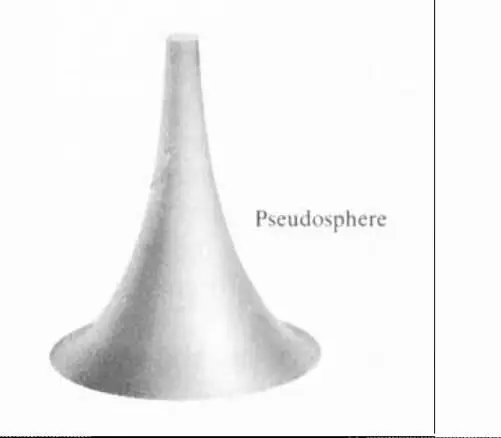
like a little old-fashioned solid picture of other possible space but here a la high-school geometry but then Larry fell silent stunned that he’d confined himself to studying the pseudosphere as a graph showing the extent to which a surface bends, a graph of bending moments (!), when this garden-variety old Euclid-type image of other, far out geometries of space linked up (like capsules) in his mind with a backward-photographed relation between the growth of the nuclear mushroom and the wild gravity of that somehow highly personal obstacle the black hole. Well, Larry seemed slightly freaked. So Mayn mentioned the Russian laser whizzes who figured out a way to fire a ruby laser beam through a smearing lens and into methane gas or it could be one of the other so-called non-linear mediums that are optically affected by light, like crystals and aerosols, and with this "phase"-something-or-other mirroring process get the light beam to come back like a time-reversed image with the distortions gone — which, fired and retrieved through atmospheric turbulence, could help us plot storms, and had uses in satellite weapon systems Mayn preferred not to think about. Mentioning these things, Mayn did not ask Larry why he accepted tacitly the Simultaneous Reincarnation label for maybe being in Two Places, voiced off the top of his head by Mayn himself, while for weeks he had never alluded to the future he might well have come from to judge from his onetime friend Mayga’s willingness to go along with it. But Mayn did ask, What do you mean "they disappeared," the two faggots in the hallway? to which Larry replied that he meant that they disappeared. Meaning? Mayn asked. Well, that Lar’s been accepting these urban phenomena lately. Maybe the space of the elevator reached out and took them (Larry grinned with one side of his face). Mayn was quite fond of him. He missed his own son. Larry let go some tears out of his eyes, his face was screwed up. Mayn had a vision and Larry put one hand across his eyes and got out some words of what he was feeling: "I wouldn’t rather live with her; I wouldn’t. I thought they got along pretty good, you know? I mean it’s O.K. with my father. Oh I don’t want her to come back. Oh…! No, I don’t mean that, I’m too old to say that; forget I said that. Maybe it’s who she’s with, another woman, like a mother — is that it? I want her to come back. But I don’t. That’s all. But I think she will." Larry is slowly, softly almost laughing, like not quite trying to throw up, and Mayn finds history right here.
Time to call a halt to falling forward, we know the voices have not stopped, back home in that place that, like founders, his grandma and he called Windrow, their name for the growing town; nor stopped in the Hermit-Inventor’s New York, nor the Harrisburg near where the Navajo Prince, increasingly real as he came eastward, encamped canopied by a cloud imbued with the lumens of a Moon barely there that night but implicit in the dawnlike fineness of ash comprising in fact the Anasazi healer’s humorous airborne remains, long before our current software’s hardware but not before our perennial software itself.
Mayn should not take Larry into his confidence. It might be dangerous. Larry did not need, moreover, to hear a middle-aged man confirming his own words from a past that could seem a future to the boy, though boy was not enough to call him. Nor should Mayn be father to the boy. He already had one, who could help him simplify his economics homework and take him to see Shakespeare Off Broadway and they’d discuss it on the way home— "Let’s walk; O.K., Dad?"
I didn’t want her to come back, was what Mayn the boy said to the spooky porch that absorbed two, three Margaret tears; and, once asked by his wife what his (apparently not very narrative) mother Sarah thought of all the grandmother stories, reported Sarah saying, Good God! I never knew any Indians.
But if he said, I don’t want her to come back, he also said: I don’t want them to find her.
He conceived of her standing right there on the beach that September day (when she was in fact long gone), awaiting a fugitive sub but herself turned invisible, yes by one magic that the Germans had at the last second salvaged from the lost War (for they did things, and proved that things had causes and then switched around and began with a cause and made a thing), salvaged through a woman leading a cadre of men and finalized a device for becoming invisible, say by an internalized meteorological focus of concentration kin to the destructive yearning of the continent to contain all the anger and hope of its tribes even if from New Mexico to Maine this yielded a mount of waste here and there that would need moving by a new geology.
Naturally it passed through Mayn’s mind — alternating current, direct, forget which is which — that his mother might have passed into another life and by some established route not died at all. Oh he never went back to that beach. Christ save us from the sentimental beachware of nostalgia, thank you. Yet wait a moment, fuck you, yes He will if we want save us. She wasn’t there, for why should she be? But neither had she been there on Jim’s secret September day in ‘45 when no one knew he was down at the shore; Jim’s no kook, no private eye, no mystic, none of the above or below; and no mother was there in spirit or intent, any more than on the day of her disappearance a few weeks previous when her family had not been there to say goodbye she had embarked by acknowledging only the owner of the boat she would always need in Jim’s mind, a boat exactly as present as the owner was not. But Jim knew it didn’t make the best sense, the sense which breathes from the soundest family histories. He knew. And knew, as well as he would ever know the statistics of what the corporations in question vowed they would only do to that giant foreign southwestern landscape of the Four Corners through flaying its cloak of (if you call that) vegetation — and knew as well as he would know that the dark-blonde woman Dina West, who "needed" him, she said, to help add to the evidence exposing the power companies’ surgery of the land (so exposed already under the vast, flat New Mexico sky we don’t just right off the bat think of their operational Enterprise as Private), did not need in the same way her husband and his radio station in Albuquerque for an instant of history coinciding with the appearance above it hanging still together of the plume from the Four Corners plant, a sign that the waste of parts may yield coherence of the whole; yet she was not coming on to Mayn when she let him take her (in her car, driven by her) past the turnoff for her Paseo and along the Sandia Mountain highway to a bedroom suburb you might call it if the land were not always taking over and surrounding us with distance and those distances of the sky’s horizon that you stop thinking about and without much ado join but a permanent change of mind if you could only lay your hand on it circling back to find it not quite there now (so you look up, you look down), and, within that pretty elegant trading post the bedroom suburb, an artists’ joint that Mayn had eaten green chili and soft, mellow chalupas in once and never forgotten when there was nothing to remember there where he thought you could drink a meal every other night if you were that caliber of artist until, in this conversation that was supposed to be about wasting environment, he just couldn’t see what the blonde was adding to the specifics he was already in possession of except, of course, within their vivid margins of number and compound one more brief life (hers) implicit in the reality and threatening to be like other stories, long before he heard from a new friend named Norma some of the same stories, more or less, fed back if not shunted via that central agency of information-sharing power Grace Kimball, which collected him more than he them, until, sipping her second straight-up margarita in sync with "your" waitress in a pearly shirt approaching from yet another corner of the woody place to try and take their order, his blonde environmentalist dinner partner with the husband with his radio station asked if Mayn was married — a question whose sense was the words he had said already to himself yet with the meaning What’re you doing here, guy? — until he heard the bottom line in her say with quiet exactness that Ray Vigil’s idea Indians’11 get into commercial geothermal (given the right rock somewhere — and not meaning the Indians working on the hot rock experiment at Los Alamos) was nuts because water was what they wanted, not money or innovations; and Mayn heard her say that she and her husband after twelve years had a good, good friendship and he had said any time she wants to go to Washington as lobbyist or, indeed, work on Interior Department people, he has connections for example with the cement industry, though probably she has plenty through the Bureau (of Indian Affairs) and the Council (Indian Youth)—
Читать дальшеИнтервал:
Закладка:
Похожие книги на «Women and Men»
Представляем Вашему вниманию похожие книги на «Women and Men» списком для выбора. Мы отобрали схожую по названию и смыслу литературу в надежде предоставить читателям больше вариантов отыскать новые, интересные, ещё непрочитанные произведения.











Обсуждение, отзывы о книге «Women and Men» и просто собственные мнения читателей. Оставьте ваши комментарии, напишите, что Вы думаете о произведении, его смысле или главных героях. Укажите что конкретно понравилось, а что нет, и почему Вы так считаете.