Aleksandar Tišma - The Use of Man
Здесь есть возможность читать онлайн «Aleksandar Tišma - The Use of Man» весь текст электронной книги совершенно бесплатно (целиком полную версию без сокращений). В некоторых случаях можно слушать аудио, скачать через торрент в формате fb2 и присутствует краткое содержание. Год выпуска: 2014, Издательство: NYRB Classics, Жанр: Современная проза, на английском языке. Описание произведения, (предисловие) а так же отзывы посетителей доступны на портале библиотеки ЛибКат.
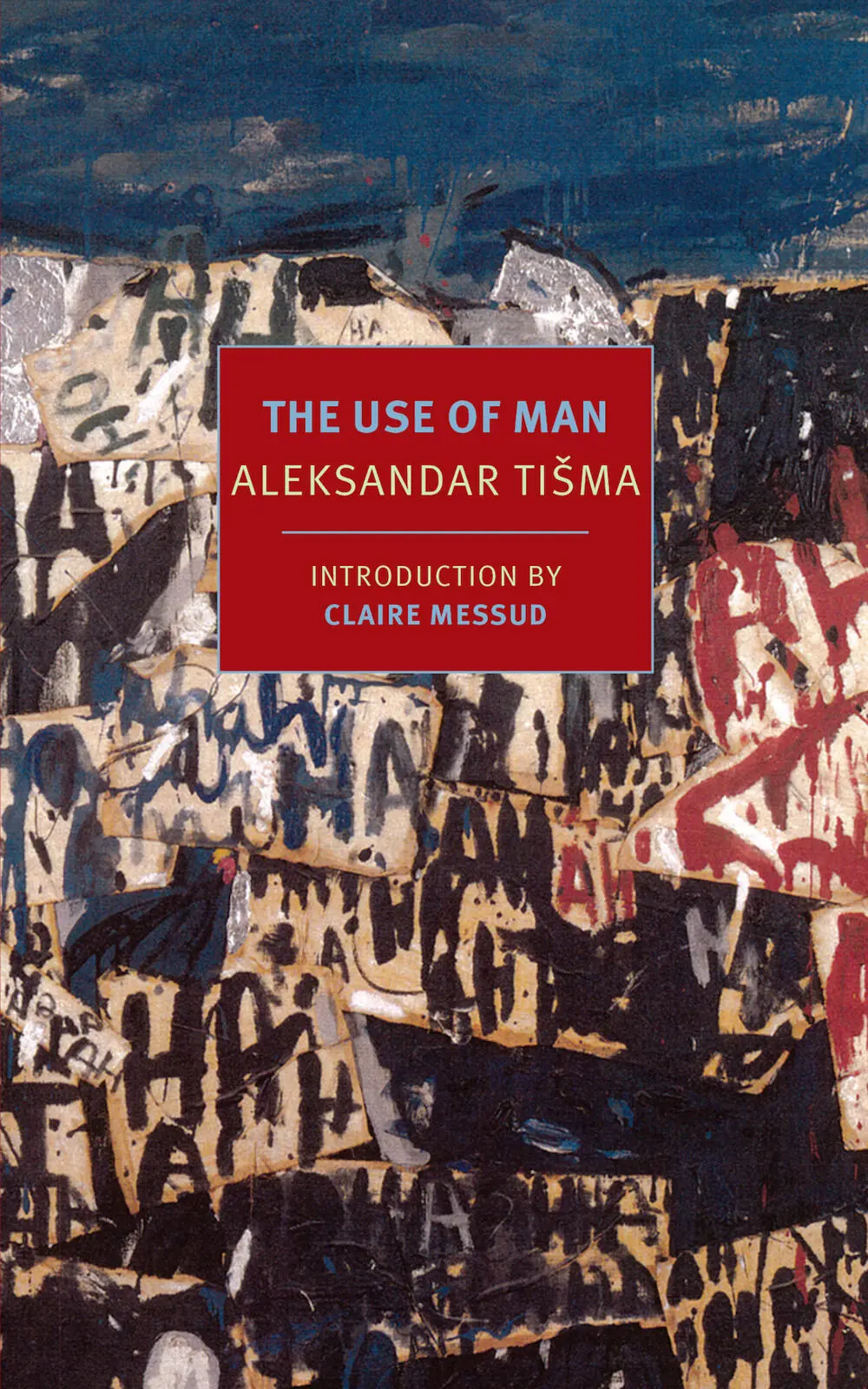
- Название:The Use of Man
- Автор:
- Издательство:NYRB Classics
- Жанр:
- Год:2014
- ISBN:нет данных
- Рейтинг книги:5 / 5. Голосов: 1
-
Избранное:Добавить в избранное
- Отзывы:
-
Ваша оценка:
The Use of Man: краткое содержание, описание и аннотация
Предлагаем к чтению аннотацию, описание, краткое содержание или предисловие (зависит от того, что написал сам автор книги «The Use of Man»). Если вы не нашли необходимую информацию о книге — напишите в комментариях, мы постараемся отыскать её.
A work of stark poetry and illimitable sadness,
is one of the great books of the 20th century.
The Use of Man — читать онлайн бесплатно полную книгу (весь текст) целиком
Ниже представлен текст книги, разбитый по страницам. Система сохранения места последней прочитанной страницы, позволяет с удобством читать онлайн бесплатно книгу «The Use of Man», без необходимости каждый раз заново искать на чём Вы остановились. Поставьте закладку, и сможете в любой момент перейти на страницу, на которой закончили чтение.
Интервал:
Закладка:
Waldenheim was interested in how they had spent their time, laughed at Sredoje’s descriptions of peasants at the taverns, and late in the evening delivered him in front of the building on Dobrnjac Street, calling, “Good night! Regards to your father!” before driving off. In his bed Sredoje breathed in contentment, as if dreaming, and he did not regret that he no longer stalked the area around the station for fallen women. Yet he had not entirely relinquished that passion, he simply curbed it until a more favorable moment, just as he had never completely lost his distrust of Waldenheim. He continued to find something alien to his notion of a German officer in Waldenheim’s relaxed behavior, in the warmth of his friendship.
Toward the end of August they went to Požega. It was a hot day, one in a succession of hot days in late summer. There was no movement in the air; dust hovered above the trees that bordered the road, turning their tired, overabundant foliage gray. At a crawl they drove into the town, which was thronged with people, vehicles, German soldiers with bayonets on their rifles. After they delivered Waldenheim at the Military Police post, on a street off the main square, and were told the time to pick him up, Hans turned the car around and, skillfully avoiding the people walking in the middle of the road, made a circle and came out at the river Skrapež.
They looked for an isolated spot, parked the car in some bushes along the bank, undressed, and jumped into the river, which was shallow and rapid. They splashed about for some time; feeling cool, they stretched out on the stones in the sun. As usual, they were silent, except for an occasional grunt of pleasure in the sun’s heat. Sredoje propped himself up on his elbows, looked at Hans, and noticed that the soldier had a green, heart-shaped stone pendant on the gold chain he always wore around his long, muscular neck. Sredoje’s father, not long ago, had had the very same pendant displayed on the table for Waldenheim. “Hans,” he said, looking at the pendant again, to make sure he was not mistaken, “where did you get that green heart on your chain?” Hans opened one eye, gray as the sand, and looked down at the thing Sredoje had mentioned. “From a girl” was all he muttered.
After a while they went into the water again, and when they came out, Hans walked over to the car, took his wristwatch from his shirt pocket and said that it was time to go. Instead of lying in the sun again to dry, they ran around and rubbed themselves with their palms; still damp, they dressed and got into the car. Back in the town, they found the streets strangely empty, but when they neared the square they saw a crowd of people, with their horses and carts, pressed close together, all standing still and looking in the same direction. Hans sounded the horn, but no one turned around. A German soldier with a rifle and bayonet motioned him sharply to move away. Hans backed up and, taking empty side streets, approached the square on the opposite side, by the police post. Here, too, was a wall of people. Sredoje stayed in the stuffy car for a minute or two, then got out and joined the crowd to find out what was going on.
He stood on tiptoe but saw nothing, so he pushed his way between two peasants, who were craning their necks. In the center of the square was a space cordoned off on all sides by Germans and soldiers of the National Guard. There was an unusual silence, as if no one were breathing. The smell of human sweat spread from man to man, in stifling air already thick with dust. “What’s happening? Why is everyone waiting?” Sredoje asked the peasant beside him. The peasant started, glared at him, as if Sredoje had interrupted something important; then, his eyes returning to the center of the square, he said quietly, his throat tight, “You’ll see. If you’re a Serb.”
Sredoje heard a shout, distant — it sounded like an order — and on the side of the square, in front of the Town Hall, there was movement. Through a wide passage that had been left open, a squad of National Guard soldiers with rifles on their shoulders stepped briskly into the square. A second order rang out, and they halted. Sredoje could now see clearly who was shouting: a broad-shouldered young officer with short bandy legs encased in boots, standing in front of the detail with his sword drawn. The squad fanned out, pressing with their backs against the crowd, until only three figures remained in the center: two soldiers and, between them, a small, burly civilian, bareheaded, in wide gray trousers and a darker gray jacket that was too big for him.
The officer waved the gleaming sword in the sunlight, the two soldiers each pulled on a clanking chain, and the civilian was jerked first one way, then the other, as if dancing with tiny steps. This went on for some time. Impatient, the officer waved his sword and several times even helped pull. The crowd murmured. At last the ends of the chain were in the hands of the soldiers, who stood at attention as if they, too, were now chained. The civilian stood straight, his legs apart, and began to rub his wrists slowly, first one, then the other. There was an awkward silence. The officer looked around, as if searching for someone, made a sign with his sword and beckoned with his free hand. But instead of anyone stepping forward, the monotonous drone of a voice was heard, its source invisible. Now and then a whistle came from the crowd and a shout of “Louder!” but the speech went on in the same low tone. After a while Sredoje was able to make out phrases he knew by heart: “Communist hireling,” “crime against the Serbian people,” and “death by hanging.”
He broke into a sweat, even though this was really what he had expected. He thought of leaving, but a cold curiosity rooted him to the spot. The peasants next to him stared ahead without blinking, and the one Sredoje had spoken to stood with his mouth half open, showing his pointed upper teeth.
The squad moved to the right, and Sredoje now noticed, directly in front of the Town Hall, a wooden frame, a rope hanging from a crosspiece, not a thick rope, but ending in a noose. The squad came to a halt beneath the noose, the officer waved his sword, the two soldiers took hold of the civilian and lifted him up, and suddenly he was standing, higher than everyone, on a stool. The civilian’s face was plump, with high, rounded cheekbones, heavy lips, big, dark eyes, and bushy eyebrows. Those eyes expressed both fear and disbelief, but most of all, Sredoje thought, a mute, tense appetite for life.
Next to the civilian’s head a second head appeared, beneath a forage cap, with thin, drained features, and a long, bony hand took hold of the noose, hurled it up, and dropped it deftly over the civilian’s neck. Then the head with the forage cap was gone. The civilian shuddered, as if the noose burned, raised his stubby hands to his neck to pull it off, but suddenly the hands jerked out in terror. He sank, the rope went tight and began to swing, and the stool lay overturned.
The man’s legs pumped as if on an invisible bicycle, he spread his arms wide, drew them to his neck, frantically threw them out again, and his face took on an expression of childlike petulance, turned dark, then the eyes bulged, wanting to pop from their sockets. Another shudder, a shiver, and everything was suddenly still. Arms and legs hung loose, and the short trunk to which they were attached swung slowly back and forth. The head was turned to one side; the face, now purple, was longer. The jaw had dropped to show a lolling blue tongue, and the eyes, expressionless, looked like buttons sewn on in an inappropriate place.
Sredoje was staring at these dulled eyes when a hand fell on his arm, making him jump. Was it his turn next? He looked around and found himself face to face with Captain Waldenheim, whose misty eyes regarded him with tender concern. “You shouldn’t have watched that,” the captain said, shaking him as if Sredoje had been asleep. “Come. We’ve decided to stay for supper with my colleagues here. You’ll like them.” He squeezed his arm in encouragement, and Sredoje followed, not entirely grasping what was expected of him. He was still mesmerized by the sight of a simple rope transforming a live body, a body that had walked, rubbed its wrists, and looked with avidly longing eyes, into a crooked, sagging carcass.
Читать дальшеИнтервал:
Закладка:
Похожие книги на «The Use of Man»
Представляем Вашему вниманию похожие книги на «The Use of Man» списком для выбора. Мы отобрали схожую по названию и смыслу литературу в надежде предоставить читателям больше вариантов отыскать новые, интересные, ещё непрочитанные произведения.







Обсуждение, отзывы о книге «The Use of Man» и просто собственные мнения читателей. Оставьте ваши комментарии, напишите, что Вы думаете о произведении, его смысле или главных героях. Укажите что конкретно понравилось, а что нет, и почему Вы так считаете.