Aleksandar Tišma - The Use of Man
Здесь есть возможность читать онлайн «Aleksandar Tišma - The Use of Man» весь текст электронной книги совершенно бесплатно (целиком полную версию без сокращений). В некоторых случаях можно слушать аудио, скачать через торрент в формате fb2 и присутствует краткое содержание. Год выпуска: 2014, Издательство: NYRB Classics, Жанр: Современная проза, на английском языке. Описание произведения, (предисловие) а так же отзывы посетителей доступны на портале библиотеки ЛибКат.
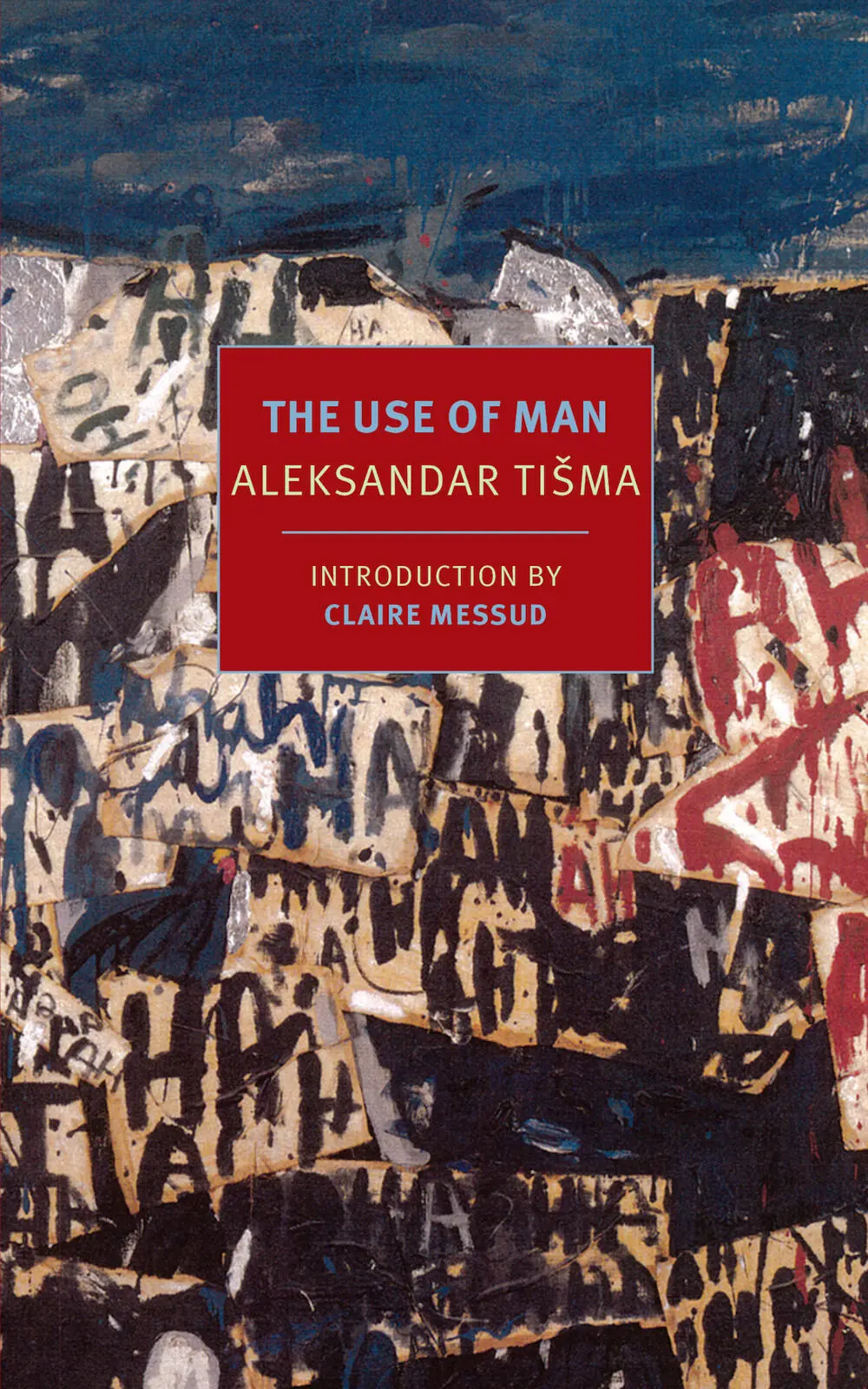
- Название:The Use of Man
- Автор:
- Издательство:NYRB Classics
- Жанр:
- Год:2014
- ISBN:нет данных
- Рейтинг книги:5 / 5. Голосов: 1
-
Избранное:Добавить в избранное
- Отзывы:
-
Ваша оценка:
The Use of Man: краткое содержание, описание и аннотация
Предлагаем к чтению аннотацию, описание, краткое содержание или предисловие (зависит от того, что написал сам автор книги «The Use of Man»). Если вы не нашли необходимую информацию о книге — напишите в комментариях, мы постараемся отыскать её.
A work of stark poetry and illimitable sadness,
is one of the great books of the 20th century.
The Use of Man — читать онлайн бесплатно полную книгу (весь текст) целиком
Ниже представлен текст книги, разбитый по страницам. Система сохранения места последней прочитанной страницы, позволяет с удобством читать онлайн бесплатно книгу «The Use of Man», без необходимости каждый раз заново искать на чём Вы остановились. Поставьте закладку, и сможете в любой момент перейти на страницу, на которой закончили чтение.
Интервал:
Закладка:
17
Sredoje’s meeting with Vera Kroner concluded a long, roundabout chain of events that began with his acceptance of the role of obedient son.
Six days after the outbreak of war, he left Novi Sad with his father, who dared not await the German and Hungarian forces under his own roof, having no desire to leave his male offspring as hostages to the enemy. Always loud in his public denunciations of Germany, as well as of the other nations who could play the aggressor on their own and threatened to do so, Nemanja Lazukić greeted the tearing up of the pact with Germany by making a speech from the balcony of the Town Hall, immediately after Dr. Marko Stanivuk, the leader of his party. He did not believe that he would actually have to make the sacrifices he vowed to make as he shook his fist above the heads of the assembled citizens; quite the contrary, he believed that his pronouncements would discourage the enemies in Berlin, Budapest, and Sofia. It was with this sentiment that he calmed his wife on returning home from the banquet that evening. And even when the sirens wailed and the silver German aircraft passed slowly across the sky in neat formations, he was troubled only for a moment. In the quiet of the dry cellar to which he had led his family, he declared, eyes raised prophetically to the ceiling, “This will cost them dear. They will have to subdue the entire country, and the Serbian soldier will stand firm.”
After the alert was over, he went into town and returned with the news that Belgrade had been bombed. “Good. Everybody will hate them now.” He packed his shaving kit and a towel into a small bag, because he had volunteered, being a captain in the reserve, for the post of deputy commander at the civil-defense headquarters. He remained on duty day and night, telephoning his family only once, to announce that the Yugoslav army had advanced deep into Bulgaria. Yet the town streets were filling up with retreating troops; hungry and tired, they sat on the sidewalks and knocked on doors asking for water. It was through their disordered ranks that he finally reached home, almost as crushed as they were. “Treason,” he said. “We have to get away. Only temporarily, of course, for we’ll win in the end, just as we did in the last war.” He went into the spare room and took the suitcases from the closet, and asked his wife to pack everything he and his sons would need for a long trip. “You, my dear, will have to stay,” he told her, placing his hand on her shoulder and looking her straight in the eye. “You’ll take care of the house until our return, which won’t be long.” He went into town to look for transportation, and after many hours finally came back with Jovan, the elderly, broad-shouldered taxi driver who used to drive him to hearings in the neighboring towns, and, pointing to the suitcases lined up in the entrance hall, went to his room to change. His sons were already sitting in the low-slung blue car, and his wife stood by the windshield, wiping the tears from her eyes, when he appeared in the sports suit — plus fours and woolen knee socks — he wore for country outings. “Let’s go.” He gave the sign, then kissed his wife on both cheeks. “Don’t you be afraid! You’re a woman, so no one will do you any harm.” Klara Lazukić stammered, “But where are you going, where are you taking my children?” Seated next to the driver, he stuck his head out of the window and said in a low voice, “Perhaps to Albania, perhaps farther. Until the fortunes of war bring us back to you.” The taxi moved off.
At the first corner it had to slow down for the soldiers, who, pouring in from all directions, jammed the streets. The taxi edged its way through the ragged army lines and advanced along with them at a walking pace as far as the bridge across the Danube. Lazukić and his sons sat in soft, well-padded seats; through the glass they saw the faces of the grimy soldiers and felt like averting their eyes. “Fight on, you brave fellows!” Lazukić mumbled, unheard by the objects of his encouragement. Then he grew preoccupied with the car’s slow progress and, leaning forward, urged Jovan to speed up. Jovan was silent, morose, uncomfortable with the assignment he had taken on. At the bridge they had to come to a stop before they could get their wheels aligned on the narrow causeway. The blue of the river stretched to the left and to the right and far into the distance. They turned to look back at the houses of Novi Sad, which stood still, as if expecting something.
On the main road they were swallowed up by the traffic. Columns of soldiers, horse-drawn guns on carriages, an occasional truck, field kitchens on high wheels, wagons carrying ammunition bumped against each other, all in a rush but powerless to widen the asphalt highway, on either side of which, in the ditches, lay burned overturned vehicles and equipment. They crept along, to the shouts and curses of the officers desperately urging on the soldiers and horses. Jovan clenched the steering wheel and changed gear constantly, while Nemanja Lazukić fidgeted in his seat and offered pointless advice. Rastko withdrew into his own thoughts, and Sredoje observed the scene with a mixture of shame and curiosity, as an unwelcome but exciting novelty.
At dusk they reached Indjija. Although Lazukić swore to God that the troops would stop there — he was reliably informed that a defensive front would be established on the slopes of Fruška Gora — the column continued to move in a dense, nervous mass. It was well into the night when they arrived at Stara Pazova. Worn out, they turned into a side street and stopped. Lazukić went off on foot to look for a place to stay. He was unsuccessful but decided to drive no farther; they would make do with the courtyard of a nearby inn, which could provide, if no room, at least the comfort of a hot meal. They took out their luggage, relieved their swollen bladders, washed their hands at a well, and, by the light of a kerosene lamp — for some reason there was no electricity — sat down at a round table in the downstairs room to a supper of goulash and pickled peppers. Lazukić engaged the innkeeper in conversation, told him what they had seen on the way, evaluated with him the chances for defense, and examined the possibility of asking a Slovak woman, who lived nearby but worked at the inn, for a room. Following the innkeeper, or, rather, his barely visible outline in the darkness, which echoed with the rumble of vehicles and the shouts of men from the main road, they walked through a garden, opened a creaking gate in a plank fence, woke sleeping dogs, listened to a hushed conversation, and heard a door bang open. Finally they were let into a large room with a low ceiling, rag rugs, and two immense beds pushed against the far wall. A buxom peasant woman wearing a head scarf and wide skirts prepared the beds for them, unfolded layer after layer of quilts, gave them a candle, accepted a tip, and left. They, in turn, undressed, climbed into the beds, covered themselves with the quilts, and, muttering about the cramped space and lack of air, fell asleep and slept through their first night as refugees.
The following morning, after breakfast at the inn, which took longer than they had intended, their plan to continue the journey was unexpectedly threatened by their driver’s decision to return home at once. Lazukić pleaded with Jovan, reminded him of the many lucrative trips they had taken together, though he could not deny that he had hired the taxi for one day only; one day, he had thought, would be enough for them to reach Belgrade. The innkeeper, who was listening to the dispute with considerable interest, now interrupted to say that, according to what he heard that morning from a soldier, it was impossible to get to Belgrade now, because the bridges had been destroyed and the troops were moving in the direction of Obrenovac. This information silenced them for a moment, then served as a basis for new negotiation. Lazukić offered Jovan more money, for which Jovan agreed to take them to the ferry on the Sava right across from Obrenovac, but, as he said, not a step farther. They got into the taxi and pulled out onto the main road.
Читать дальшеИнтервал:
Закладка:
Похожие книги на «The Use of Man»
Представляем Вашему вниманию похожие книги на «The Use of Man» списком для выбора. Мы отобрали схожую по названию и смыслу литературу в надежде предоставить читателям больше вариантов отыскать новые, интересные, ещё непрочитанные произведения.








Обсуждение, отзывы о книге «The Use of Man» и просто собственные мнения читателей. Оставьте ваши комментарии, напишите, что Вы думаете о произведении, его смысле или главных героях. Укажите что конкретно понравилось, а что нет, и почему Вы так считаете.