David Bezmozgis - The Free World
Здесь есть возможность читать онлайн «David Bezmozgis - The Free World» весь текст электронной книги совершенно бесплатно (целиком полную версию без сокращений). В некоторых случаях можно слушать аудио, скачать через торрент в формате fb2 и присутствует краткое содержание. Год выпуска: 2011, Издательство: Farrar, Straus and Giroux, Жанр: Современная проза, на английском языке. Описание произведения, (предисловие) а так же отзывы посетителей доступны на портале библиотеки ЛибКат.
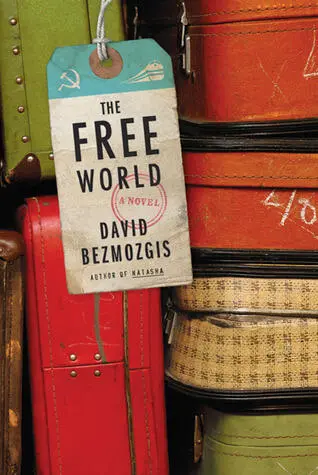
- Название:The Free World
- Автор:
- Издательство:Farrar, Straus and Giroux
- Жанр:
- Год:2011
- ISBN:нет данных
- Рейтинг книги:4 / 5. Голосов: 1
-
Избранное:Добавить в избранное
- Отзывы:
-
Ваша оценка:
The Free World: краткое содержание, описание и аннотация
Предлагаем к чтению аннотацию, описание, краткое содержание или предисловие (зависит от того, что написал сам автор книги «The Free World»). Если вы не нашли необходимую информацию о книге — напишите в комментариях, мы постараемся отыскать её.
There is Samuil, an old Communist and Red Army veteran, who reluctantly leaves the country to which he has dedicated himself body and soul; Karl, his elder son, a man eager to embrace the opportunities emigration affords; Alec, his younger son, a carefree playboy for whom life has always been a game; and Polina, Alec's new wife, who has risked the most by breaking with her old family to join this new one. Together, they will spend six months in Rome — their way station and purgatory. They will immerse themselves in the carnival of emigration, in an Italy rife with love affairs and ruthless hustles, with dislocation and nostalgia, with the promise and peril of a new life. Through the unforgettable Krasnansky family, David Bezmozgis has created an intimate portrait of a tumultuous era.
Written in precise, musical prose,
is a stunning debut novel, a heartfelt multigenerational saga of great historical scope and even greater human debth. Enlarging on the themes of aspiration and exile that infused his critically acclaimed first collection,
establishes Bezmozgis as one of our most mature and accomplished storytellers.
The Free World — читать онлайн бесплатно полную книгу (весь текст) целиком
Ниже представлен текст книги, разбитый по страницам. Система сохранения места последней прочитанной страницы, позволяет с удобством читать онлайн бесплатно книгу «The Free World», без необходимости каждый раз заново искать на чём Вы остановились. Поставьте закладку, и сможете в любой момент перейти на страницу, на которой закончили чтение.
Интервал:
Закладка:
There are many people in the street.
There are men, women, and children.
There is a cat.
Rome has many cats.
Rome has many beautiful women.
But they are not more beautiful than Paula.
Polina had always been a good student, but she found herself struggling with the language. Alec encouraged her, saying that even his mother’s cousin in Chicago, barely five feet tall, was learning the language. Everyone learned it. Millions of imbeciles spoke it every day. Lyova said that, in his experience, the most important thing in learning a language was confidence. Intelligent people who doubted themselves often had it the hardest.
— How were you in school? Lyova asked.
— In what sense?
— Did you worry very much?
— Only at the very end.
— The exams? That’s nothing. Everybody worries about those.
— I might have worried more.
— Why?
— I didn’t want to be separated from my boyfriend.
— And what happened?
— I scored well. We weren’t separated. Instead we got married.
— Later divorced.
— Yes, it might have been better if we’d been separated. But I didn’t think that at the time.
The truth was that, at the time, she’d wanted desperately to fail and be sent away to some far-flung region where Maxim would never be expected to visit, but she was disgusted with that part of her and wanted to renounce it, smother it, seal it inside a vault of constancy. And so she’d worried about scoring well enough to secure a placement in Riga. As she waited for her grades, she resolved that, if they were insufficient, she wouldn’t simply abide by the decision but would do whatever she could to steer her life onto its proper course.
She went to her father, something she’d never done before. He had just then returned from Gdansk. She waited until her mother and sister were away from the apartment and then told him — careful to keep any hint of plaintiveness out of her voice — that there was something she needed to discuss.
Her father sat at the kitchen table in a wash of afternoon sunlight. He had covered the table with newspaper and spread out upon it the disassembled parts of a hair dryer that had recently stopped working. He’d brought the hair dryer back from East Germany several years earlier as a present for Polina’s mother and it had become one of the family’s most prized possessions. They didn’t know anybody else who had one. Polina’s mother used it sparingly for herself and for the girls, and, occasionally, she loaned it to some of their neighbors. Every now and then Polina would answer the door and discover a woman with her head wrapped in a towel. Another family might have turned this into a small venture and charged for it, but in their home even to intimate such a thing was an abomination. Sometimes a neighbor brought a jar of preserves or a tin of sprats, but only out of the goodness of her heart. When the dryer broke down, another neighbor, an electrician, would conjure the necessary resistor or fuse for which Polina’s father paid the designated market price — not a kopek less — always in front of witnesses and always with a signed receipt. Her father would then go about fixing the dryer himself. Tinkering with devices and gadgets was the closest thing he had to a hobby. Like others of his generation, he possessed a deep reverence for mechanical things. With Polina’s graduation approaching, her mother had hoped he might get the dryer back into working order so that she could set her own and the girls’ hair for the ceremony.
The hair dryer and the graduation ceremony provided Polina with a convenient way to broach the topic. She tried to frame her words as directly as possible. At first, it seemed as if her father didn’t quite hear her, as if he was too immersed in the coils and circuits of the hair dryer, but eventually, as she persevered, he turned his attention to her.
— You have always been an excellent student. You will do fine, he said.
— I don’t think so.
— Nothing comes of this sort of talk.
— I don’t want to be separated from Maxim, Polina said, conviction trailing a half step behind her words.
— Nobody is forcing you to separate.
— If we’re sent to different places we won’t be able to get married.
— This is a pointless conversation, her father said evenly. I’m surprised at you.
His attention drifted back down to his repair work. He had issued what amounted to his harshest rebuke: the suggestion that Polina was behaving in a way unbefitting “her father’s daughter.”
— I just thought if something could be done, Polina said.
— I’ve heard enough.
Polina knew not to raise the subject again. In the succeeding days her father acted as if the conversation had never happened. When he was home, he kept tinkering with the hair dryer until, one morning, Polina awoke to the sound of its shrill whine. Later that same day, as her father was heading out the door, he called Polina over and somberly told her that there would be a position for her at the VEF radio factory. Before Polina could collect herself to thank him, he was already down the hall.
In the end, both her panic and her father’s intervention proved unwarranted. When the grades were announced, Polina discovered that she had finished in the top quartile. Her results guaranteed her a position in Riga. Now, if VEF hired her, nobody could challenge the impartiality of their decision. The outcome suited everyone. With her grades, she had vindicated herself before her father; meanwhile, without suffering any adverse effects, her father had been able to demonstrate his love for her.
On the day of her graduation ceremony she sat with her parents and Nadja under the glass roof of the university’s great hall. According to custom, her father held a bouquet of flowers — white, fragrant calla lilies. Polina’s hair, freshly shampooed and styled by her mother, shone brilliantly, as if radiating intellectual light. She wore a new dress of luminous green cloth — the material purchased by her mother and then sewn by a seamstress after a French pattern. Polina was the first in their family to receive a university degree. Anything her father had learned after eight grades of primary school came courtesy of the Soviet navy. Her mother had come from a small Byelorussian town where the pursuit of higher education was rare for anyone, and particularly for women. When Polina heard her name called, she rose from her chair and felt herself propelled to the stage as if by the cumulative force of her parents’ dreams.
In the evening, Polina joined her classmates for a party at Café Riga in the old city. All over town, graduates were dancing and toasting their student days goodbye. A number of her classmates brought their instruments and played the songs of the Beatles, Raymond Pauls, and Domenico Modugno. Glasses of champagne were circulated, and they all dropped the diamond-shaped lapel pins they’d been awarded into them, then downed the contents in one swallow, leaving the shiny blue enamel glinting between their teeth. At around ten o’clock, Maxim left his class’s party and joined Polina at Café Riga. When she spotted him in the crowd, she was surprised by how glad she was to see him. A warm, proprietary feeling bloomed inside her. This man — blinking through the haze of cigarette smoke, intently searching the room for her, rubbing absently at the scar above his eyebrow, where, as a boy, a schoolmate had hit him with a badminton racquet — this was her man. Out of the many, he was hers, and this simple recognition was enough to endear him to her. Flushed with optimism, alcohol, and affection, Polina fell into his arms and swept him onto the dance floor. Her classmates offered them a steady flow of champagne, vodka, and wine. Before long, Maxim forgot his usual reserve, loosened his tie, and danced with uninhibited, clumsy exuberance as the band played the Beatles’ “Get Back.”
Читать дальшеИнтервал:
Закладка:
Похожие книги на «The Free World»
Представляем Вашему вниманию похожие книги на «The Free World» списком для выбора. Мы отобрали схожую по названию и смыслу литературу в надежде предоставить читателям больше вариантов отыскать новые, интересные, ещё непрочитанные произведения.












Обсуждение, отзывы о книге «The Free World» и просто собственные мнения читателей. Оставьте ваши комментарии, напишите, что Вы думаете о произведении, его смысле или главных героях. Укажите что конкретно понравилось, а что нет, и почему Вы так считаете.