David Bezmozgis - The Free World
Здесь есть возможность читать онлайн «David Bezmozgis - The Free World» весь текст электронной книги совершенно бесплатно (целиком полную версию без сокращений). В некоторых случаях можно слушать аудио, скачать через торрент в формате fb2 и присутствует краткое содержание. Год выпуска: 2011, Издательство: Farrar, Straus and Giroux, Жанр: Современная проза, на английском языке. Описание произведения, (предисловие) а так же отзывы посетителей доступны на портале библиотеки ЛибКат.
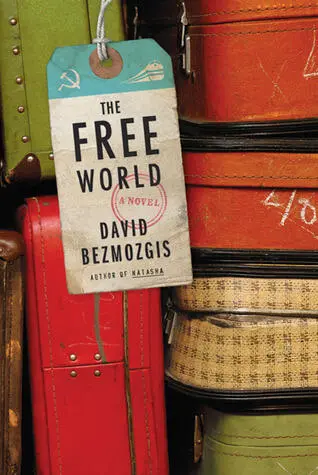
- Название:The Free World
- Автор:
- Издательство:Farrar, Straus and Giroux
- Жанр:
- Год:2011
- ISBN:нет данных
- Рейтинг книги:4 / 5. Голосов: 1
-
Избранное:Добавить в избранное
- Отзывы:
-
Ваша оценка:
The Free World: краткое содержание, описание и аннотация
Предлагаем к чтению аннотацию, описание, краткое содержание или предисловие (зависит от того, что написал сам автор книги «The Free World»). Если вы не нашли необходимую информацию о книге — напишите в комментариях, мы постараемся отыскать её.
There is Samuil, an old Communist and Red Army veteran, who reluctantly leaves the country to which he has dedicated himself body and soul; Karl, his elder son, a man eager to embrace the opportunities emigration affords; Alec, his younger son, a carefree playboy for whom life has always been a game; and Polina, Alec's new wife, who has risked the most by breaking with her old family to join this new one. Together, they will spend six months in Rome — their way station and purgatory. They will immerse themselves in the carnival of emigration, in an Italy rife with love affairs and ruthless hustles, with dislocation and nostalgia, with the promise and peril of a new life. Through the unforgettable Krasnansky family, David Bezmozgis has created an intimate portrait of a tumultuous era.
Written in precise, musical prose,
is a stunning debut novel, a heartfelt multigenerational saga of great historical scope and even greater human debth. Enlarging on the themes of aspiration and exile that infused his critically acclaimed first collection,
establishes Bezmozgis as one of our most mature and accomplished storytellers.
The Free World — читать онлайн бесплатно полную книгу (весь текст) целиком
Ниже представлен текст книги, разбитый по страницам. Система сохранения места последней прочитанной страницы, позволяет с удобством читать онлайн бесплатно книгу «The Free World», без необходимости каждый раз заново искать на чём Вы остановились. Поставьте закладку, и сможете в любой момент перейти на страницу, на которой закончили чтение.
Интервал:
Закладка:
In the days after his beating, Alec swaggered around, streetwise and cocky. He felt as if he had drawn nearer to the ranks of men. On buses, in streets, cafeterias, and kiosks, he read the coded biographies inked on people’s skin. This one’s a thief. This one’s a highranking thief. This one’s a common hooligan. This one served eight years. This one’s a lackey, an errand boy, a “sixer.” This one was booked for a military crime. This one did solitary. This one’s a “waffle eater,” a cocksucker.
Judging from what he saw on Minka, the man had done his share of time. A barbed-wire tattoo on his forearm gave 1962 as the date of his first incarceration. A ring tattoo of a black diamond with a white stripe attested that he’d moved from a juvenile to an adult offender. A grinning cat on the back of his hand identified him as a member of the brotherhood of thieves. A second ring tattoo spelled the acronym MIR: “Shooting will reform me.” Another ring tattoo, a tiger’s head at the intersection of two strands of barbed wire, meant that he’d committed a crime while in prison.
— Not as good as what we had in Riga, but not bad, Iza said, setting his bottle on the bar.
— I’d drink horse piss to get out of this heat, Minka said.
— Minka’s had enough of Rome, Iza said.
— If only the Yid sons of bitches let me, I’d get on a plane tomorrow, Minka said.
— Syomka tried and talked to someone at HIAS on Minka’s behalf, Iza said, but of course he can’t help everybody.
— Shitocracy, you know, Minka said. Put a guy behind a desk and he starts looking down his nose.
— He doesn’t mean you, Iza said.
— Naturally, Alec said.
— Iza claims you’re a good guy, Minka said and wagged a cautionary finger. Don’t let them turn you into a shitocrat, is what I’m saying. Don’t become insensitive to human beings.
— I’ll keep it in mind, Alec said.
— That’s good. You do that. Minka nodded. A man in a position to help people should help people.
— The immigration puts people under a terrible strain, Iza said. I don’t have to tell you, you’ve seen. And not everyone is equipped to handle it. Old people. Sick people. Virtuous people. They need to be protected.
— Iza, you know what my job is? Alec said. I go with a few others and we give the welcome speech and help people fill out their forms. Sometimes we suggest, “Write this; don’t write that.” Then we pass the forms to another department. From there I assume they go to the embassies. But I’ve been on the job three days. I know next to nothing. I’m still deciding if it’s for me.
— Of course, Iza said. I hope you didn’t misunderstand me. I know what the briefing department does. This isn’t about Minka’s case. This isn’t for me or for Minka.
— No? Alec asked. Who, then?
Fleetingly, he wondered if Iza might have been gripped by some altruistic impulse.
— It’s known that the briefing department is informed in advance about the new arrivals — how many and when. But then what happens? Almost as soon as the people arrive, before they can get their bearings, the vultures descend and try to exploit them. This isn’t right, is it?
— No, Alec replied, knowing that it was completely immaterial what he said: No, Yes, Tomato.
— Someone should protect them. But who?
— You? Alec ventured.
— Me? No, not me, Iza said. You.
— Me?
— Sure, why not? Iza said. Why couldn’t you protect them? You think it would be hard? It would be easy.
From there Iza outlined the standard scheme. It deviated in no significant way from what Oleg had described. In exchange for giving Iza advance notice of the arrivals and their location, Alec would receive a certain retainer. With advance notice, Iza and Minka could be the first to solicit the new arrivals. They would pay them fair prices for their goods, and thus protect the weak and innocent from the venal and corrupt.
— I’ll think about it, Alec said.
— What’s there to think about? Minka asked.
— If HIAS found out, it could be more than my job. It could be real trouble. Maybe a negative report to the Canadian embassy?
— For trying to help people? Minka said.
— You said yourself. Shitocrats. Not everyone is sympathetic like you.
— That’s true, said Minka with surprising delicacy, there are a lot of nasty people in the world.
It then occurred to Alec that everybody had a rough time in the emigration, including a thief like Minka. He too was vulnerable and confused. He too had been cast into alien surroundings and was now obliged to compete with thieves and hoodlums from the disparate corners of the Soviet Union. He was no longer a boy, and he would have to start from scratch to establish himself like anybody else. You’d think that a thief could prosper anywhere, but Alec saw that thieves suffered too. And if it was true that the emigration turned honest men into thieves, why not the reverse? Looking at Minka, it seemed that he was not immune; he mourned the loss of his old, familiar larcenous life.
4
Samuil had not sought a friend or confidant in Josef Roidman, but Roidman was an irresistible force. Samuil discovered that when he approached Club Kadima to read his newspaper he wondered if Roidman would be there. In fact, he came to look forward to seeing him. He was a man to whom one could speak in a forthright way. Between Samuil and his family there was no longer a subject that remained unbarbed. Roidman may have suffered from an excess of Jewish irony, and he entertained some misconceptions about the Soviet Union, but at heart he was not a subversive or a reactionary. And even his operatic tribute to the terrorist Fanny Kaplan — portions of which Roidman periodically foisted upon Samuil — could be excused as little more than dilettantism and sentimentality.
(Outside the doors of Club Kadima, Josef Roidman flourished an introduction on his violin.
— Imagine: The year is 1905 and I am Mika, a young anarchist, nineteen years of age. Rakishly handsome. A recruiter and provocateur. In your mind, Samuil Leyzerovich, pretend that it is not me that you see and hear but a strong and striking tenor. Now, as for the set, picture that we are in the shtetl. Here, Mika approaches the modest house of Chaim Roidman, a melamed, a humble Jewish teacher. This Mika lights a cigarette, and a pretty, dark-haired maiden emerges from the house. She is a girl of sixteen. She is shy as young village girls are shy. And yet, that is not the whole story. Behind this shyness lurks a keen intelligence and a bold and courageous heart. With soft, almost soundless steps, she approaches.
Here Roidman played a new theme.
Kind sir, please forgive me, but do you not know that you transgress? Today is the Sabbath. One should not kindle a light.
Roidman alternated the pitch of his voice, high and low, to assume the different roles.
Girl, do you wish that I extinguish this light?
Once you have lighted it, to extinguish it is also a sin.
Girl, do you know whereof you speak?
I speak of the Sabbath.
No, my dear, you speak of the Revolution.)
Josef had a son in Winnipeg. The son, with a wife and two children, had emigrated from Kiev two years earlier. Josef had remained behind with his late wife, who was at the time gravely ill with a female condition. The surgeons had cut out all there was to cut out. It was all very dismal. His son didn’t want to abandon his mother at such a time, but there was the danger that his visa would expire. It was only when Josef’s wife commanded him that he consented to go. The living should not arrange their lives around the dying, she had said.
Читать дальшеИнтервал:
Закладка:
Похожие книги на «The Free World»
Представляем Вашему вниманию похожие книги на «The Free World» списком для выбора. Мы отобрали схожую по названию и смыслу литературу в надежде предоставить читателям больше вариантов отыскать новые, интересные, ещё непрочитанные произведения.










Обсуждение, отзывы о книге «The Free World» и просто собственные мнения читателей. Оставьте ваши комментарии, напишите, что Вы думаете о произведении, его смысле или главных героях. Укажите что конкретно понравилось, а что нет, и почему Вы так считаете.