David Bezmozgis - The Free World
Здесь есть возможность читать онлайн «David Bezmozgis - The Free World» весь текст электронной книги совершенно бесплатно (целиком полную версию без сокращений). В некоторых случаях можно слушать аудио, скачать через торрент в формате fb2 и присутствует краткое содержание. Год выпуска: 2011, Издательство: Farrar, Straus and Giroux, Жанр: Современная проза, на английском языке. Описание произведения, (предисловие) а так же отзывы посетителей доступны на портале библиотеки ЛибКат.
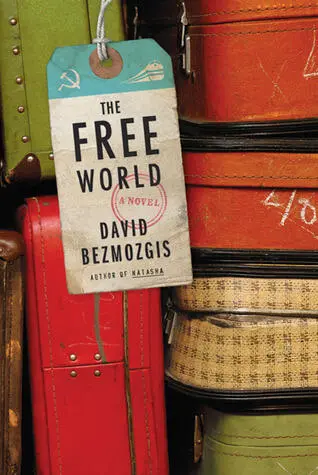
- Название:The Free World
- Автор:
- Издательство:Farrar, Straus and Giroux
- Жанр:
- Год:2011
- ISBN:нет данных
- Рейтинг книги:4 / 5. Голосов: 1
-
Избранное:Добавить в избранное
- Отзывы:
-
Ваша оценка:
The Free World: краткое содержание, описание и аннотация
Предлагаем к чтению аннотацию, описание, краткое содержание или предисловие (зависит от того, что написал сам автор книги «The Free World»). Если вы не нашли необходимую информацию о книге — напишите в комментариях, мы постараемся отыскать её.
There is Samuil, an old Communist and Red Army veteran, who reluctantly leaves the country to which he has dedicated himself body and soul; Karl, his elder son, a man eager to embrace the opportunities emigration affords; Alec, his younger son, a carefree playboy for whom life has always been a game; and Polina, Alec's new wife, who has risked the most by breaking with her old family to join this new one. Together, they will spend six months in Rome — their way station and purgatory. They will immerse themselves in the carnival of emigration, in an Italy rife with love affairs and ruthless hustles, with dislocation and nostalgia, with the promise and peril of a new life. Through the unforgettable Krasnansky family, David Bezmozgis has created an intimate portrait of a tumultuous era.
Written in precise, musical prose,
is a stunning debut novel, a heartfelt multigenerational saga of great historical scope and even greater human debth. Enlarging on the themes of aspiration and exile that infused his critically acclaimed first collection,
establishes Bezmozgis as one of our most mature and accomplished storytellers.
The Free World — читать онлайн бесплатно полную книгу (весь текст) целиком
Ниже представлен текст книги, разбитый по страницам. Система сохранения места последней прочитанной страницы, позволяет с удобством читать онлайн бесплатно книгу «The Free World», без необходимости каждый раз заново искать на чём Вы остановились. Поставьте закладку, и сможете в любой момент перейти на страницу, на которой закончили чтение.
Интервал:
Закладка:
— I do not need to describe for you the parting scene, Josef said. How to put it into words? I watched my son kiss his mother goodbye. It was like he buried her. Then, four months later, I buried her again. Like with all things, the second time was easier.
After his wife died, Josef applied for a visa. He traveled alone, carrying only his violin case and one other bag. He had already been in Italy for three months and there was still no telling when Canada might accept him. Letters were being sent; well-intentioned Jewish ladies were placing phone calls to Canadian ministers. As for how effective all this was, Josef had his doubts. But, if you listened to his son, you were liable to believe that Pierre Trudeau’s greatest concerns were what to do about Quebec and what to do about Roidman.
— By the way, Josef said, did you know that the Soviet Union was financing the Quebec separatists?
— That’s nonsense, Samuil said.
— During the Montreal Olympics they held secret meetings. Members of the Soviet contingent arrived with briefcases packed with money. They also revealed classified information, of an intimate nature, about various Canadian politicians.
— Where did you hear this? Samuil asked.
— Here. From a man from Moscow. He said he had it on good authority. To be honest, I feel as if I have learned more about the Soviet Union during my three months in Italy than in my sixty-three years in the Ukraine.
— What you’re learning is capitalist slander, Samuil said.
— Also a possibility. Still, one can see how it could make sense. Strategically speaking. This Quebec could become the “Cuba of the North.”
Waiting in Italy, on the seashore, in the summer, was not exactly a tragedy. Josef was prepared to wait a while longer, a few more months — but if nothing transpired he would apply to the United States. In New York, they accepted everybody. One leg, no legs, three arms: they took you anyway. His son could come to New York in his car and then simply drive him across the border. Once he was in the country Josef doubted the Canadians would notice that they’d gained another elderly invalid.
He recommended that Samuil also prepare a contingency plan.
— Contingency plan, Samuil said. What is my contingency plan?
— America, Josef said.
— America, Samuil snorted.
— Well, where else?
— Where else? The other place.
— What other place? Israel?
— The grave.
— I understand your perspective, Samuil Leyzerovich, Josef said. But please remember that I speak to you as a friend. It is not too soon to start making preparations. Half an hour. An hour. You fill out some forms, saying you weren’t a member of the Party, and that’s it.
— My youngest secured himself a job with HIAS. I’m acquainted with these forms.
— So, then.
— My hand would turn to stone before I wrote such a thing.
— Yes, I understand, Josef said, it’s a problem. But the Americans regard Communists the way the Canadians regard invalids.
— Stone, Samuil said.
— Samuil Leyzerovich, these are not your memoirs. In one’s memoirs — which are, so to speak, between one’s self and one’s soul — one must be truthful, but not, I would suspect, on an immigration form that is only between one’s self and the American immigration service.
— It is not a question of where one writes it, Samuil said. Apostasy is apostasy. It is always between one’s self and one’s soul.
Samuil felt that this statement possessed finality. It was as solid and imposing as a fortress. He identified himself with this fortress. His argument was himself. He felt as if aglow with moral satisfaction.
He left Club Kadima still aglow. However, before he reached home, the glow began to fade. He thought more about what Josef had said about the Party Story document. It disturbed Samuil to think of the dozens, the hundreds if not thousands of Party Stories being written by traitors and prevaricators to please the Americans. Samuil envisioned the dossier the American diplomats were compiling, full of false testimonies. In the end, it would lead to a gross distortion of the historical record. Samuil recalled life before the Communists and life after the Communists. He remembered the excesses of the bourgeoisie and the abject existence of the proletariat. He remembered hunger, cold, filth, penury, and, worst of all, the smothered hopes of gifted, honest proletarian youth. No one who had not experienced these things could legitimately judge the Communist state. Of course, he acknowledged that, at times, mistakes had been made, that opportunistic elements had wormed their way into positions of power, but the system could not be judged on the basis of rogues and impostors. Rogues and impostors could not be allowed to qualify the essential Communist picture. In order to see this picture, a person would need to take up residence inside Samuil’s head, where the real events of proletarian struggle and triumph were housed like a breathing archive.
In the weak light, Samuil saw the smudged face of his brother and of the other bookbinders, bent over the lathes in the chill of Baruch Levitan’s miserly home workshop.
He saw himself and Reuven stepping briskly through the dark streets of the Moskovsky district, risking beatings and arrests, to collect copies of Der emes and Der apikoyres that Hirsh Kogan had smuggled in from Russia and dropped in a barrel behind Ozolinsh’s blacksmith shop.
He saw the burning and undernourished faces of the girls on the education committee, folding pamphlets into the night after twelve hours at their sewing machines. Their pale, quick hands, their frayed coat sleeves, their serious expressions: Chaverte Rivka Shapira, Chaverte Shulamis Garber, Chaverte Malka Averbukh, and the great beauty, Bluma Fabrikant. All dead.
Where were they in the record of history? None would be found in the revisionist volumes of the émigrés’ Party Stories. In their place would be complaints over congestion in communal apartments, shortages of chocolate and of denim pants, repression of Zionist-nationalist organizations, and holy outrage over an anti-Semitic taunt shouted by some drunken bus driver.
5
Before they left Riga, Alec arranged for Polina to take a three-day immersive course given by an old classmate of his from the English school. The class was conducted in secrecy in the man’s apartment. There were six students, none of whom spoke any English. But for those three days, they were forbidden to speak any other language. The only Russian they heard came from some Soviet instructional recordings. Of those three days, Polina retained little more than two phrases. One was:
Did you go on a motoring tour of England?
The other was:
Why not visit the exhibition of national economy achievements of the USSR?
In Rome, she enrolled in a language class offered by a Jewish vocational agency. A young American girl taught the class, and she spent the first lesson demonstrating the differences between British and American English. At the end of the class, everyone came away feeling like they knew even less than when they went in.
To help her with her studies, Alec and Lyova took to speaking English in the mornings before Alec left for work. Lyova had learned some English in Israel because his civil engineering firm had had a German client. In Rome, he read the Herald-Tribune and The Times of London.
Good morning, Al.
Good morning, Leo.
Good morning, Paula.
Would you like a cup of coffee?
Yes, thank you.
It is a nice day.
The sun is shining.
Please open the window.
Читать дальшеИнтервал:
Закладка:
Похожие книги на «The Free World»
Представляем Вашему вниманию похожие книги на «The Free World» списком для выбора. Мы отобрали схожую по названию и смыслу литературу в надежде предоставить читателям больше вариантов отыскать новые, интересные, ещё непрочитанные произведения.








Обсуждение, отзывы о книге «The Free World» и просто собственные мнения читателей. Оставьте ваши комментарии, напишите, что Вы думаете о произведении, его смысле или главных героях. Укажите что конкретно понравилось, а что нет, и почему Вы так считаете.