Richard House - The Kills
Здесь есть возможность читать онлайн «Richard House - The Kills» весь текст электронной книги совершенно бесплатно (целиком полную версию без сокращений). В некоторых случаях можно слушать аудио, скачать через торрент в формате fb2 и присутствует краткое содержание. Год выпуска: 2013, Издательство: Picador, Жанр: Современная проза, на английском языке. Описание произведения, (предисловие) а так же отзывы посетителей доступны на портале библиотеки ЛибКат.
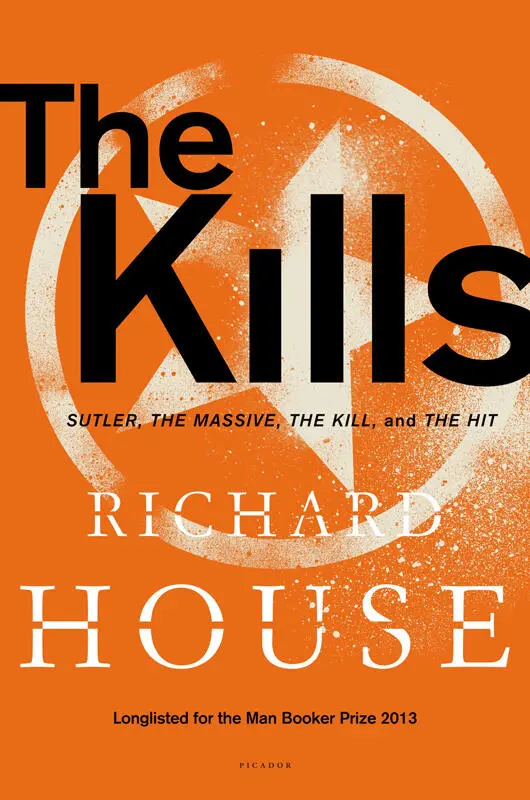
- Название:The Kills
- Автор:
- Издательство:Picador
- Жанр:
- Год:2013
- ISBN:нет данных
- Рейтинг книги:3 / 5. Голосов: 1
-
Избранное:Добавить в избранное
- Отзывы:
-
Ваша оценка:
The Kills: краткое содержание, описание и аннотация
Предлагаем к чтению аннотацию, описание, краткое содержание или предисловие (зависит от того, что написал сам автор книги «The Kills»). Если вы не нашли необходимую информацию о книге — напишите в комментариях, мы постараемся отыскать её.
The Kills — читать онлайн бесплатно полную книгу (весь текст) целиком
Ниже представлен текст книги, разбитый по страницам. Система сохранения места последней прочитанной страницы, позволяет с удобством читать онлайн бесплатно книгу «The Kills», без необходимости каждый раз заново искать на чём Вы остановились. Поставьте закладку, и сможете в любой момент перейти на страницу, на которой закончили чтение.
Интервал:
Закладка:
‘It wasn’t anyone. It doesn’t matter.’
Livia paused, then made herself smile. She stepped closer to Niccolò and apologized. Her tone became lighter, easier. ‘You’re right? This is your business. If they call you in and then they don’t speak with you it has nothing to do with me. I promise I won’t interfere.’
Niccolò nodded. There were things that she didn’t want to hear. Details about the clothes. Details about the murder. New ideas.
Livia waggled her hands. ‘I don’t need to know. I don’t want to hear how many times that boy was stabbed, or what else they’ve discovered. I don’t want such details in my head.’
* * *
Niccolò watched from the balcony as Livia kissed her in-laws goodbye. She waited as they got into their car and kept her hand raised in a minimal wave, crisp, precise, until they had driven out of sight — then immediately dusted her hands. She glanced up before returning to the building. Hearing the door close behind her, Niccolò flicked his cigarette into the street and returned to wash his hands and brush his teeth. On the table the remains of their small supper: olives, cold meats, bread, cut tomatoes and artichokes.
As Livia cleared the table she said he should not let them talk to him like that. ‘You could defend yourself a little more, you know.’ She stopped and grimaced, hand at her stomach. ‘I shouldn’t have eaten so late. Why do we always eat so late?’ She gathered the plates together. ‘Did you notice how they agreed with me? You watch, he’ll call tomorrow. I’m telling you.’ She paused and asked: ‘Don’t you mind how they speak to you? You barely said a word. It wouldn’t hurt if you stood up to them. Just once. That’s all you have to do. Stand up to them, and they will respect you.’
* * *
She spoke to the police later in the evening, broke her promise and called them to complain. She held her hand over her stomach, sometimes looking at Niccolò, and sometimes at the wall as she cleared up the confusion.
‘Someone called. I don’t think he would make that up. Someone invited him into the city,’ and then, with genuine anger. ‘That isn’t how it works.’
He knows what she will say. This is his story, although, to be honest, he’s sick of hearing it. Two years, she’ll say, he nearly died. They held him down, she’ll say, a foot on his neck, she’ll say, they beat him with a metal pole. She’ll try not to tap her head as she talks. She might give the detail about how he came across them, a band of men in one of the warehouses stripping out the units. She will explain how, even after the police had caught them, they couldn’t really explain why they’d done it. We’d already got what we came for. When it was done they took the pole with them and drove away, and nobody knows this except Niccolò, how he managed to get himself to the security barrier. From the warehouse to the barrier. It wouldn’t take two minutes to walk, but it took him all night and he made it on his belly, with his fingers in the dust and his toes pointing and pushing to drive himself forward across a concrete lot, across a rough stretch of scrub, across the open parking lot, all the way to the security barrier. The report says that the men dragged him, propped him up against the barrier and left him, but no, Niccolò had focused on the barrier and made it the whole way by himself. He knew what lonely was, he knew what effort was and what it cost him, that crawling on his belly to that barrier was something almost beyond him, an ocean to swim, or like turning bone to metal through pure force of will. He knew that when you have to focus on your breathing you are in trouble. He understood that everything comes at you one moment at a time, and when it came down to it he either made it to the barrier or he didn’t. He either survived or he did not.
Livia had one or two stories about her brother depending on her mood. Story one was always the attack, how she had heard this on the national news, about how she had stood up and screamed and screamed with grief. Story two, more often than not, was the story about how his wife had left him, taken their daughter and moved back north to Rivara, because he did not know who they were. He knew who they were in common ways, he could remember their histories, the birthdays, the courtship with his wife, but these events no longer had content, and while he knew enough to sometimes feel guilt, even that was not sustained. He knew that he had loved his wife. He just didn’t currently understand what that meant. She told this story when she was angry, or when she wanted to become angry. She didn’t speak about the day he married, his daughter’s birth. She didn’t explain that she had taught him to swim, and how beautiful he was, my god, how incredibly handsome, floating free of her arms, just loose, present, so very alive, and that every day she had to steel her heart because she was looking at someone who both was and wasn’t her brother, and how her only wish was to have him back. She didn’t speak about how easy he was, about how, before all of this Niccolò Scafuti didn’t have one miserable bone in his body. She hid the photos in his apartment for herself because she no longer believed in that perfect world.
TUESDAY: DAY P
Niccolò arrived early for work and sat in the booth frustrated. On the horizon hung one long grey cloud, smog rising from the city.
Fede sent Stiki up to the main building with the report and the logbook, he wanted to speak with Niccolò. Out on the counter were his study books, an English-language primer and an English-language newspaper. Niccolò was in no mood to talk, but seeing the newspaper, he asked Federico if he could read English.
‘Yes. Of course. My reading is better than my speaking. With reading,’ he explained, ‘I can take my time. As long as the subject isn’t too technical. That’s why a newspaper is good.’ Fede set his books away, and slipped the small and worn dictionary into a drawer beneath the desk. ‘I can manage. So did they say anything? Yesterday. The police?’
Niccolò took the student’s notebook from his pocket and set it on the desk. The notebook was almost full now, fat with newspaper clippings.
‘What’s this?’
Niccolò pushed the notebook across the desk.
Fede picked up the small book and looked through the pages, slowly turning and reading. ‘Do you understand any of this?’
Niccolò shook his head and asked if Fede could make any sense out of it.
‘No, it’s difficult.’ Fede frowned at the pages. ‘Tricky.’ The writing was small and slanted, difficult to read. He glanced quickly through the other pages; his head made a small bird-like peck when he came to the clippings. ‘What are these? What is this book? Where is it from?’ Fede closed the book and looked at the cover. He didn’t understand. ‘Surely this is evidence? Why haven’t you handed it to the police?’
Niccolò said that the police didn’t know about it, yet.
‘But I saw them myself, they had a whole team of men, they wouldn’t have missed it?’ Federico placed the book down on the desk. ‘You found this in the field? Why didn’t you give it to them yesterday?’ Federico opened the cover. ‘If this is the American’s notebook it might be important. It belongs to his family. You can’t keep it. You understand? They might be able to tell who he is. His family will want to know. You should call them immediately. I mean now. You should tell them now. Any news about this person is important.’
When Stiki returned he stood outside the booth and asked what was wrong. Fede shook his head and said it was nothing. Nothing he needed to explain.
Читать дальшеИнтервал:
Закладка:
Похожие книги на «The Kills»
Представляем Вашему вниманию похожие книги на «The Kills» списком для выбора. Мы отобрали схожую по названию и смыслу литературу в надежде предоставить читателям больше вариантов отыскать новые, интересные, ещё непрочитанные произведения.



Обсуждение, отзывы о книге «The Kills» и просто собственные мнения читателей. Оставьте ваши комментарии, напишите, что Вы думаете о произведении, его смысле или главных героях. Укажите что конкретно понравилось, а что нет, и почему Вы так считаете.