Pearl Buck - The Living Reed
Здесь есть возможность читать онлайн «Pearl Buck - The Living Reed» весь текст электронной книги совершенно бесплатно (целиком полную версию без сокращений). В некоторых случаях можно слушать аудио, скачать через торрент в формате fb2 и присутствует краткое содержание. Год выпуска: 2012, Издательство: Open Road Media, Жанр: Современная проза, на английском языке. Описание произведения, (предисловие) а так же отзывы посетителей доступны на портале библиотеки ЛибКат.
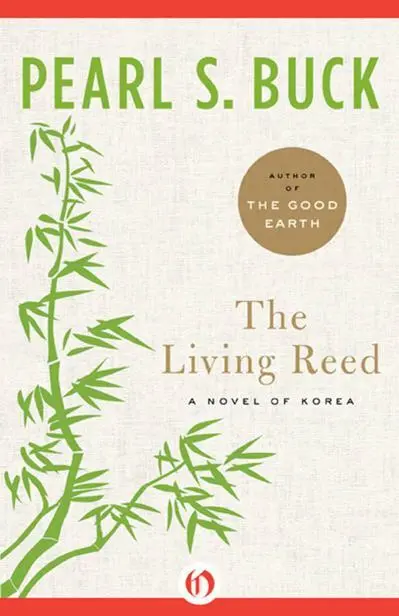
- Название:The Living Reed
- Автор:
- Издательство:Open Road Media
- Жанр:
- Год:2012
- ISBN:нет данных
- Рейтинг книги:4 / 5. Голосов: 1
-
Избранное:Добавить в избранное
- Отзывы:
-
Ваша оценка:
The Living Reed: краткое содержание, описание и аннотация
Предлагаем к чтению аннотацию, описание, краткое содержание или предисловие (зависит от того, что написал сам автор книги «The Living Reed»). Если вы не нашли необходимую информацию о книге — напишите в комментариях, мы постараемся отыскать её.
, Pearl S. Buck’s epic historical novel about four generations of one aristocratic family in Korea. Through the story of the Kims, Buck traces the country’s journey from the late nineteenth century through the end of the Second World War. The chronicle begins as the Kims live comfortably as advisors to the Korean royal family. That world is torn apart with the Japanese invasion, when the queen is killed and the Kims are thrust into hiding. Regarded by Buck as “the best among my Asian books,”
is a gripping account of a nation’s fight for survival, and a detailed portrait of one family’s entanglement in the ebb and flow of history.
The Living Reed — читать онлайн бесплатно полную книгу (весь текст) целиком
Ниже представлен текст книги, разбитый по страницам. Система сохранения места последней прочитанной страницы, позволяет с удобством читать онлайн бесплатно книгу «The Living Reed», без необходимости каждый раз заново искать на чём Вы остановились. Поставьте закладку, и сможете в любой момент перейти на страницу, на которой закончили чтение.
Интервал:
Закладка:
“What is this?” Il-han asked.
He looked about as he spoke. Silence was everywhere. The usual bustle of servants, the shouts and laughter of his children, and Sunia’s voice of welcome, all were gone.
“Master,” the gateman whispered. “We had warning just before sunset that this house would be attacked in the night.”
“Warning?” Il-han exclaimed. “How did it come?”
“The tutor told our mistress,” the man replied. “He was away all day, after you left, and he came in at noon and he told.”
“But why?”
The man shook his head. “I know nothing. Only my mistress bade us make all haste to leave and under her command we put clothing and food into boxes and baskets and as soon as darkness fell all went to the country except me. She bade me stay here until you came and to saddle your horse ready. I have saddled the two horses for I am to go with you.”
Il-han was astounded and somewhat vexed. “How can I leave the city at this time? All is in confusion and I do not know at what moment I shall be sent for at court.”
The servant interrupted. “Master, these questions can be answered when you are with our mistress again. Now we must leave, for who knows what lies ahead? You could be seized at any moment. You must retire now to your grass roof, otherwise you will lose your life, and if the Queen is angry with you, your family, too, will die. Who knows whether she will listen a second time to the American woman?”
When Il-han still hesitated, the servant began to weep silently but Il-han would not allow such pleading.
“Do not distract me with tears,” he said sternly. “I have more to consider at this moment than my own life or even the lives of my sons.”
Upon this the servant sobbed aloud. “And can you serve if you are dead? Your father stood here even as you do. I was only a boy but I stood beside him. But he was wise — he chose to retire to his grass roof and live and protest, rather than to let his voice be silenced in death.”
“My father?” Il-han exclaimed.
“Go to his house,” the servant said. “Search his books and you will find what he was. You never knew him.”
Why this moved Il-han he himself did not know, but he bowed his head in assent and the man went to the stables and led out the two horses, saddled and ready. Il-han held in his restless horse until he heard the gate of his house barred behind him and then he galloped into the night.
It was soon after midnight when he drew rein before the wooden gate set into the earthen wall which surrounded the farmhouse where his father had lived for so many years, alone except for his few old servants some of whom still lived here and would until they died. The ancient gateman sat outside on the stone step, staring into the darkness and huddled in his padded jacket. The night wind blew chill and the moon was dark when Il-han came down from his horse and the old man wakened and lit his paper lantern and held it up.
“It is your master,” Il-han’s manservant told him.
“We are waiting for you,” the old man said, coughing in the night wind.
With this he opened the gate, and Il-han strode into the courtyard. The sound of the horses’ feet told Sunia that Il-han had come and she opened the door of the house and he saw her there, her head lifted, the candles burning in the room behind her. He entered and closed the door.
“I thought you would never come,” she said.
“The road was endless,” he replied. “Tell me what happened.”
Before she could reply they heard a knock on the inner door, and she called entrance and the tutor came in.
For the first time Il-han saw this man was no longer young.
He came in, not shy or hesitating, and he looked Il-han full in the face.
“Sir,” he said, “shall I speak now or shall I wait until you are bathed and have eaten and rested?”
“How can I rest or bathe or eat when I know nothing of what has happened?” Il-han replied.
“Can anyone hear us?” Sunia asked, her voice low.
“I have my men on guard,” the tutor said.
“Your men!” Il-han exclaimed. “Who are you?”
The tutor motioned to Il-han to be seated, and Il-han sat down on the floor cushion at the table in the center of the room. He was suddenly very weary, and he braced himself for whatever news he must hear. When he sat, Sunia sat also, and he gestured to the tutor to be seated. Had he been only the tutor he would not have dared to seat himself, but now he did and face to face with Il-han who had been his master, the tutor spoke.
“I do not know whether you have heard that a new revolution is growing everywhere like fire in the wild grass. Yet it is so. The landfolk are ready to rise up in every village and on every field. They can no longer suffer what they are suffering nor will they any more pay with their life and their strength for what is being forced upon them.”
A dark foreboding fell upon Il-han. “I suppose you mean the Tonghak.”
“Only a name for being in despair, sir,” the tutor said. “I must tell you that it was I who gave your household warning. I am grateful to you for sheltering me all these years in your house, as your father sheltered mine. Now I must warn you that the turmoil has only begun. The landfolk have lost hope. They have come together under the Tonghak banner and no one can foretell what they will do.”
“Tonghak!” Il-han cried. “Are you a Tonghak?”
“I am,” the young man said. He stepped back and folded his arms and looked straight into Il-han’s eyes.
“I cannot understand this,” Il-han exclaimed. “You have had ease and courtesy in my house. None has oppressed you or watched you. Why do you join with those Tonghak rebels?”
“Sir,” the man said, “I am a patriot. I take my place with our people. And who knows them better than you do, sir? The landfolk are the ones who pay for everything. They only are the taxed, for we have no industries such as you say the western nations have. Here all taxes fall upon the land. When the King wants money for these new ventures of his, the new army, the post office, the trips abroad, such as the one you made, not to speak of the diplomats and the delegations, the new machines he wants to buy, where does the King get the money? He taxes the landfolk! And as if this were not enough, who pays for the corruption inside the Court? And outside as well, for every petty magistrate has his little court, and the Queen has her relatives and her favorites, and who pays — who pays? The countryfolk who till the land, even the land they cannot own, which they can neither buy nor sell because it belongs to some great landlord, and he does not pay the tax, oh no, it is the lowly peasant who only rents the land who pays the tax! Sir, does your conscience never stab you in the heart?”
Il-han stared at the tutor as though he saw a madman. “Am I to blame?” he demanded.
“You are to blame,” the tutor said, his voice and his face very stern. “You are to blame because you do not know. You do not allow yourself to know. You traveled through the country for many months, did you not, and you saw nothing except mountain and valley and sea and people moving like puppets. Have you ever heard of a Russian named Tolstoy?”
“I know no Russians,” Il-han said.
“Tolstoy was a man like you, a landowner,” the tutor went on. “Yet his conscience woke. He saw his people, the people whom he owned because they belonged on his land, and when he saw them he understood that they were human beings and he began to suffer. Sir, you must suffer! It is for this that I have saved you.”
Il-han could not swallow such talk. It was enough for him to be amazed that the meek young man who he had thought was only a scholar, employed to teach his elder son, now showed himself a stranger.
Читать дальшеИнтервал:
Закладка:
Похожие книги на «The Living Reed»
Представляем Вашему вниманию похожие книги на «The Living Reed» списком для выбора. Мы отобрали схожую по названию и смыслу литературу в надежде предоставить читателям больше вариантов отыскать новые, интересные, ещё непрочитанные произведения.





Обсуждение, отзывы о книге «The Living Reed» и просто собственные мнения читателей. Оставьте ваши комментарии, напишите, что Вы думаете о произведении, его смысле или главных героях. Укажите что конкретно понравилось, а что нет, и почему Вы так считаете.