Pearl Buck - The Living Reed
Здесь есть возможность читать онлайн «Pearl Buck - The Living Reed» весь текст электронной книги совершенно бесплатно (целиком полную версию без сокращений). В некоторых случаях можно слушать аудио, скачать через торрент в формате fb2 и присутствует краткое содержание. Год выпуска: 2012, Издательство: Open Road Media, Жанр: Современная проза, на английском языке. Описание произведения, (предисловие) а так же отзывы посетителей доступны на портале библиотеки ЛибКат.
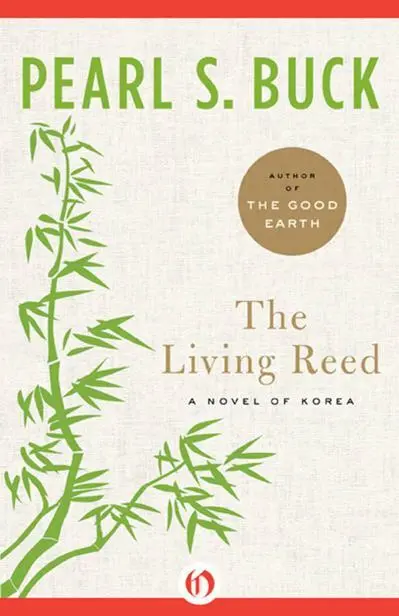
- Название:The Living Reed
- Автор:
- Издательство:Open Road Media
- Жанр:
- Год:2012
- ISBN:нет данных
- Рейтинг книги:4 / 5. Голосов: 1
-
Избранное:Добавить в избранное
- Отзывы:
-
Ваша оценка:
The Living Reed: краткое содержание, описание и аннотация
Предлагаем к чтению аннотацию, описание, краткое содержание или предисловие (зависит от того, что написал сам автор книги «The Living Reed»). Если вы не нашли необходимую информацию о книге — напишите в комментариях, мы постараемся отыскать её.
, Pearl S. Buck’s epic historical novel about four generations of one aristocratic family in Korea. Through the story of the Kims, Buck traces the country’s journey from the late nineteenth century through the end of the Second World War. The chronicle begins as the Kims live comfortably as advisors to the Korean royal family. That world is torn apart with the Japanese invasion, when the queen is killed and the Kims are thrust into hiding. Regarded by Buck as “the best among my Asian books,”
is a gripping account of a nation’s fight for survival, and a detailed portrait of one family’s entanglement in the ebb and flow of history.
The Living Reed — читать онлайн бесплатно полную книгу (весь текст) целиком
Ниже представлен текст книги, разбитый по страницам. Система сохранения места последней прочитанной страницы, позволяет с удобством читать онлайн бесплатно книгу «The Living Reed», без необходимости каждый раз заново искать на чём Вы остановились. Поставьте закладку, и сможете в любой момент перейти на страницу, на которой закончили чтение.
Интервал:
Закладка:
“How can you say so?” she exclaimed. “He is only a child.”
She put her arms around the elder son and murmured to him, and Il-han stood holding the younger one on his shoulder until suddenly he was impatient.
“Come, come, Sunia,” he said, “let us make some order in this family of ours. Take the children away and feed them and put them to bed. Leave me alone for a while.”
She obeyed, casting hostile looks at him as she went, to which he paid no heed. His own confusion must first be resolved before he could be father and husband again. Impatient to be alone, he closed the door after them, and sat down on the floor cushion facing the garden and sank himself into meditation.
The disorder in his family was the disorder of his people. How diverse were the elements! Here under the grass roof of his father’s house, here where his father had lived out his long life as a scholar and a recluse, the spirit of the past descended again. Must he repeat the life of his father in his own life? He had endeavored to avoid the national disease of dissension. He had maintained a prudent and middle course, now with the Queen, now with the King, aware of old loyalties, yet ready for new. To live a floating life, swimming with the tide and never against it, ready for all change provided it was for the good of his country, he had nevertheless come to the same place where his father had come in the years before he himself was born, and this by a totally different path. His father had never wavered in his faithfulness to the past, and so had been hated only by those who dreamed of the future. Now he, the son, was hated by all, by those who clung to the Queen and by those who clung to the King. Was there no place for him in his own country? If not, what could he teach his sons? Here in his own house the Tonghak rebellion was brewing, while he unknowing had pursued his middle way. He felt lost and distracted and the day passed without clearing his mind or lifting his spirit.
“All that I know about myself,” he told Sunia in the restless night, “is that I am Korean. I am born of this soil, I have been nurtured on its fruits and its waters. The blood and bones of my ancestors are my blood and my bones. Therefore I must know myself first.”
She let him talk, his head on her breast. And after a while he said, “I have never had time to know myself. I have always been at the call of others. Now I shall answer no summons. I will close the doors of my grass-roof house against the world. I shall be alone with myself.”
Womanlike, she listened to such musings and answered yes, yes, do so, whatever you think best, and when morning came she busied herself again about the old house, silk-spinning and making kimchee and keeping festivals. To live in this country house after the years in the city was in itself a task, for here nothing was convenient. The kitchens were old and the caldrons worn thin, mice and rats ran everywhere, lizards came creeping out of walls, and spiders festooned their webs among the blackened roof beams. In the wall closets the bed mattresses were mildewed, in the rooms the floor cushions were torn and their linings split. There were also her sons, and where to find a new tutor for them was a burden.
“You must teach them,” she told Il-han one day, “or else you must find a teacher.”
Who would dare come now to this house to teach his sons? In the end Il-han was compelled to teach them, lest they grow up fools and yokels. Yet he found the teaching a task, and he could only force himself to it, teaching them two hours in the morning and then setting them free for the rest of the day, and Sunia complained that they were twice as mischievous after he had taught them as they were before, the elder one always in the lead. At last she set Il-han’s man servant to watch them and keep them from falling into the fishponds and smothering in the rice vats and running down the road to be lost.
As for Il-han, he did not know what to teach his sons and he could only teach them what he himself was trying to learn. As he studied afresh the history of his people, each day he made a simple lesson for his children of what he himself had learned the day before. His father’s books were his source and his treasure, and how vast the library was he had not realized until now. Here in the shelves of four connecting rooms lay the rolls of manuscripts and books, a room for each of the subjects of learning, one for literature, another for history, another for philosophy, and the fourth for mathematics, economics and the calendar. With philosophy was also politics, for these two were inseparably together both in history and in the present, and one cannot be considered without the other.
He knew that his people were divided by geography. Those of the rugged north, where craggy mountains split the sky, were more rude, less cultivated, less learned than those of the south. Troublemakers they were called, revolutionary by nature, and the cause for this was partly in that most landfolk owned their own land. Moreover, they did not plant rice paddies but they grew wheat on dry fields. They were scornful of the people of the south, declaring them effete and lazy, scheming rascals without ambition, working on land that others owned. This division went so deep that even here in the capital city, south meant those nobles whose families lived in the southern part of the city, as Il-han’s family had for many generations, and north meant those whose houses were in the northern part of the city. The Noron, or northern, faction, was sometimes in power in government, and sometimes the Namin, or southern faction, took power. The struggle in the capital was the symbol of the struggle everywhere among his people, and he himself was a symbol, for he and his fellows had as children been kept within the circle of the Namin, and Sunia’s family had been Namin, like his, else neither his family nor hers would have considered it possible to allow marriage between them. Namin would not marry Noron. Yet it seemed to him sometimes as he continued day after day to study the books in the library and to express them in essence to his sons, young as they were, that this very division had its benefits. For while one faction was in power, the opposition in retreat fought it with vigor and device, and their rebellion was expressed in strong music and passionate poetry so that much of the great literature of his people sprang from the sources of dissension.
This conception seemed to him so apt, so correct, that he cast about in his mind one day as to how to express it to his sons in language which they could understand. It was autumn again, the season of high skies and fat horses. Sunia and her women were making kimchee, and the smell of fresh cabbage, of white radishes a foot long, of red peppers and garlic and onions, ground ginger and cooked beef scented the air. She ran into his room, he looked up from his book and saw her there, wrapped in a wide blue cotton apron, her hands wet with salt, her beautiful face pleading and impatient.
“Can you not keep the boys with you today?” she demanded. “We are distracted with their naughty ways. The elder one throws the cabbages here and there like balls, and the little one follows him. I cannot watch them and get the kimchee into the vats, too. That elder one — he hid in a vat and we could have smothered him without knowing it.”
“Send them here,” he said, his own patience tried. They came in then, the two of them hand in hand, dressed in clean garments and with hair freshly combed. His heart melted at the sight of them in spite of himself, but he made himself stern.
“Sit down,” he said as coldly as he could.
They sat down, awed for the moment by his coldness, and he bit his lip, contemplating them as they sat facing him. Their brown eyes, so trusting and clear, their cream-white skin tanned by the sun, their red cheeks and lips, made him long to embrace them but he would not allow himself the pleasure. However his love welled up in him, he must control it and make the surface cool and firm.
Читать дальшеИнтервал:
Закладка:
Похожие книги на «The Living Reed»
Представляем Вашему вниманию похожие книги на «The Living Reed» списком для выбора. Мы отобрали схожую по названию и смыслу литературу в надежде предоставить читателям больше вариантов отыскать новые, интересные, ещё непрочитанные произведения.

Обсуждение, отзывы о книге «The Living Reed» и просто собственные мнения читателей. Оставьте ваши комментарии, напишите, что Вы думаете о произведении, его смысле или главных героях. Укажите что конкретно понравилось, а что нет, и почему Вы так считаете.