Reif Larsen - I Am Radar
Здесь есть возможность читать онлайн «Reif Larsen - I Am Radar» весь текст электронной книги совершенно бесплатно (целиком полную версию без сокращений). В некоторых случаях можно слушать аудио, скачать через торрент в формате fb2 и присутствует краткое содержание. Год выпуска: 2015, Издательство: Penguin Press, Жанр: Современная проза, на английском языке. Описание произведения, (предисловие) а так же отзывы посетителей доступны на портале библиотеки ЛибКат.
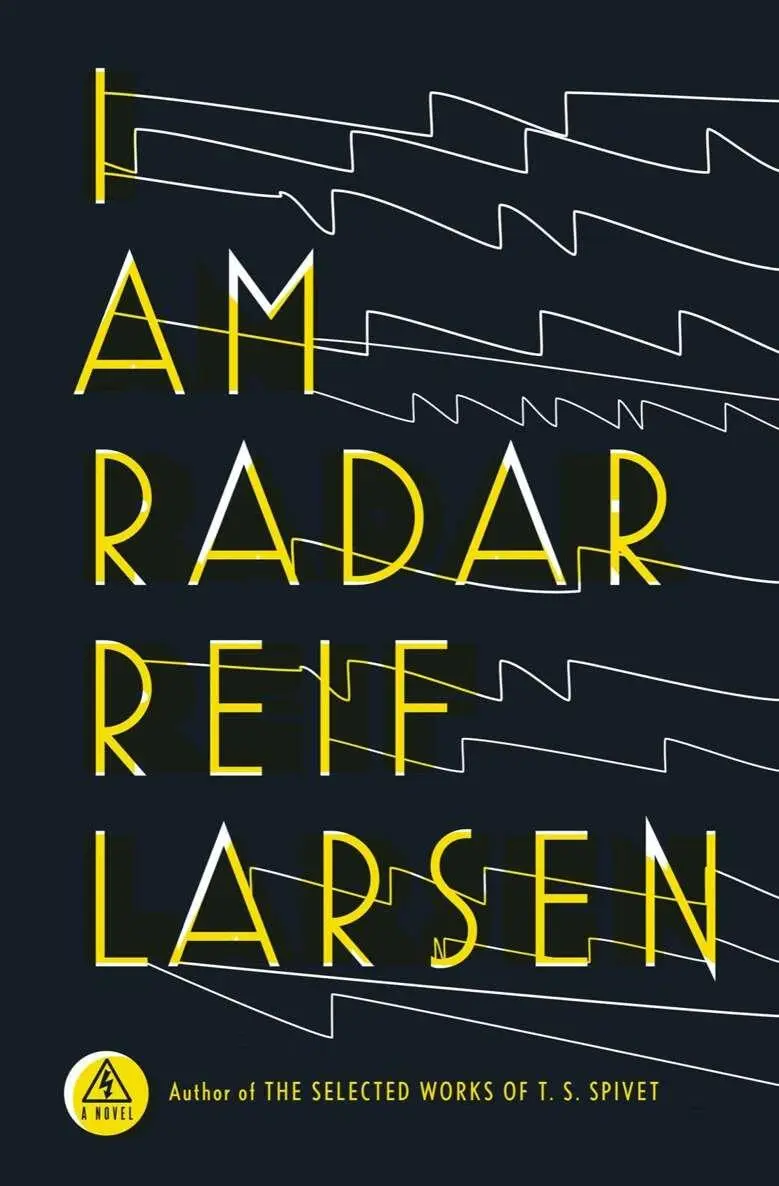
- Название:I Am Radar
- Автор:
- Издательство:Penguin Press
- Жанр:
- Год:2015
- ISBN:нет данных
- Рейтинг книги:3 / 5. Голосов: 1
-
Избранное:Добавить в избранное
- Отзывы:
-
Ваша оценка:
I Am Radar: краткое содержание, описание и аннотация
Предлагаем к чтению аннотацию, описание, краткое содержание или предисловие (зависит от того, что написал сам автор книги «I Am Radar»). Если вы не нашли необходимую информацию о книге — напишите в комментариях, мы постараемся отыскать её.
I Am Radar Deep in arctic Norway, a cadre of Norwegian schoolteachers is imprisoned during the Second World War. Founding a radical secret society that will hover on the margins of recorded history for decades to come, these schoolteachers steal radioactive material from a hidden Nazi nuclear reactor and use it to stage a surreal art performance on a frozen coastline. This strange society appears again in the aftermath of Cambodia’s murderous Khmer Rouge regime, when another secret performance takes place but goes horrifically wrong. Echoes of this disaster can be heard during the Yugoslavian wars, when an avant-garde puppeteer finds himself trapped inside Belgrade while his brother serves in the genocidal militia that attacks Srebrenica. Decades later, in the war-torn Congo, a disfigured literature professor assembles the largest library in the world even as the country around him collapses. All of these stories are linked by Radar — now a gifted radio operator living in the New Jersey Meadowlands — who struggles with love, a set of hapless parents,and a terrible medical affliction that he has only just begun to comprehend.
I Am Radar — читать онлайн бесплатно полную книгу (весь текст) целиком
Ниже представлен текст книги, разбитый по страницам. Система сохранения места последней прочитанной страницы, позволяет с удобством читать онлайн бесплатно книгу «I Am Radar», без необходимости каждый раз заново искать на чём Вы остановились. Поставьте закладку, и сможете в любой момент перейти на страницу, на которой закончили чтение.
Интервал:
Закладка:
“And there would be no RGBNN.”
Kermin stopped and stared at his host. “How did you know about this?” he said.
“You thought no one was listening, didn’t you? We are always listening.”
The RGBNN. Kermin had not thought about these letters in some time. A lantern was lit in the recesses of his memory. How we forget! How we forget everything!
Kermin had been in America only six months when his father, Dobroslav Radmanovic, brave radioman for the vanquished Chetniks, collapsed and died while waiting in line at the A&P, ground chuck in hand. A brain tumor had been slowly filling the soft space beneath his skull, an artery had burst, and Dobroslav had unceremoniously surrendered his ticket, at the age of thirty-seven leaving his son orphaned and alone in a strange land.
Luckily, the bureaucratic beast that was the Bergen County Department of Human Services had sent Kermin to the Simics, a well-meaning Serbian-Australian couple who lived in a diminutive row house a stone’s throw from exit 13 of the New Jersey Turnpike.
Luka, Kermin’s new foster father, was quick to denounce the “Chetnik savages,” who he believed had given Serbs a bad reputation abroad.
“No offense to your father, but those men are wicked,” he said in Serbian. “The only reason to grow your beard this long is because you are shipwrecked. Otherwise, you have something to hide. The Chetnik is the devil sitting on the Serb’s shoulder, whispering everything we do not need to hear.”
“In English, ” said Weema, Luka’s wife, emerging with cocktail and spatula in hand. “Otherwise, the little rooster will never learn.”
“In English, in English,” Luka agreed. “Everything is clearer in English. Do you know, my little rooster, that it is impossible to tell a lie in English even if what you say is not true? The opposite is true in Serbian: everything you say is a lie, even if what you say is true. And that is the truth.”
The Simics had done their best to give Kermin a Normal American Childhood. They had indeed taught him English. They had sent him to school. They had brought him to St. Sava’s each Sunday. They had tolerated his strange radio habits. And yet, as Kermin tried to settle into this new life he had inherited, he could not help feeling a great chasm opening up around the question of his father’s legacy. Until the day he died, Dobroslav had never once spoken a bad word about either Dujic or the Chetnik cause. Such unequivocalness left his son balancing a degree of cautious reverence for his father’s memory with a growing mistrust for the Chetniks themselves, whom he had increasingly come to understand as collaborationist, disorganized, and potentially genocidal. How, then, to reconcile the participation of someone you loved in what was most probably a very bad thing? Could his father still be a good man who had also participated in evil deeds?
Kermin had resolved this, at least in part, by founding the Ravna Gora Broadcast News Network (RGBNN) when he was sixteen years old. Transmitting from his bedroom in Elizabeth, using a homebrewed radio setup, the RGBNN was a short-lived exercise in making right what was once wrong: it exclusively broadcast elaborate (and one must say, incoherent) anti-fascist manifestos that Kermin had penned himself. He would read these aloud over Luka’s old Serbian records.
“Ladies and gentlemen, we are all equal rights,” young Kermin intoned into his microphone. “No one can tell us how to make difference from others. We are all made from same branches of trees. We are all human branches. Past is past, future is future, man is man, woman is woman.”
Any self-consciousness about the clumsiness of these sermons was mitigated by the knowledge that no one was listening to his frequency, and even if they were, they certainly wouldn’t know who was speaking. At least this was what he had assumed.
• • •
“YOU ARE JOKING ME,” Kermin said to Leif, shaking his head. “Truly — how did you find out? No one knows this.”
“You know what your problem is, Kermin?” said Leif, smiling. “You keep wanting us to be different, but the more you get to know me, the more you realize that we are exactly the same.”
They walked in silence. The light in the sky had grown soft and casual, like the back of a hand. The drumming popped lightly through Kermin’s radio.
Leif stopped. “Tell me, Kermin, are you familiar with Heinrich von Kleist?”
“No.”
“Kleist wrote an essay called ‘On the Marionette Theatre.’ Not an essay, really — more of a dialogue. . in the Socratic tradition. You know Socrates, yes?”
Kermin shook his head. “Not personally.”
Leif laughed out loud. “That is a good one. ‘Not personally.’ I must remember that one.”
Kermin smiled at his unintentional humor. For just an instant, he felt like the smartest man alive.
“Well, I don’t know Socrates personally, either,” said Leif. “Nor Kleist. But in his essay, two men discuss puppetry, which at the time was seen as a petty craft, performed by unskilled peasants for children and criminals. In many ways, not that different from how it is perceived today, yes?”
“Puppets?” said Kermin. “Like Pinocchio?”
“You see? You think of puppets and you immediately think of children. You have been corrupted by a lack of imagination. Kleist’s essay addresses this exact problem. . In his piece, one of the men proposes that the puppet, without any awareness of self, is more graceful, more true, in the Kantian sense, than any human actor can possibly be. This astonishes his partner, who, like you, has never before considered the puppet as anything but a child’s toy. But here, then, is the problem: a human cannot move without also observing his own movement, and in observing it, he corrupts it. A puppet doesn’t suffer from this same condition. It’s free to inhabit only the movement asked of it, nothing more, and in doing so, the puppet tempts perfection — and, indeed, God himself.”
“Without observation, there is no life.”
“But how do you know? This is an assumption on your part, yes?”
Kermin turned off his radio. “You are a crazy man.”
“No, Kermin, I’m a puppeteer. There’s a difference,” said Leif. “Come, I want to show you something.”
They walked down some steps, through a gate, and to the door of a large house that Kermin had not seen before. Leif paused with his hand on the doorknob.
“Don’t be alarmed by what you’re about to see,” he said. “Your life will never be in danger. Do you trust me?”
“No.”
“Fine. Probably better this way,” said Leif and opened the door.
The entire house was one large room, with high ceilings and a dimly lit stage at its center, surrounded by several rows of empty chairs. In the middle of the stage stood a bear, perhaps nine feet tall. At first Kermin thought the bear was merely a taxidermied statue, but then he saw its head twist and one of its paws shudder and he realized the thing was alive. He took a step back against the wall.
“Don’t be afraid,” said Leif. “We’ve controlled Gunnar thoroughly. He only knows his task.”
“He is real bear?”
“As real as you or I,” said Leif. “Now I want you to fight him.”
“Jesi lud.”
“I assure you, there’s no danger. Gunnar will never fight back; he has been trained only to defend.” Leif picked up what looked like a fencer’s rapier. “The point is not sharp, so have no fear about injuring the creature. Your only objective is to try and tap the pendant attached to the bear’s chest. If you do this, the alarm will chime and the fight will be over.”
“I’m not fighting a bear. He will kill me.”
Читать дальшеИнтервал:
Закладка:
Похожие книги на «I Am Radar»
Представляем Вашему вниманию похожие книги на «I Am Radar» списком для выбора. Мы отобрали схожую по названию и смыслу литературу в надежде предоставить читателям больше вариантов отыскать новые, интересные, ещё непрочитанные произведения.











Обсуждение, отзывы о книге «I Am Radar» и просто собственные мнения читателей. Оставьте ваши комментарии, напишите, что Вы думаете о произведении, его смысле или главных героях. Укажите что конкретно понравилось, а что нет, и почему Вы так считаете.