Radwa Ashour - Blue Lorries
Здесь есть возможность читать онлайн «Radwa Ashour - Blue Lorries» весь текст электронной книги совершенно бесплатно (целиком полную версию без сокращений). В некоторых случаях можно слушать аудио, скачать через торрент в формате fb2 и присутствует краткое содержание. Город: Doha, Год выпуска: 2014, ISBN: 2014, Издательство: Bloomsbury Qatar Foundation Publishing, Жанр: Современная проза, на английском языке. Описание произведения, (предисловие) а так же отзывы посетителей доступны на портале библиотеки ЛибКат.
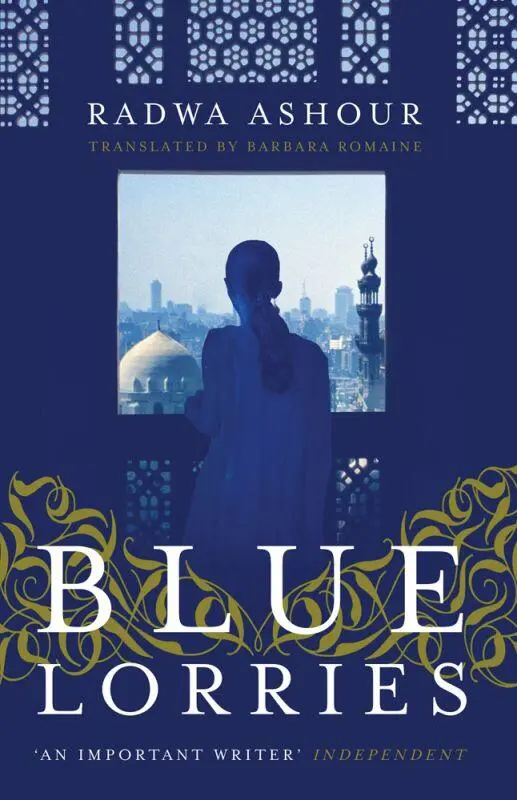
- Название:Blue Lorries
- Автор:
- Издательство:Bloomsbury Qatar Foundation Publishing
- Жанр:
- Год:2014
- Город:Doha
- ISBN:9789927101250
- Рейтинг книги:4 / 5. Голосов: 1
-
Избранное:Добавить в избранное
- Отзывы:
-
Ваша оценка:
Blue Lorries: краткое содержание, описание и аннотация
Предлагаем к чтению аннотацию, описание, краткое содержание или предисловие (зависит от того, что написал сам автор книги «Blue Lorries»). Если вы не нашли необходимую информацию о книге — напишите в комментариях, мы постараемся отыскать её.
The more things change, the more they stay the same. Through student sit-ins, imprisonments, passionate arguments, accidental alliances, fallen friends, joys and regrets, Nada’s story grows into the story of Egypt’s many celebrated activists such as Arwa and Siham. Moving, uplifting and deeply human, Radwa Ashour’s masterpiece is the story of Egypt in the second half of the twentieth century and a paean to all…
Blue Lorries — читать онлайн бесплатно полную книгу (весь текст) целиком
Ниже представлен текст книги, разбитый по страницам. Система сохранения места последней прочитанной страницы, позволяет с удобством читать онлайн бесплатно книгу «Blue Lorries», без необходимости каждый раз заново искать на чём Вы остановились. Поставьте закладку, и сможете в любой момент перейти на страницу, на которой закончили чтение.
Интервал:
Закладка:
‘Nada, what do you say we get married?’
‘How can we get married and set up house when we’re students? My father is paying my expenses, and your family’s paying yours.’
‘We can work while going to school.’
I laughed. ‘How? We can’t find enough time for studying to begin with — we don’t go to most of the lectures as it is! Besides, we’re not even twenty! Siham and Tawfik split up, Arwa and Khaled as well. It seems to me marriage is a strategic decision, to be taken by a person who’s mature and self-assured. I laughed again. It’s like those well-made commodities you expect to last a lifetime. I’m going to graduate from the university first and work for a few years before I think about marriage!’
He turned pale, then burst out shrilly, strident in his accusation: ‘You don’t love me. You don’t know the meaning of love. You’re just one of the bourgeois, and you think only of marriage bourgeois-style. Your revolutionary ideas are nothing but a superficial shell. You went to Paris for the pleasure and the spectacle, you threw me on the mat and left. Your father took part in the dissolution of the Party!’
He turned his back on me and befriended another girl.
Then began a new phase in my life, my responsibility for which I could not neglect, nor could I deny the joy it brought me.
Hamdiya took me aside, looking conspicuously pale and wan. ‘There’s something I want to talk to you about,’ she said. I looked at her. She said she was pregnant. I didn’t know what I was expected to say, nor did I know how to deal with the news. I said nothing, as if I hadn’t heard, or had heard her but not grasped the words.
‘I’m afraid to tell your father,’ she said.
‘Why? He’ll be overjoyed.’
‘No, he won’t. He made an agreement with me before we got married that we wouldn’t have children. I didn’t intentionally break my promise — I got pregnant by accident.’
‘Do you want to terminate the pregnancy?’
When she didn’t reply, I said, ‘Tell him in my presence, and then leave it to me.’
I surprised myself in saying this, not knowing why I said it or why I had decided so quickly and resolutely that I would protect her from my father.
After dinner, Hamdiya made tea and brought it to us in the sitting room. Then she sat down beside me and said in a faint voice, looking at my father, ‘Doctor (for this is what she called him), yesterday the physician confirmed that I’m pregnant.’
There was a moment’s silence, which was broken by my father’s voice. ‘It’s not a problem. You can have an abortion.’
I joined the conversation. ‘Why an abortion? Does she have some health problem that prohibits her from carrying and bearing a child?’
Neither of them said anything. Then my father looked at me. ‘I’m about to turn fifty, Nada!’
‘And your point is?’
I was gathering my forces, and it showed in my voice, which seemed louder than I wanted it to be.
‘My point is that I may not live long enough to raise this child!’
I said, ‘God give you strength and good health — may you live a hundred years. Congratulations, Hamdiya!’
Hamdiya was watching my father, waiting for a decision or a pronouncement, which struck me as provocative and offensive. Looking at my father, I said, ‘Congratulations, Abu Nada!’
He raised his voice. ‘I have a daughter, and that’s enough.’
I shouted, ‘But Hamdiya has a right to bear a child. And you have no right to deprive her of that, or to deprive me of a sister or brother. Hamdiya may accept your insistence on an abortion, and she may forgive you, but I won’t accept or forgive!’
I went into my room and slammed the door.
The battle over the baby lasted seven days, culminating in my father’s capitulation. Nor was this favourable outcome a matter only of the battle to save the child; it was also an occasion for collaboration between Hamdiya and me, as if my defence of her right to this baby conferred on me also some right where it was concerned — not merely that of the sister who would delight in the baby after it was born, but the right to participate in actual maternity, by following its progress from the early stages of pregnancy to preparing to receive the newborn, whose name my father and Hamdiya had given me the honour of choosing.
Chapter twelve
Lady Fortuna comes on the scene
Life can be melodramatic — it can lead you unexpectedly to a series of events so fascinating and so extravagant in their sentimentality that they lend legitimacy to the Arab films we were raised on. For example, there’s the one with the child actress Fayrouz, at the end of which she cries out in the courtroom, ‘Papa, Papa — that’s my Papa!’ and he embraces her — her adoptive father, the goodhearted vagabond (Anwar Wagdi), and the audience’s tears flow at the happy ending. Or any number of films in which we follow the trials and tribulations of the innocent heroine (played by Shadia or Faten Hamama), who is usually young and petite. Her cheerfulness is fortified by the horror of the evils she encounters, and the cruel adversity she endures throughout the film, until the truth comes out at the end, typically with the dawn call to prayer resounding in the background. And since we all, to one degree or another, grew up under the canopy of the shade tree that is Egyptian cinema, we all indisputably know the meaning of melodrama, although we may be unable to define it as a technical term (that is, we are in the position of the little girl in Dickens’s Hard Times , whom the headmaster asks in the classroom, ‘Give me your definition of a horse.’ And the child — whose family works for the circus, living among horses and dealing with them daily at close range — is unable to give the headmaster the scientific definition he is after: ‘A horse is a quadruped… etc.’) Life, then, surprises us with its melodrama, just as Lady Fortuna surprises us — she whom the ancient Romans envisaged as a blindfolded woman holding a vast wheel from which were suspended human beings and their destinies. The good lady would turn the wheel suddenly, at random, and those at the top would wind up at the bottom, while those at the bottom would come to rest at the top.
One week before Hamdiya gave birth, my father died of a heart attack.
He died before he reached the age of fifty. He died suddenly, with no telltale illness or pain to suggest even a fleeting impression that he might die. The men carried the coffin, the deep hole in the earth waited, and the mourning-women of the village began their wailing, which rose and intensified as soon as we drew near to the outskirts of the village. In a spacious hall designated specially for the women, Hamdiya stretched out on the floor beside my grandmother, who kept asking her if she could manage this, for her belly was bulging with the nine months of her pregnancy, making it rather a problem for her to sit cross-legged on the ground. After two days, my aunt whispered in my ear, ‘Hamdiya’s belly is very large — I’ve never seen such a big belly. She may have twins.’ Then, ‘Her belly has dropped, God help us — she could go into labour at any moment.’ But the baby didn’t give occasion for any further consternation. He waited.
Six days later we returned home from Upper Egypt, and on the seventh day after my father’s death Hamdiya gave birth to a boy. Twenty minutes later the nurse came out of the birthing room, laughing. ‘And a boy!’ I thought she was repeating the news, either in celebration or in the hope of some extra compensation. It was only after Hamdiya emerged from the birthing room that I realised the nurse had been conveying to me part two of the announcement: Hamdiya had given birth to two boys.
Читать дальшеИнтервал:
Закладка:
Похожие книги на «Blue Lorries»
Представляем Вашему вниманию похожие книги на «Blue Lorries» списком для выбора. Мы отобрали схожую по названию и смыслу литературу в надежде предоставить читателям больше вариантов отыскать новые, интересные, ещё непрочитанные произведения.









Обсуждение, отзывы о книге «Blue Lorries» и просто собственные мнения читателей. Оставьте ваши комментарии, напишите, что Вы думаете о произведении, его смысле или главных героях. Укажите что конкретно понравилось, а что нет, и почему Вы так считаете.