Radwa Ashour - Blue Lorries
Здесь есть возможность читать онлайн «Radwa Ashour - Blue Lorries» весь текст электронной книги совершенно бесплатно (целиком полную версию без сокращений). В некоторых случаях можно слушать аудио, скачать через торрент в формате fb2 и присутствует краткое содержание. Город: Doha, Год выпуска: 2014, ISBN: 2014, Издательство: Bloomsbury Qatar Foundation Publishing, Жанр: Современная проза, на английском языке. Описание произведения, (предисловие) а так же отзывы посетителей доступны на портале библиотеки ЛибКат.
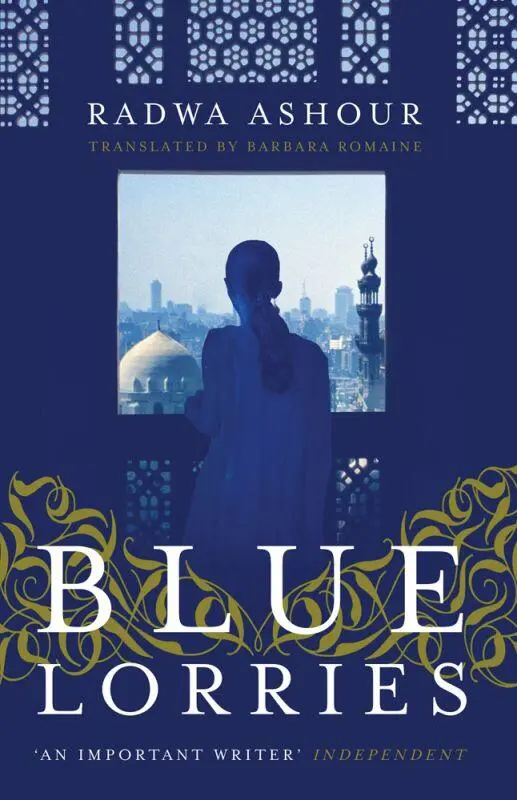
- Название:Blue Lorries
- Автор:
- Издательство:Bloomsbury Qatar Foundation Publishing
- Жанр:
- Год:2014
- Город:Doha
- ISBN:9789927101250
- Рейтинг книги:4 / 5. Голосов: 1
-
Избранное:Добавить в избранное
- Отзывы:
-
Ваша оценка:
Blue Lorries: краткое содержание, описание и аннотация
Предлагаем к чтению аннотацию, описание, краткое содержание или предисловие (зависит от того, что написал сам автор книги «Blue Lorries»). Если вы не нашли необходимую информацию о книге — напишите в комментариях, мы постараемся отыскать её.
The more things change, the more they stay the same. Through student sit-ins, imprisonments, passionate arguments, accidental alliances, fallen friends, joys and regrets, Nada’s story grows into the story of Egypt’s many celebrated activists such as Arwa and Siham. Moving, uplifting and deeply human, Radwa Ashour’s masterpiece is the story of Egypt in the second half of the twentieth century and a paean to all…
Blue Lorries — читать онлайн бесплатно полную книгу (весь текст) целиком
Ниже представлен текст книги, разбитый по страницам. Система сохранения места последней прочитанной страницы, позволяет с удобством читать онлайн бесплатно книгу «Blue Lorries», без необходимости каждый раз заново искать на чём Вы остановились. Поставьте закладку, и сможете в любой момент перейти на страницу, на которой закончили чтение.
Интервал:
Закладка:
Siham is not the only ‘aforementioned’. All of them are referred to as ‘the aforementioned’ — my close friends, all of whose height and girth I know well; I know the lineaments of their faces in joy, anger, despair; I know the nuances of each one’s voice and intonation; I know their gait; I know whom they loved, went about with, married; I know when it all came down on their heads, with or without their children looking on. Likewise I know a thousand details of their lives, of episodes both meaningful (the great, the earthshaking) and meaningless, or seemingly so.
I go back to the files, and all those facts slip out from their hiding places in the memory, to reclaim their body, their presence, their role in the creation of what I find written in the dossiers. And every time the same question surfaces: Does death constitute a barrier or does it, on the contrary, draw aside a curtain? For example, I read the words of my comrade who committed suicide by throwing herself, in a highly dramatic scene, from a twelfth-storey balcony. I read about the suicide after the fact and I wonder: am I seeing it more clearly, or less? Does reading across the line between life and death, across more than thirty years, with all that happened in the course of those years, form a thick lens, like prescription glasses, that improves vision, or blinders that shield the eyes from the sun’s glare? Or is the whole premise inadequate? Should we consider each case on its own merits?
Be that as it may, the fact remains that the files are much like a mirror, in which I stare at my own face, which is not mine alone, but is rather the face that belongs to us all together, as a collective of young men and women who took part in a dream, a movement, a pulse; in terror and confusion and disappointment — a face some strip bare and then call history; others feel in it the throb of life and the structure of the consciousness it created, so difficult to annul, however rigorous the attempt… a mirror, or a group picture taken of us one morning thirty years ago in a sunny square. I look more closely, and cry, ‘This is me, and this… Good Lord, look how thin he was, and that one… as if it were someone else, and here’s so-and-so, may she rest in peace, and there — my God, how she’s changed. And that one… incredible, he was so handsome — he still is, so why does he look so grubby and dishevelled in the picture, like a student’s dormitory room that for a month no one has lifted a finger to clean or tidy? And here’s Siham…’ I gaze at her image for a long time, and see us together in Qanatir Prison, reciting a French poem we’d both memorised in primary school:
Le petit cheval dans le mauvais temps, qu’il avait donc du courage!
C’était un petit cheval blanc
Il n’y avait jamais de beau temps dans ce pauvre paysage
Il n’y avait jamais de printemps, ni derrière ni devant.
We take turns reciting the lines of the poem. One of the women on our cellblock objects, ‘We don’t understand!’ Siham translates: ‘A little white horse.’ ‘A colt,’ I put in. She says, ‘A brave white colt, they’re behind him and he’s in front.’ I say, ‘All of them are behind, and he’s in the vanguard.’ Together we finish translating the poem, or interpreting the lines when they’re too hard to translate.
Chapter eleven
Incongruities
No one tortured us in prison. We were beaten, we girls, one time: on the day we decided we would refuse to go back to our cells, after a rally protesting the placement of one of our mates with the criminal prisoners. They descended on us with truncheons; some of us suffered bruises or minor wounds. But the era of Abdel Latif Rushdie had passed, or so it seemed to me — this was one of my many naïve notions. (Here is where Foucault’s argument concerning the transition from securing power by means of extreme torture to control by means of the Panopticon represents a European reality, applicable only in part to our own situation, in that for us power is like a thrifty, scrimping housewife, who never gets rid of anything, even if it’s worn out — she keeps her old, used-up things along with whatever new things she has managed to procure, usually in the same drawer, or at best in two adjoining drawers, opening sometimes one, sometimes the other, according to circumstance and need.)
We were not tortured, because we were students, and the authorities knew how little threat we represented, or because the new president had risen to power only recently, holding the card of democracy: a democracy with teeth, as he once declared, or one whose teeth had been pulled — it hardly matters; what matters is that it was a democracy that permitted the arrest of thousands of students, and occasionally non-students, in the course of a single night, and either punished dissenters with modern batons, different from Abdel Latif Rushdie’s, or brought them baskets full of carrots, and patted them sweetly on the head, so that they took one look and turned into tame rabbits. (And as long as we’re back on the subject of Abdel Latif Rushdie, that ‘Abul Fawares’, the ultimate cavalier, we must mention — though it’s a digression — that he was transferred to Upper Egypt, where he pursued some of his usual methods, ordering his men to beat the soles of a suspect’s feet in front of a crowd of spectators. But the victim was a man of position and good family, and no sooner was the family informed than — before daybreak — they had bombarded the cavalier’s house. The government couldn’t lay hands on those who had perpetrated the killing of its personal cavalier, whom it had mounted upon its own horse. My paternal aunt recounted this incident to me, and then later I confirmed the accuracy of the details she had related, when a former detainee, one of my father’s colleagues, offered them up in a book he wrote.)
Abdel Latif Rushdie did not break us — he was off the set. Nor did the milder versions, those who took his place in the seventies, break us. What, then, broke us? And how?
The question that preoccupies Arwa — between two suicide attempts (the one that failed, when she threw herself into the Nile but was rescued, and the second, when she jumped from the twelfth floor) — is a similar one she takes up in the context of what she calls the attempt to identify both our ‘true image’ and the reasons for the ‘aborted dream’. She talks about the defiance of that group of boys and girls who set out on their noble mission one morning, answering ‘history’s summons’, wishing to ‘adjust the scales’, raising the banner of the ‘dream of collective liberation’, convinced they were a collective who were partaking together of the grand march that ‘traversed the ages’, ‘toward fraternity, equality, justice, and fulfilment’. What happened to them, then, that in the end they were merely a generation come ‘before their time’ (that’s the title of her book), living lives of isolation, despair, impotence and flaccidity, or else of nihilism, stripped of all morality? What happened between that exuberant moment of setting off to realise the noble dream, and the final moment of abandoning the dream to a life of ‘wholesale destruction’, where they became ‘like mummies that, suddenly exposed to the sun, crumbled into dust’?
Arwa talks about the moment that empowered the students to announce their defiance, seeing it as a tragic moment, in spite of everything, because the establishment — armed with ‘a long history of autocracy and the prerogative of word, deed, and thought’ — had been on the point of taking the populace altogether on a different path, reducing it to a state of murderous mayhem, with society following submissively, disempowered and helpless, for ‘it had no foot free, with which to keep its balance’. During the collapse, the situation and its rules changed, and ‘the struggle reached a new level too fierce to be led by students’.
Читать дальшеИнтервал:
Закладка:
Похожие книги на «Blue Lorries»
Представляем Вашему вниманию похожие книги на «Blue Lorries» списком для выбора. Мы отобрали схожую по названию и смыслу литературу в надежде предоставить читателям больше вариантов отыскать новые, интересные, ещё непрочитанные произведения.






Обсуждение, отзывы о книге «Blue Lorries» и просто собственные мнения читателей. Оставьте ваши комментарии, напишите, что Вы думаете о произведении, его смысле или главных героях. Укажите что конкретно понравилось, а что нет, и почему Вы так считаете.