Zakes Mda - Cion
Здесь есть возможность читать онлайн «Zakes Mda - Cion» весь текст электронной книги совершенно бесплатно (целиком полную версию без сокращений). В некоторых случаях можно слушать аудио, скачать через торрент в формате fb2 и присутствует краткое содержание. Год выпуска: 2007, Издательство: Picador, Жанр: Современная проза, на английском языке. Описание произведения, (предисловие) а так же отзывы посетителей доступны на портале библиотеки ЛибКат.
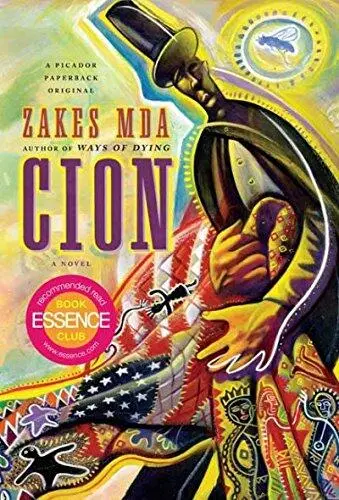
- Название:Cion
- Автор:
- Издательство:Picador
- Жанр:
- Год:2007
- ISBN:нет данных
- Рейтинг книги:3 / 5. Голосов: 1
-
Избранное:Добавить в избранное
- Отзывы:
-
Ваша оценка:
Cion: краткое содержание, описание и аннотация
Предлагаем к чтению аннотацию, описание, краткое содержание или предисловие (зависит от того, что написал сам автор книги «Cion»). Если вы не нашли необходимую информацию о книге — напишите в комментариях, мы постараемся отыскать её.
Toloki, sets down with a family in Middle America and uncovers the story of the runaway slaves who were their ancestors.
Toloki, the professional mourner, has come to live in America. Lured to Athens, Ohio, by an academic at the local university, Toloki makes friends with an angry young man he meets at a Halloween parade and soon falls in love with the young man's sister. Toloki endears himself to a local quilting group and his quilting provides a portal to the past, a story of two escaped slaves seeking freedom in Ohio.
Making their way north from Virginia with nothing but their mother's quilts for a map, the boys hope to find a promised land where blacks can live as free men. Their story alternates with Toloki's, as the two narratives cast a new light on America in the twenty-first century and on an undiscovered legacy of the Underground Railroad.
Cion — читать онлайн бесплатно полную книгу (весь текст) целиком
Ниже представлен текст книги, разбитый по страницам. Система сохранения места последней прочитанной страницы, позволяет с удобством читать онлайн бесплатно книгу «Cion», без необходимости каждый раз заново искать на чём Вы остановились. Поставьте закладку, и сможете в любой момент перейти на страницу, на которой закончили чтение.
Интервал:
Закладка:
The slave screamed and uttered Irish profanities to no avail.
The Owner took his mulatto slave back to Fairfield Farms where he became an African again.

To the slave’s surprise, after this episode he was not treated harshly anymore. He resigned himself to his fate. He performed his duties well, and soon he was promoted to a supervisory position at the vegetable gardens. By this time he was free to mingle with other white slaves, including the aristocratic ones who worked in the household. But he always preferred the company of the Africans. He was more at home with the field slaves and shared in their folklore. He found that some of the stories they told in the evenings were very similar to the folk stories he used to hear as a child back in Ireland.
One favorite story told over and over again was about a woman called the Abyssinian Queen and how she herself used to tell stories. She was so beautiful that The Owner ran mad with desire for her. She was powerful too, for the ancestors who lived in her stories protected her and even The Owner was in awe of her. She had two sons, Nicodemus and Abednego. They were as wily as Ananse the Spider of their mother’s stories. One day the sons escaped and crossed the River Jordan. She was punished severely for their escape and for weeks or even months she lay sick on her bed, and was nursed by blind matriarchs. One day a big blue fly came and hovered over her. For the first time her pain seemed to go away. She laughed and whispered: “Thank you, Lord. Oh, thank you, my sweet Lord!” The sound of the blue fly seemed to lull her to sleep. She died smiling a broad smile.
The white slave was fascinated by the beautiful death of the Abyssinian Queen. He vowed that one day he would retrace the steps of her two boys. One day he too would cross the River Jordan. The plantation grapevine had brought the news back to Fairfield Farms: the Abyssinian Queen’s boys lived in a paradise called Tabler Town, a day’s journey from the River Jordan. Both were crowned chiefs of Indian tribes. And both had vowed that one day they would come with their Indian braves to free everyone at the plantation.
The white slave was not prepared to wait for that day though. Even if it took him years he would find his way to Tabler Town. He would bide his time. He would not leave anything to chance next time he escaped. He would study the methods that were used by the boys. He would learn about the quilts and the secret messages they contained. He would study other escapes recorded in folklore. He would take time to work out an elaborate plan. Next time he escaped, he vowed, no one would catch him.
He had been a slave for eight years when slave stealers from Ripley, Ohio, secretly visited the region. As usual the message was relayed through songs, and the white slave, now adept at the ways of the slaves, was one of those who were able to escape.
The Tablers of Tabler Town welcomed a new resident, a craggy Irishman by the name of Quigley. The family employed the man as a farmhand, and in the evenings listened to his stories of slavery. He told them of his escape from Fairfield Farms assisted by the sons of the Reverend John Rankin of Ripley, Ohio, of the succor he received at the home of the same Rankin overlooking the mighty Ohio River, of the insistence that he wanted to proceed to Athens County and to find two Africans he regarded as his brothers though he had never met them, namely Nicodemus and Abednego, and of his final journey to Tabler Town as a fully fledged white man after he had spent about six months with the Rankins recovering from the scars of slavery.
He was not sure whether he actually experienced the journey to Athens County or whether he dreamed it. He remembered or dreamed an intersection where he had great difficulty turning onto the road that would lead him to Tabler Town. There were many wagons, carts and carriages that moved very slowly, blocking the road. There were also many people selling their wares and blaring bullhorns. Among them he saw his slave dressed like a Native American in a black hat and a Navajo blanket worn poncho-style. The slave looked quite different though, his formerly skeletal figure filled with glistening flesh. The slave walked among the people selling scrolls and cloths that were red and white in color. He dashed from one side of the road to the other showing his wares to people who were hurrying about. The slave approached Quigley and Quigley shouted, “Hey, you ninny, how much are those scrolls?” The slave said they were ten dollars. One year’s savings for a working man! Quigley felt there must be something about the scrolls.
“What are they used for?” he asked.
“As a room divider,” the slave said, stretching one so that the prospective customer could see its full length and breadth. The slave did not recognize his master, and the master did not reveal his identity.
Although Quigley thought the scrolls were too narrow to use as dividers he still bought one. One day he would have a bedroom of his own. And a wife. He was determined not to go back to his old life of whiskey, whores and gaming. He would use the scroll to demarcate his territory so that his wife would know which side was his and which was hers. He had become very territorial from his experience of sleeping in slave quarters.
When he stretched the scroll he discovered that it was very long. It was made of fluffy feather-like material. On it were symbols and figures. He did not know how he learned to decipher such inscriptions, but he read them and discovered that the scroll contained the story of his life — from his past to the present. He could actually read the very present — reading about himself reading the scroll. There were other symbols that he tried to decipher but with great difficulty. He assumed they contained the story of his future and of the generations that would emerge from his loins. But he could not be sure about this.
After this the only thing he remembered vividly was an early morning after a particularly rainy night. He was waiting for a flood to subside with a group of people who were on their way to Tabler Town and beyond. Even as he stood there he was not sure if he had experienced the crossroads incident or dreamed it. No one among the people waiting knew anything about any such crossroads anywhere in the region. Yet he still had the scroll with him.
If Quigley happened to be at his house when he told the story he would take out the scroll and show his listeners. They would marvel at the symbols and the figures and he would tell them what they meant. Right up to the time he was telling the story.
“One day I’m gonna know what the rest means, and when that happens I will tell the future,” he said with conviction.
The first thing he did when he got to Tabler Town was to seek out Nicodemus and Abednego. He found Abednego and wept when he learned of the death of Nicodemus. Quigley suggested to Abednego that one day they should set out to avenge Nicodemus’s death, in memory of the fellow Africans that they left behind at Fairfield Farms and of all those who had been captured and sold and tortured and killed.
At first Abednego thought this was just idle talk. He had never really entertained any thoughts of vengeance. He was happily married to one of Harry Corbett’s beautiful daughters and was immersed in his father-in-law’s experiments with growing pawpaw in his orchards. He spent most of his days sitting there, staring at the trees as if willing them to grow, sometimes talking to them, egging them on and promising them the world if only they would show a peep of flowers. This was beginning to show results. Trees that had been growing slowly in the five years since the enterprise was started were almost the height of a man and had bloomed. Later the leaves would grow compact and dense. The plants looked healthier than those that grew in the wild. There was reason to celebrate, for the challenge of growing pawpaw as transplants had been won.
Читать дальшеИнтервал:
Закладка:
Похожие книги на «Cion»
Представляем Вашему вниманию похожие книги на «Cion» списком для выбора. Мы отобрали схожую по названию и смыслу литературу в надежде предоставить читателям больше вариантов отыскать новые, интересные, ещё непрочитанные произведения.









Обсуждение, отзывы о книге «Cion» и просто собственные мнения читателей. Оставьте ваши комментарии, напишите, что Вы думаете о произведении, его смысле или главных героях. Укажите что конкретно понравилось, а что нет, и почему Вы так считаете.