Dacia Maraini - Train to Budapest
Здесь есть возможность читать онлайн «Dacia Maraini - Train to Budapest» весь текст электронной книги совершенно бесплатно (целиком полную версию без сокращений). В некоторых случаях можно слушать аудио, скачать через торрент в формате fb2 и присутствует краткое содержание. Год выпуска: 2011, ISBN: 2011, Издательство: Arcadia Books, Жанр: Современная проза, на английском языке. Описание произведения, (предисловие) а так же отзывы посетителей доступны на портале библиотеки ЛибКат.
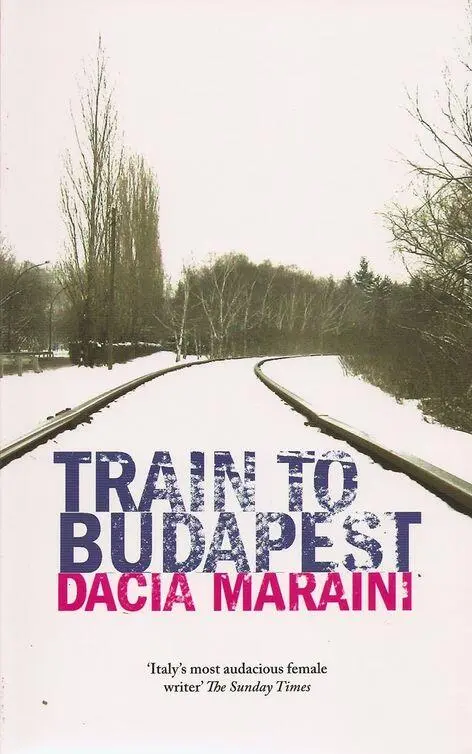
- Название:Train to Budapest
- Автор:
- Издательство:Arcadia Books
- Жанр:
- Год:2011
- ISBN:9781908129086
- Рейтинг книги:4 / 5. Голосов: 1
-
Избранное:Добавить в избранное
- Отзывы:
-
Ваша оценка:
Train to Budapest: краткое содержание, описание и аннотация
Предлагаем к чтению аннотацию, описание, краткое содержание или предисловие (зависит от того, что написал сам автор книги «Train to Budapest»). Если вы не нашли необходимую информацию о книге — напишите в комментариях, мы постараемся отыскать её.
Train to Budapest — читать онлайн бесплатно полную книгу (весь текст) целиком
Ниже представлен текст книги, разбитый по страницам. Система сохранения места последней прочитанной страницы, позволяет с удобством читать онлайн бесплатно книгу «Train to Budapest», без необходимости каждый раз заново искать на чём Вы остановились. Поставьте закладку, и сможете в любой момент перейти на страницу, на которой закончили чтение.
Интервал:
Закладка:
10
Kraków. Returning absent-mindedly to the Hotel Wawel, Amara doesn’t see the partly rolled carpet, trips and crashes to the floor. A young porter with red hair runs to her rescue. ‘Are you all right? Sorry about the carpet, we were just moving it out of the way.’ Then she hears him shouting at a boy in trousers that are too big for him bargaining over other rolled-up carpets piled on a hoist.
‘There’s a letter for you,’ says the porter after checking that she hasn’t broken anything or needs medical attention. He hands her a buff envelope with the key to her room.
My dear Saviour … Amara reads and rereads again but nothing makes any sense. Saviour from what? The letter is indeed addressed to her, but she doesn’t recognise the sender’s name: who’s Hans Wilkowsky? She reads on: I have such a vivid memory of your ears. Why particularly your ears, who knows. They seemed to me like two unbelievably graceful pink shells. Perhaps I remember them because I was trying so hard to make sure the profound and sincere sound of my voice would reach you through them.
Now she remembers: the train to Prague. They had stopped at the frontier. The man with gazelles on his jumper. The guarantee she signed in such a hurry. The sound of the locomotive in the night. And next to him the other man with fur armbands, the mother with the young baby, and the smell of smoked herrings and birchbark.
I trusted you and you trusted me. You saved me from two days of bureaucratic torture. I reached Poznan´ safe and sound. I found my daughter Agnes had just given birth to a beautiful boy who will be called Hans like me. The child looks like my mother. I told you in the train my mother Hanna was Hungarian and Jewish, and died in the Treblinka concentration camp. My father is half Austrian and half Polish. I’m not sure the two young people did the right thing in coming together as a couple but, I assure you, they were really beautiful: a girl with honey-coloured hair, very long legs and a crystal-clear soprano voice, and a tall dark young man with shining eyes and a playful and well-formed mind. Tadeusz and Hanna. I have here a photograph of my parents at Graz. She is wearing a long light-coloured skirt and a pair of lace-up sandals; he has a jacket with wide sleeves and a pair of shoes with spats. They met in the first years of the twentieth century. My father was studying music at the famous conservatory at Vác. He wanted to be an orchestral conductor. My mother had studied singing in Budapest and had won a scholarship to Vác to follow a course at the conservatory which was reputed to have produced great singers. One evening they met and walked beside the Danube under a huge moon that made their eyes shine and silhouetted them against the long white riverbank. You may ask how I know these details. I answer that my father never stopped talking about it. It was a little piece of family mythology that made him intensely proud.
They spent all that night chattering. And in the morning, when the sun had warmed them, they decided to take a dip in the river naked. They never even kissed. Just lay close together in the sun without their clothes, then left each other, each going home. But they began writing to each other and after two years of lively correspondence they decided to get married.
They went to live in Graz, in a little apartment without water or lighting, because he had not yet found work as a conductor and she was singing in the theatre for next to nothing, just to get known. They were so deeply in love they could not bring themselves to separate for a moment. ‘I was afraid of meeting you again after so long apart. We had grown used to that and I was afraid our separated bodies would not understand each other. But they understood each other perfectly and we have never felt any need to be unfaithful.’ This was what my mother used to tell me when I was a child and too young to understand. It is only now I understand what their love was.
Then came the laws against the Jews. Tadeusz and Hanna had returned to Vienna where at long last he had found work with a youth orchestra. Until one day the city authorities discovered that my Austrian father had married a Hungarian Jewess. The guilty pair were summoned to the police and told that despite the long years they had lived together, and despite the fact that they had two grown-up children, their marriage was not valid under the new laws of the Reich.
Two weeks later an SS patrol came and took them to Heldenplatz to join other couples like themselves. They were forced to wear placards round their necks. On hers was written I’M A JEWISH WHORE AND I CORRUPT CHRISTIANS. On his I’M AN AUSTRIAN PIG AND I LUST FOR JEWISH MONEY. The SS photographed them in right profile and left profile, and made them stand in the square all day with passers-by staring at them. Some, encouraged by the guards, spat on them, particularly on the ‘Jewish whore’. Others showed sympathy, but didn’t dare to stop. I still have a photograph published in a Nazi paper. She is in a light-coloured dress, her curly blonde hair now touched with grey, wearing her hat at a jaunty angle, her head poised with a certain defiance despite the humiliating situation. Her face is serious, not exactly resigned, more ironic I think: it’s easy to see how contemptible all this is, she seems to be saying; I’m here and you are there, you’re free to spit on me, but you can’t avoid seeing me and understanding the horror of my situation. My father seems much angrier, even disheartened. He is holding his placard by one corner; its chain is probably hurting his neck. With his other hand he is holding his hat against his leg; he has a white shirt and bow tie and his eyes are sad. Behind him are standing four SS guards in brown shirts, their collars tightly buttoned to the chin, bandoliers across their chests, swastikas prominent on their shirt sleeves, more swastikas stamped on their caps. They are standing stiffly, pleased with themselves. One is smiling; another sports a Hitler moustache though his manner is unconvincing. A nice souvenir photo …
I was in Denmark at the time and so missed the whole wretched scene. It was nearly evening before the police let them go home. But after that nothing was the same as before. A few days later my father lost his job. My mother had to wear the yellow star on her chest. My sister died soon after of tuberculosis. When their friends saw them approaching, they would cross to the other side of the road and look away. They no longer had any right to go into shops, sit in trams, or go into a cinema or restaurant. I wanted to come home, I wanted to be near them, but they begged me to stay where I was. That saved my life because my mother was deported to Treblinka, where she died of privation a few months later. My father managed to hide until almost the very end of the war, when they found him and took him to Auschwitz. I did not know about this till later. For years I heard nothing. I went on writing to them thinking they must still be alive somewhere. But I never had any answers.
It was only after the end of the war that I found my father, who had miraculously survived not because he was an Aryan but because at the very moment when the Germans decided to burn the camp and exterminate all the survivors as embarrassing witnesses, Soviet tanks arrived and set them free.
When I met him again in ’46 he weighed only thirty-eight kilos and had lost all his teeth. I took him in my arms like Aeneas with his father Anchises after the terrible sack of Troy. It was like embracing a little child. You can’t imagine, my dear Saviour, what it was like for me to take home the featherless sparrow my father had turned into. He couldn’t even speak and only chirped, just like a little bird. I had the joy of seeing him get back his health. A little at a time, stuffed with eggs, meat and apples, he recovered. I also bought him a set of dentures. We were happy together for two years. Then he fell in love with a Frenchwoman called Odette who had settled in Hungary and set up house in the centre of Budapest with her and his friend Ferenc Bruman, first violin in the city orchestra.
Читать дальшеИнтервал:
Закладка:
Похожие книги на «Train to Budapest»
Представляем Вашему вниманию похожие книги на «Train to Budapest» списком для выбора. Мы отобрали схожую по названию и смыслу литературу в надежде предоставить читателям больше вариантов отыскать новые, интересные, ещё непрочитанные произведения.




Обсуждение, отзывы о книге «Train to Budapest» и просто собственные мнения читателей. Оставьте ваши комментарии, напишите, что Вы думаете о произведении, его смысле или главных героях. Укажите что конкретно понравилось, а что нет, и почему Вы так считаете.