Joshua Cohen - Witz
Здесь есть возможность читать онлайн «Joshua Cohen - Witz» весь текст электронной книги совершенно бесплатно (целиком полную версию без сокращений). В некоторых случаях можно слушать аудио, скачать через торрент в формате fb2 и присутствует краткое содержание. Год выпуска: 2010, Издательство: Dalkey Archive Press, Жанр: Современная проза, на английском языке. Описание произведения, (предисловие) а так же отзывы посетителей доступны на портале библиотеки ЛибКат.
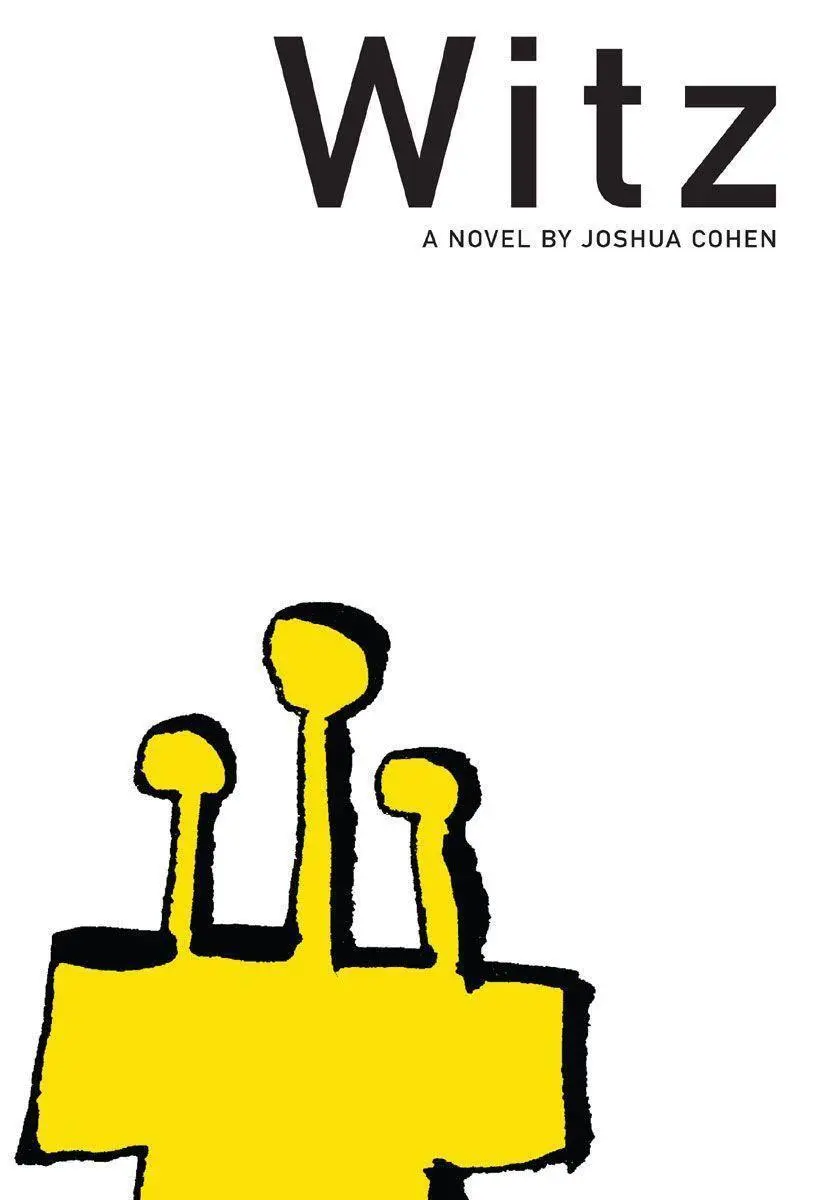
- Название:Witz
- Автор:
- Издательство:Dalkey Archive Press
- Жанр:
- Год:2010
- ISBN:нет данных
- Рейтинг книги:3 / 5. Голосов: 1
-
Избранное:Добавить в избранное
- Отзывы:
-
Ваша оценка:
Witz: краткое содержание, описание и аннотация
Предлагаем к чтению аннотацию, описание, краткое содержание или предисловие (зависит от того, что написал сам автор книги «Witz»). Если вы не нашли необходимую информацию о книге — напишите в комментариях, мы постараемся отыскать её.
Meanwhile, in the not-too-distant future of our own, “real” world, another last Jew — the last living Holocaust survivor — sits alone in a snowbound Manhattan, providing a final melancholy witness to his experiences in the form of the punch lines to half-remembered jokes.
Witz — читать онлайн бесплатно полную книгу (весь текст) целиком
Ниже представлен текст книги, разбитый по страницам. Система сохранения места последней прочитанной страницы, позволяет с удобством читать онлайн бесплатно книгу «Witz», без необходимости каждый раз заново искать на чём Вы остановились. Поставьте закладку, и сможете в любой момент перейти на страницу, на которой закончили чтение.
Интервал:
Закладка:
Again it’s the front, through which no intimate guest would pass whether in entry or exit.
Steinstein saying it’s been fun…actually, really, I had a good time, great to meet you.
And Ben says thank you and you’re welcome both, He’s not sure which might be appropriate.
He opens the door for him: the stoop’s descent to the lawn and its edging drive before snowedover, now cleared, and cleared of the firstborns, too, who are boys no more though working still. A brotherhood of the frozen, they’re more like white themselves, less boychicks young and healthy than a stranger species of globoid mutant idol: frost babies swaddled in a wasting crystal flak. His new friends, apparently, they’re supposed to be, though He recognizes none of them, why would He: these firstborns turned rolypoly, fattened with freeze, though still laboring with shovels, having saved the stoop and the path of slate and the double driveway of asphalt toward the triple garage from the very substance of which they’re presently made; the tripartite snow that rounds their legs and stomachs and their greatglobed, roughhewn heads…the flurry that holds their arms of gnarled sticks, that steadies them and their wet, tenpronged leafless twigs. Each of them is a making of three huge hunks of weather, all of them piled atop one another then packed hard and dense into a mensch; fraternally frosted golems drifted into animation, they’ve been made and put to work then destroyed, too, then remade again by the wind gusting thickly, pitiless; or else on orders of, maybe, a gesture of goodwill. They’re rolling low to hurriedly heave their last spadefuls, to scoop the final white away while savaging for themselves a handful only, a meager ball, a fruit’s mere clod this modest dig, with which to repack themselves ever tighter to withstand work’s unmaking winter, and to survive, also, the lowing, rolling effort of their shift. To rummage through the plastic inside the rubber, amid the trashcans rowed and stowed under a shingled hutch to the side of the house — in frantic search of button eyes, noses of broken parsnip, turnip ears, a mouth of scrapped tinfoil. The garbage rebagged, recanned. Trash taken out again for another pickup. To shovel the snow to the troughs of the sledges waiting just beyond the fence’s gate, which are then hauled by dogs far out from the Island and onto the ice that’s stilled the vale of Joysey, its hardened wetland rim — there to firm the icy stuff into the forms of other boys, companions: inanimate, whitefaced godlets; survivors made in the image most familiar…to ward off the crows, the flightless boredom, unwinged idle.
Steinstein takes himself down the carefully salted slates and out into the day, whistling as he passes through the fenced gate then greets with a soft Shalom and a tiny wave a small group of the larger, older boys — they once were. Snowmenschs now, working out toward the far rim of the lawn to the west, they’re bending at the knees, which are clumps of ice flexed warm with their effort, exhausting, the melt of falter, their heaving the little strip of Israelien sidewalk naked, their shovels scraping metal on tar giving way with the puddling of self to rubble into gravel: an access road approaching the Great Hall, the frontage of which has already been cleared and kosherly salted, too, to prevent a slip, a broken life. Rain is known: it’d caused the crops to grow as Eden, then Adam sent His widow Lillith out to bring in the sheaves of the harvest. These widows found us in the field and there they married us, and then we were made and grown. And the field became a lawn. But snow. As we are told, there are two kinds of snow. One is pure, it’s said, and the other that’s not. It’s from here that it’s understood, said in the name of forecasters to come. One kind is the stuff of the boys — the firstborns out early on a Sunday and working before brunch; it’s dense, it’s hard. As pure as it is real — an actuality, a world, its presence thorough, round and lasting. As for the other, impure kind — it’s the favorite blanket, the comforting coverlet, the falsifying dust. That both are white is a matter of discernment. Of discrimination. A test of our very soul. From discarnate darkness, a lightning vein, then a shriek of thunder — the entire world is lit. The bunched and bundled boys turn to face the east, the quarter from which weather issues, the womb of the stillborn sun. All glare their whitest purest faces. Ben stands at His door above His lawn, raising His eyes from Steinstein’s cautious path, the gate in the fence, which is little and without latch, the sidewalk then up to the heavens, up to Heaven. West, He’s turned away. To nail a lid to a windblown cloud. A knife cutting flash the furthest dim. Far becomes near, and has always been, or hasn’t: the beaches cold, picnicbaskets blown…the benches overturned, the boarded summer cottages — then, the tankers floating out in the slushy open ocean: their cargo, blood, drained. Liberty stands. Her torch holds the lightning, smoke. From its reach springs a pillar of fire.
We asked the questions — and anything they answered we questioned again and again. And this was how it worked for generations, in every land and in all its languages forever. Call it a parasitic symbiosis, call it Ishmael — just don’t call it late for dinner, was the joke. Some years, some centuries, were better than others. America, for one. The here and now, the recently at least.
For us, no questions were forbidden — they were all our sons, and however they were born to us we loved them; we brought them up without an image, letting them take whatever form they would. As for our firstborn son, we named him Why? In every generation, he’s born beautiful, which is forgivable, and brilliant, which can be forgiven, too, but he’s also born blessed and chosen, and so is hated by the world. As he is pure and peaceful, he’s killed and dies without a thought. In every generation. We are proud, and loud with grief, and so we mourn him by praying his own name.
Though Why? is never asked or answered, only said. Or else it’s both asked and answered, or neither and green, flint as much as diamond. This is where the difficulties begin, when the generations become tangled, ensnared — trippedup on marks of punctuation…interrogatories phrased falsely as pronouncements, prophecy no longer extolled from the mountaintop but whispered from the valleys, without authority, unsure. It’s that we have forgotten how to ask — how to bring into this answering world a boy who is Himself a question. And so what ensures survival is not to search for Why? but instead to search for others who also search for Why? then to embrace them, give them gifts and marry them off to our sisters. This is the only way to peace. In this way, we increase our inheritance, which are our generations — and soon the Why? it’s said, becomes less a search than a limb. And then less a limb than a germ — a gene. Passed down. Flung among. Reactive, it’s been said. In our day, this inheritance has been programmed for extinction. Traits come up for expiration. A breath — expired. Rumors abound. After their death, the world deals only with the second rate, trafficks exclusively amid the middling and managing, the niggling clerks, the bores and the hopeless…gone are the thinkers; remaining are only the losers, the gentile. Unspeakable, thy name is mediocrity. It’s the best they have. We might as well make do.
And did they ever make do! Garden, Inc., its president Der, with the approval then partnership of the Shade Administration selling stock in stock, in the drained blood of the Affliated to anyone who’d afford it; huge banks stored in the holds of those tankers anchored out in flowing water past the freeze, a haul of the consanguine made public, nominally, in concept — not that any of these shareholders would ever come into actual physical possession of so precious a commodity, but — the coffers cough, spit thick gobs of gold. Though the blood it’s just a portion, a peripherally profitable venture, of this government scheme only vaguely privatized within the icicled gates of the Garden to preserve for the powerful the merest assurance of plausible deniability — this project proposing to study the physiological and psychological conditions of the ingathered survivors, which means tests: the laborious filling out of forms by which they sign themselves away, assenting to all manner of invasive procedures not limited to the sampling of everything from everywhere, whenever, intensive patience tries, the trial withholding of approval, hat and shoetightening, protracted submersion within lukewarm water; damningly, the injection of miscellaneous fluids, spuriously saving plasmic transfusions, veined in the hues of the last rainbow ever to be hung sagging over Liberty scorched to the east.
Читать дальшеИнтервал:
Закладка:
Похожие книги на «Witz»
Представляем Вашему вниманию похожие книги на «Witz» списком для выбора. Мы отобрали схожую по названию и смыслу литературу в надежде предоставить читателям больше вариантов отыскать новые, интересные, ещё непрочитанные произведения.







Обсуждение, отзывы о книге «Witz» и просто собственные мнения читателей. Оставьте ваши комментарии, напишите, что Вы думаете о произведении, его смысле или главных героях. Укажите что конкретно понравилось, а что нет, и почему Вы так считаете.