Mavis Gallant - Paris Stories
Здесь есть возможность читать онлайн «Mavis Gallant - Paris Stories» весь текст электронной книги совершенно бесплатно (целиком полную версию без сокращений). В некоторых случаях можно слушать аудио, скачать через торрент в формате fb2 и присутствует краткое содержание. Год выпуска: 2002, Издательство: NYRB Classics, Жанр: Современная проза, на английском языке. Описание произведения, (предисловие) а так же отзывы посетителей доступны на портале библиотеки ЛибКат.
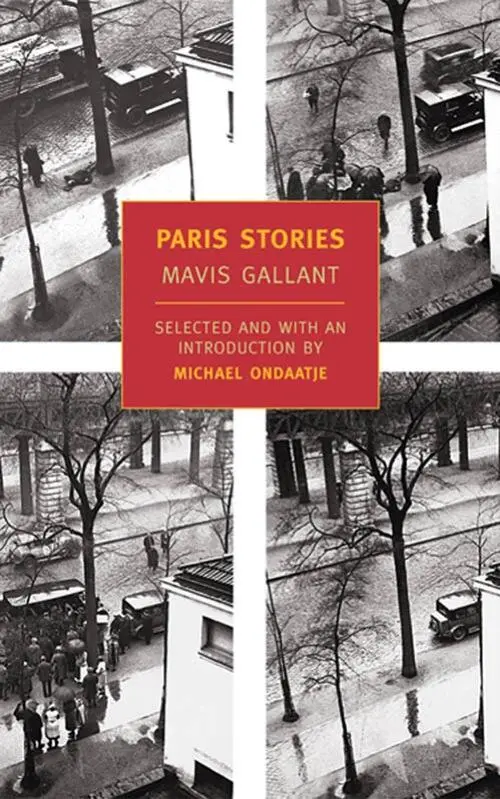
- Название:Paris Stories
- Автор:
- Издательство:NYRB Classics
- Жанр:
- Год:2002
- ISBN:нет данных
- Рейтинг книги:5 / 5. Голосов: 1
-
Избранное:Добавить в избранное
- Отзывы:
-
Ваша оценка:
Paris Stories: краткое содержание, описание и аннотация
Предлагаем к чтению аннотацию, описание, краткое содержание или предисловие (зависит от того, что написал сам автор книги «Paris Stories»). Если вы не нашли необходимую информацию о книге — напишите в комментариях, мы постараемся отыскать её.
Paris Stories — читать онлайн бесплатно полную книгу (весь текст) целиком
Ниже представлен текст книги, разбитый по страницам. Система сохранения места последней прочитанной страницы, позволяет с удобством читать онлайн бесплатно книгу «Paris Stories», без необходимости каждый раз заново искать на чём Вы остановились. Поставьте закладку, и сможете в любой момент перейти на страницу, на которой закончили чтение.
Интервал:
Закладка:
She became conscious of a sound, as a sound in the fabric of a dream. Florence looked away from Bonnie's letter and saw that this sound was real. At one of the café tables, a laughing couple were pretending to give a child away to a policeman. The policeman played his role well, swinging his cape, pretending to be fierce. “She is very naughty,” said the mother, when she could stop laughing enough to speak, “and I think prison is the best solution.” All the people in the café laughed, except Flor. They opened their mouths in the same way, eyes fixed on the policeman and the child. The child cried out that it would be good, now, but everyone was too excited to pay attention. The child gave one more promise and suddenly went white and stiff in the policeman's grasp. He gave her back to her parents, who sat her on a chair. “She'll be good now,” the policeman said.
The closed face of Paris relaxed. This was Paris: this was France. Oh, it was not only France. Her mother's mother's gardener had broken the necks of goldfinches. “If you tell you saw, you'll get hit by lightning,” he had said.
“It's because of things like that,” said Florence earnestly, retracing her steps home, “I'm not afraid of bombs.”
She unlocked the empty apartment and the element she recognized and needed but that had evaded her until now rushed forward to meet her, and she knew it was still August, that she was still alone, and there was still time. “I only need a long sleep,” she said to the empty air. The unopened letters from Bob she put on the chest in the hall. Her advancing foot kicked something along and it was a trodden, folded letter that had been pushed under the door. It was dirty and had been walked on and was greasy with city dust. She carried this letter — three sheets folded one over the other — around the flat. She closed all the doors except the door of the kitchen and the door of her bedroom. The passage was a funnel. Her sleep had been a longer and longer journey away from shore. She lay down on the bed, having been careful to remove her shoes. The letter spoke to her in peaked handwriting. She had no idea who it was from.
“I have stupid ideas,” said this pointed hand, “and you are right to have nothing to do with me. You are so beautiful and clever.” It groveled on like this for lines. Who is the writer of this letter? Her husband loves her but has gone away with another woman. “The girl knows I know, and it doesn't work, we are all unhappy, he has his work, and I can't just make a life of my own as he suggests. I thought you would help me but why should you? You are right not to let anyone hang on your skirts. The important thing is that I have made a decision, because I understood when you locked me out that what is needed is not slow suffering or hanging on to someone else, but a solution. I went out on the street that day and wanted to die because you had locked me out and I realized that there was a solution for me and the solution was a decision and so now I am going home. I am not going away but going home. He can follow, or he can stay, or he can do what he likes, but I have made a decision and I have cabled my father and he is cabling the money and I am going home. I'm leaving on the sixteenth and I'll wait for you every evening, come down if you want to say goodbye. I won't bother you again. All I want to tell you is I hid your sleeping pills and now I know I had no right to do that, because every person's decision is his own. I know I was silly because you're young and pretty and have everything to live for and you wouldn't do what I was afraid you would. I can't even write the word. You may have been wanting those pills and I'm sorry. They're in the kitchen, inside the white tin box with ‘Recipes’ written on it. Don't be angry with my interference and please Florence come and say goodbye. Florence, another thing. Everybody makes someone else pay for something, I don't know why. If you are as awful to your mother as she says you are, you are making her pay, but then, Florence, your mother could turn around and say, ‘Yes, but look at my parents,’ and they could have done and said the same thing, so you see how pointless it is to fix any blame. I think my husband is making me pay, but I don't know what for or why. Everyone does it. We all pay and pay for someone else's troubles. All children eventually make their parents pay, and pay, and pay. That's the way I see it now, although I may come to change my mind when I have children of my own. Florence, come once and say goodbye.”
She had no time and no desire to say, They have paid. At the edge of the sea, the Fox departed. She saw the animal head breaking the water and the fan-shaped ripples diminishing against the shore. She turned her back and left the sea behind. At last she was going in the right direction. She rode Chief, her pony, between an alley of trees. Chief was a devil: he daren't bolt, or rear, but he sometimes tried to catch her leg against a tree. Nearby somebody smiled. She held herself straight. She was perfect. Everyone smiled now. Everyone was pleased. She emerged in triumph from the little wood and came off Chief, her pony, and into her father's arms.
MLLE. DIAS DE CORTA
YOU MOVED into my apartment during the summer of the year before abortion became legal in France; that should fix it in past time for you, dear Mlle. Dias de Corta. You had just arrived in Paris from your native city, which you kept insisting was Marseilles, and were looking for work. You said you had studied television-performance techniques at some provincial school (we had never heard of the school, even though my son had one or two actor friends) and received a diploma with “special mention” for vocal expression. The diploma was not among the things we found in your suitcase, after you disappeared, but my son recalled that you carried it in your handbag, in case you had the good luck to sit next to a casting director on a bus.
The next morning we had our first cordial conversation. I described my husband's recent death and repeated his last words, which had to do with my financial future and were not overly optimistic. I felt his presence and still heard his voice in my mind. He seemed to be in the kitchen, wondering what you were doing there, summing you up: a thin, dark-eyed, noncommittal young woman, standing at the counter, bolting her breakfast. A bit sullen, perhaps; you refused the chair I had dragged in from the dining room. Careless, too. There were crumbs everywhere. You had spilled milk on the floor.
“Don't bother about the mess,” I said. “I'm used to cleaning up after young people. I wait on my son, Robert, hand and foot.” Actually, you had not made a move. I fetched the sponge mop from the broom closet, but when I asked you to step aside you started to choke on a crust. I waited quietly, then said, “My husband's illness was the result of eating too fast and never chewing his food.” His silent voice told me I was wasting my time. True, but if I hadn't warned you I would have been guilty of withholding assistance from someone in danger. In our country, a refusal to help can be punished by law.
The only remark my son, Robert, made about you at the beginning was “She's too short for an actress.” He was on the first step of his career climb in the public institution known then as Post, Telegrams, Telephones. Now it has been broken up and renamed with short, modern terms I can never keep in mind. (Not long ago I had the pleasure of visiting Robert in his new quarters. There is a screen or a machine of some kind everywhere you look. He shares a spacious office with two women. One was born in Martinique and can't pronounce her r's. The other looks Corsican.) He left home early every day and liked to spend his evenings with a set of new friends, none of whom seemed to have a mother. The misteachings of the seventies, which encouraged criticism of earlier generations, had warped his natural feelings. Once, as he was going out the door, I asked if he loved me. He said the answer was self-evident: We were closely related. His behavior changed entirely after his engagement and marriage to Anny Clarens, a young lady of mixed descent. (Two of her grandparents are Swiss.) She is employed in the accounting department of a large hospital and enjoys her work. She and Robert have three children: Bruno, Elodie, and Félicie.
Читать дальшеИнтервал:
Закладка:
Похожие книги на «Paris Stories»
Представляем Вашему вниманию похожие книги на «Paris Stories» списком для выбора. Мы отобрали схожую по названию и смыслу литературу в надежде предоставить читателям больше вариантов отыскать новые, интересные, ещё непрочитанные произведения.





Обсуждение, отзывы о книге «Paris Stories» и просто собственные мнения читателей. Оставьте ваши комментарии, напишите, что Вы думаете о произведении, его смысле или главных героях. Укажите что конкретно понравилось, а что нет, и почему Вы так считаете.