John McGahern - Amongst Women
Здесь есть возможность читать онлайн «John McGahern - Amongst Women» весь текст электронной книги совершенно бесплатно (целиком полную версию без сокращений). В некоторых случаях можно слушать аудио, скачать через торрент в формате fb2 и присутствует краткое содержание. Год выпуска: 2008, Издательство: Faber & Faber, Жанр: Современная проза, на английском языке. Описание произведения, (предисловие) а так же отзывы посетителей доступны на портале библиотеки ЛибКат.
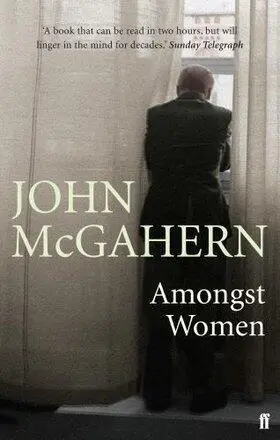
- Название:Amongst Women
- Автор:
- Издательство:Faber & Faber
- Жанр:
- Год:2008
- ISBN:нет данных
- Рейтинг книги:5 / 5. Голосов: 1
-
Избранное:Добавить в избранное
- Отзывы:
-
Ваша оценка:
Amongst Women: краткое содержание, описание и аннотация
Предлагаем к чтению аннотацию, описание, краткое содержание или предисловие (зависит от того, что написал сам автор книги «Amongst Women»). Если вы не нашли необходимую информацию о книге — напишите в комментариях, мы постараемся отыскать её.
Amongst Women — читать онлайн бесплатно полную книгу (весь текст) целиком
Ниже представлен текст книги, разбитый по страницам. Система сохранения места последней прочитанной страницы, позволяет с удобством читать онлайн бесплатно книгу «Amongst Women», без необходимости каждый раз заново искать на чём Вы остановились. Поставьте закладку, и сможете в любой момент перейти на страницу, на которой закончили чтение.
Интервал:
Закладка:
Moran went out to the road and closed the iron gates under the yew after returning with the car from the station. He listened for the noise of the diesel train crossing the Plains behind the house but it had already passed. The light was beginning to fail but he did not want to go into the house. In a methodical way he set out to walk his land, field by blind field. He had not grown up on these fields but they felt to him as if he had. He had bought them with the money he had been given on leaving the army. The small pension wasn’t enough to live on but with working the fields he had turned it into a living. He’d be his own man here, he had thought, and for the first time in his life he’d be away from people. Now he went from field to field, no longer kept as well as they once were, the hedges ragged, stones fallen from the walls, but he hardly needed the fields any more. It did not take much to keep Rose and himself.
It was like grasping water to think how quickly the years had passed here. They were nearly gone. It was in the nature of things and yet it brought a sense of betrayal and anger, of never having understood anything much. Instead of using the fields, he sometimes felt as if the fields had used him. Soon they would be using someone else in his place. It was unlikely to be either of his sons. He tried to imagine someone running the place after he was gone and could not. He continued walking the fields like a man trying to see.
Dark had fallen by the time he went into the house. Rose had washed up and tidied after the visit but he did not notice. She did not ask him where he had been but more than once looked at him with covert anxiety. She would feel easier if he raged or scolded. As soon as he sat at the table, she made and poured his tea. She checked that everything he needed was on the table and then asked him if his tea was sufficiently strong.
Mona and Sheila came every other week from Dublin to the house and twice a year Maggie came from London. After the long train and sea journey she would stay a day and night in Dublin with her younger sisters. The three girls had so much to tell one another that the time never seemed long enough. They all went home together on the train. They were in their flower and attracted many admirers. Moran always came alone to the station to meet them. Though he would be nervous with excitement and irritable for days before they came, he was distant and withdrawn as soon as he met them. Rose’s delight in seeing them was slightly tempered by her natural watchfulness but within an hour she would have completely merged with the band of girls, joking, laughing, getting them to help with chores, always giving them her full attention and they answered to her as if she were another sister rather than their father’s wife.
If Moran was in the fields she would sometimes smoke an ‘outrageous’ cigarette. ‘I know Daddy doesn’t like it but it’s an occasion.’
‘Smoking is no harm,’ they would say in unison though they did not smoke themselves.
‘Bad habits picked up in Scotland,’ she would say lightly and look up as she laughed. ‘Of course I smoke in front of him but he never likes it.’
‘He’ll not change now.’
‘No, it’s very unlikely he’ll change.’
No matter how far in talk the sisters ventured, they kept returning, as if to a magnet, to what Daddy would like or dislike, approve of or disapprove of. His unpredictable violences they discounted simply as they might the tantrums of a difficult child. His moods were as changeable as the moods in the long day of a child and Rose could follow them now even better than they. Sometimes the moods were of pure charm, like asking one of the girls to go with him over the fields to look at the cattle as if he were inviting them to a special place in his heart.
‘It’s more than Rose would do nowadays — come with me to look at the cattle,’ he would tease as he waited for one of the girls to dress for the fields.
‘Listen to him talk now,’ Rose would rail happily. ‘Who did everything with the cattle when you were in bed for a whole week just before Christmas?’
‘That’ll do you now,’ he would say indulgently.
When Moran was out of the house they often talked of Luke and Michael. Rose’s inquiries went eagerly in search of Michael. He had had several jobs already — clerk, labourer, night porter in a hotel, even cook: ‘Poor Michael’s cooking,’ Rose laughed at the vision until it hurt. ‘I wouldn’t like to eat in that restaurant.’
‘It was a canteen but he burned someone with cooking oil and was sacked. He’s on the buildings now.’
‘Has he girls?’
‘Girls?’ Maggie said. ‘He doesn’t seem to mind who he has as long as they have skirts. And they go for him as if he was honey.’
‘He’s so young,’ Rose said. ‘Does he say anything about coming home at all?’
‘He says he’ll come home in the summer but he’ll have to save.’
‘Does he mind what went on?’ she asked anxiously.
‘Not at all. He was telling one of his girlfriends one evening about this place. She was Indian. It’d make you laugh. You’d think he was describing heaven.’
‘It was all his own fault anyhow; and you know Daddy.’
‘Michael isn’t like Luke at all that way. He doesn’t hold anything in. Once it’s over it’s forgotten.’
Rose didn’t want to talk about Luke, or she wasn’t yet ready to do so, for as soon as his name came up she changed the conversation to a shopping trip that had been proposed.
All these conversations were relayed by Rose to Moran: they were their main subject of conversation when they were alone, and she hoarded them like precious morsels. Moran had always put on such a hurt air when Luke’s name came up that she assumed he didn’t want to hear about him at all, that he found it too disturbing; but she learned that the opposite was true, that Moran couldn’t bring himself to ask the girls. She brought to him all she knew.
Luke had qualified as an accountant but still worked with the same firm which bought old houses round Notting Hill, converted them into flats and then sold them. The firm had grown bigger. He seemed to be one of four partners. His girlfriend was English whom he had met through his work. They weren’t sure if they lived together or not but they thought they did. She was tall, dark; she wasn’t pretty but they supposed she could be called attractive: they didn’t like her very much.
‘Is she hoi polloi ?’ Rose asked humorously.
‘I think her father worked in a bank,’ Maggie said.
‘Daddy would love it if Luke came home though he cannot say it,’ Rose said.
‘I told him that,’ Maggie said warmly. ‘I asked him, was he afraid to go home or what was wrong with him. He was rude — the way he looks at you! You never can tell what he is thinking.’
‘What did he say?’
‘He said that only women could live with Daddy.’
‘He has some neck. Something’s wrong with him. He won’t live and let live,’ Sheila added.
Maggie was more eager to talk about Mark O’Donoghue, a young man from Wexford who worked on the buildings in London. They were secretly engaged but it was a secret she told everybody, including Rose who had of course told Moran. She wanted everybody who met Mark to be as excited about him as she. Part of her annoyance with Luke was that he had been non-committal when they met in London and he had refused to say what he thought about Mark despite her tearful pressure. ‘He’s fine with me’ was the most she could force from him by way of approval. But what she wanted most of all was Moran’s approval.
Maggie brought Mark O’Donoghue home at Easter. After the boat journey they stayed the night with Mona and Sheila in Dublin. Though the two sisters had heard much about him before the first meeting they were taken aback by his appearance. He was as fair and handsome as they had been told but they were shocked by the black drainpipe trousers, the black suede shoes, the Elvis hairdo, and a dark wool jacket that was studded with little bits of metal that glittered when they caught the light.
Читать дальшеИнтервал:
Закладка:
Похожие книги на «Amongst Women»
Представляем Вашему вниманию похожие книги на «Amongst Women» списком для выбора. Мы отобрали схожую по названию и смыслу литературу в надежде предоставить читателям больше вариантов отыскать новые, интересные, ещё непрочитанные произведения.








Обсуждение, отзывы о книге «Amongst Women» и просто собственные мнения читателей. Оставьте ваши комментарии, напишите, что Вы думаете о произведении, его смысле или главных героях. Укажите что конкретно понравилось, а что нет, и почему Вы так считаете.