John McGahern - The Pornographer
Здесь есть возможность читать онлайн «John McGahern - The Pornographer» весь текст электронной книги совершенно бесплатно (целиком полную версию без сокращений). В некоторых случаях можно слушать аудио, скачать через торрент в формате fb2 и присутствует краткое содержание. Год выпуска: 2009, Издательство: Faber & Faber, Жанр: Современная проза, на английском языке. Описание произведения, (предисловие) а так же отзывы посетителей доступны на портале библиотеки ЛибКат.
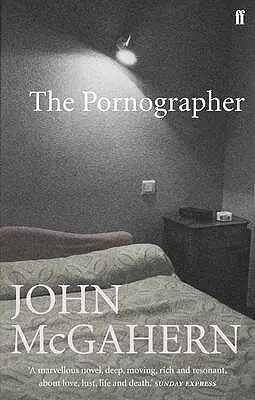
- Название:The Pornographer
- Автор:
- Издательство:Faber & Faber
- Жанр:
- Год:2009
- ISBN:нет данных
- Рейтинг книги:4 / 5. Голосов: 1
-
Избранное:Добавить в избранное
- Отзывы:
-
Ваша оценка:
The Pornographer: краткое содержание, описание и аннотация
Предлагаем к чтению аннотацию, описание, краткое содержание или предисловие (зависит от того, что написал сам автор книги «The Pornographer»). Если вы не нашли необходимую информацию о книге — напишите в комментариях, мы постараемся отыскать её.
The Pornographer — читать онлайн бесплатно полную книгу (весь текст) целиком
Ниже представлен текст книги, разбитый по страницам. Система сохранения места последней прочитанной страницы, позволяет с удобством читать онлайн бесплатно книгу «The Pornographer», без необходимости каждый раз заново искать на чём Вы остановились. Поставьте закладку, и сможете в любой момент перейти на страницу, на которой закончили чтение.
Интервал:
Закладка:
“You sounded quite determined about it when you wrote to me.”
“No, love. I was hoping it’d have the opposite effect on you. I suppose none of this has the slightest effect on you?”
“Of course it has. It’s an awful mess to have got into in the first place. If you’d married Jonathan it would have cleared it up, only from my point of view, granted. Now it’s just a mess again.”
“I can’t take that. I know it’ll work out all right. I know that nothing but good will come of it. Because both of us are good people. We didn’t try to dodge anything. You wouldn’t be here if you weren’t a good person.”
“Tell me more.”
“Do you still write that stuff?”
“It’s all I get paid for.”
“But you have some money from your family.”
“Not enough to live on,” I said abruptly, closing the conversation. “What are you going to do now?”
“I’ll keep this job till the child comes. It’s very boring but it makes no demands and it pays quite well. One good thing that this upheaval taught me is how valueless our prized security is. I can get a far more exciting job here with my skills than that boring job back at the bank. I’d never have had the courage to find that out except for what happened.”
“What are you going to do with the child?”
“That’s the six marker.”
“Marriage is now out,” the way she reacted I saw she hadn’t by any means given it up. “It’s out.”
“That may change with the child. It’ll be your child. People long for children.”
“It won’t change with the child,” I said brutally. “It won’t change.”
“You can never tell those things.”
“You’ll have to take my word for it. It’s out. Completely out. And there are only two other ways left now.”
“What?”
“Adoption. Give the child to two parents looking for a child. That way it’ll be as if the child were born into a normal home.”
“It’s all right for you to say that. That way your little mistake will have been farmed out, got rid of. You hadn’t to leave Dublin. You don’t have to carry the child around in your body all these months, cry over it, worry over it. And then after all that just hand it over to somebody else as if it were a postal parcel. And then spend the rest of your life wondering: where is it now, what’s happening to it, is it happy.…”
“Well, the alternative is simple. You keep the child. And once you do that you’re on your own. You’ll never see me again.”
“I don’t know how you can say that.”
“I’m fed up listening to you prate about the child’s good. The child must come first, but apparently only when it happens to coincide with your own wishes. Two parents can bring up a child better than one. There’s nothing special about our seed.”
“Stop it, stop it,” she said.
“All right. I’ll pay. And we can have a brandy in the pub.”
“I need a brandy. And to think I wasn’t able to sleep last night with looking forward to this lunch.”
There was a bar a few doors down from the view of the Bay of Naples with its several sailboats and we had the drinks standing at a counter girdled by a thin brass rail. She took a brandy but I changed to a pint of bitter. As I came out of the Mens I was able to look at her for the first time. There were still no apparent signs of her pregnancy. She was a strong handsome woman, younger looking than her thirty-eight years. Years of regular hours and church-going had worked wonders of preservation on natural good looks.
“Do you know what I want you to do? I want you to come with me to Jonathan’s place. No, we don’t have to go in or anything, in fact we couldn’t,” she was in extreme good spirits again when I joined her. “But I just want you to see it. We can get the bus. We can just walk past the gate. It’s no more than twelve minutes away on the bus.”
“But why?”
“I just want you to see it. It won’t take long.”
“Whatever you say,” I was anxious to avoid the tension of the restaurant at any cost. It had been the same argument as we had had several times in Dublin and we’d never reached anywhere except the same impasse, and never would. “I’m in your hands for the rest of the day,” I said.
We left the pub like any pair of lovers in the centre of London for the day, and I caught her hand as we raced to get to the stop on Shaftesbury Avenue before a six bus which was stopping at traffic lights.
We got off a few stops after Harrods and walked. There was a feeling of decorum and quiet about the roads, of ordered, sheltered lives. The houses were rich and white, with balconies and black railings, and they all had basements.
“It’s only three doors away,” she’d grown very nervous. “If there are signs of anybody in the house we’ll just walk straight past.”
There was a magnolia tree on the bare front lawn, an elegant grey door, and the basement was down steps. It didn’t look as if there was anybody in the house.
“They must be in the country for the week-end,” she said. “When I left, the lawn was white with magnolia blossom. They must have vacuumed them up.”
“Who’s they?” I asked.
“Jonathan and his wife. Did I not tell you he’s married? The woman is a widow, has money too. It’s she who has the cottage in the country. Clutching at a late life.”
“Come on. You never know, there might be somebody in the house.”
“I’d love to just get one look into the basement.”
“No. I’m moving on if you are. It’s not right,” I was afraid someone might open the door and enquire what we wanted or — worse — invite us in.
“I suppose it was just foolish of me to want to see if the basement has been changed.”
“Why did you want to see the house at all?”
“I don’t know. I just wanted you to see it. Often I used to wish it was just us two who were in the house. But I was very grateful for that basement when I came to London first. What do you think of it?”
“I think it’s a fine house,” I said.
I had a beer in the small local at the corner of the road, where she and Jonathan used to have a drink on Sunday mornings after walking in the gardens. Then we took the underground to Finsbury Park. Her flat was just seven bus stops from the station.
Cars were parked bumper to bumper on both sides of the road we turned into, the long rows of glass glittering each time the sun shone out of hurrying white clouds.
“There must be a home game,” she said. “We’re just a few minutes away from the Spurs ground. Both my landlords are fanatic Spurs followers,” and as if to support what she’d said a huge roar went up close by, followed by a deafening rhythmic pounding of feet on hollow boards, broken by a huge groan that led off into sharp definitive clapping. The whole little terrace was grey, the brick dark from smoke or soot, tradesmen’s houses of the nineteenth century, each house with a name plaque between the two upper windows in the shape of a cough lozenge. “Ivanhoe” was the barely legible name I made out as she searched for her key. A black and a grey cat met us in the narrow hallway.
“We have the house to ourselves. My landlords are on the Costa Brava. I’m looking after the cats for them. You should have heard all the feeding instructions I got before they left. The cats are their children,” she stroked the cats in the hallway but they did not follow us up the stairs. I listened to the baying of the crowd: indignation, polite appreciation, anxiety, relief, abuse, anger, smug satisfaction.
“I’m hardly ever here on a Saturday. I do my shopping and laundry round this time every Saturday.”
The flat looked as if it had been furnished from several junk rooms. There was a gas cooker, a gas fire, a circular table, armchairs of different shapes and colours, a corduroy sofa, a narrow bed against the wall. There was lino on the floors but what nearly broke my heart was the bowl of tulips, the fresh cheese biscuits, the unopened bottle of whiskey and the bottles of red and white wine, and even packs of stout.
Читать дальшеИнтервал:
Закладка:
Похожие книги на «The Pornographer»
Представляем Вашему вниманию похожие книги на «The Pornographer» списком для выбора. Мы отобрали схожую по названию и смыслу литературу в надежде предоставить читателям больше вариантов отыскать новые, интересные, ещё непрочитанные произведения.








Обсуждение, отзывы о книге «The Pornographer» и просто собственные мнения читателей. Оставьте ваши комментарии, напишите, что Вы думаете о произведении, его смысле или главных героях. Укажите что конкретно понравилось, а что нет, и почему Вы так считаете.