Leslie Silko - The Almanac of the Dead
Здесь есть возможность читать онлайн «Leslie Silko - The Almanac of the Dead» весь текст электронной книги совершенно бесплатно (целиком полную версию без сокращений). В некоторых случаях можно слушать аудио, скачать через торрент в формате fb2 и присутствует краткое содержание. Год выпуска: 2013, Издательство: Simon & Schuster, Жанр: Современная проза, на английском языке. Описание произведения, (предисловие) а так же отзывы посетителей доступны на портале библиотеки ЛибКат.
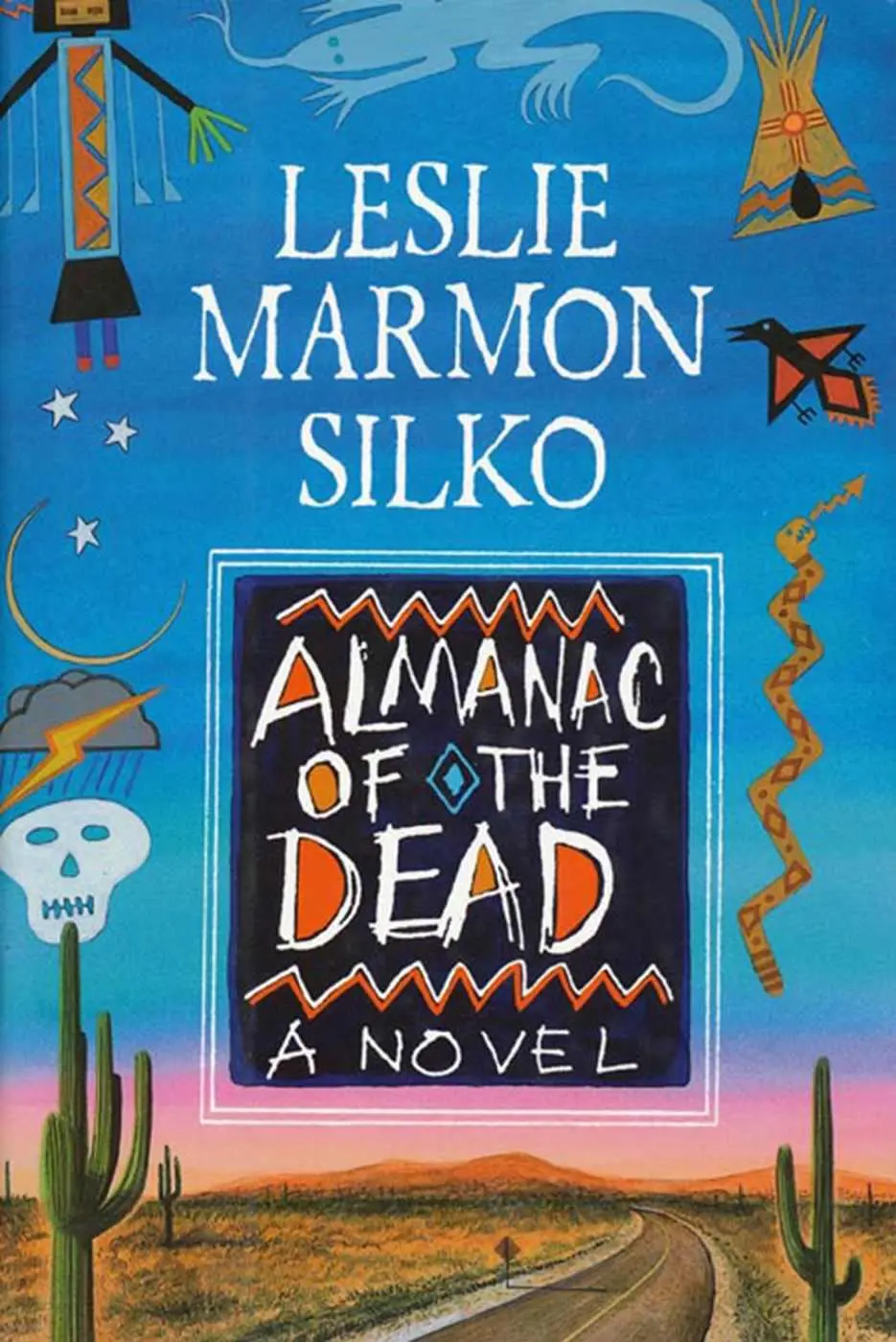
- Название:The Almanac of the Dead
- Автор:
- Издательство:Simon & Schuster
- Жанр:
- Год:2013
- ISBN:нет данных
- Рейтинг книги:3 / 5. Голосов: 1
-
Избранное:Добавить в избранное
- Отзывы:
-
Ваша оценка:
The Almanac of the Dead: краткое содержание, описание и аннотация
Предлагаем к чтению аннотацию, описание, краткое содержание или предисловие (зависит от того, что написал сам автор книги «The Almanac of the Dead»). Если вы не нашли необходимую информацию о книге — напишите в комментариях, мы постараемся отыскать её.
In this virtuoso symphony of character and culture, Leslie Marmon Silko’s breathtaking novel interweaves ideas and lives, fate and history, passion and conquest in an attempt to re-create the moral history of the Americas as told from the point of view of the conquered, not the conquerors. Touching on issues as disparate as the borderlands drug wars, ecological devastation committed for the benefit of agriculture, and the omnipresence of talking heads on American daytime television,
is fiction on the grand scale, a sweeping epic of displacement, intrigue, and violent redemption.
The Almanac of the Dead — читать онлайн бесплатно полную книгу (весь текст) целиком
Ниже представлен текст книги, разбитый по страницам. Система сохранения места последней прочитанной страницы, позволяет с удобством читать онлайн бесплатно книгу «The Almanac of the Dead», без необходимости каждый раз заново искать на чём Вы остановились. Поставьте закладку, и сможете в любой момент перейти на страницу, на которой закончили чтение.
Интервал:
Закладка:
It had been a setup, from the start. Even if he had managed to get old Aunt Marie to talk about the last time the tribe allowed a Hollywood movie company to film on tribal land, he would probably not have been saved. Because all the officers from all the villages had conferred with the tribal councilmen, and they had decided Sterling must do it. The whole Tribal Council had voted to appoint Sterling Laguna Pueblo film commissioner, and he could not say no. Sterling had tried in the most gracious way to decline the honor but no one on the Tribal Council seemed to want the position of tribal film commissioner. That should have been the tip-off, his warning that he had been set up.
Four hundred dollars a month. It hardly seemed worth it now because he was paid almost that much each week in Tucson. All he had to do was skim dead lizards off the surface of the swimming pool and hose dog shit off the kennel runways. For four hundred dollars a month, Sterling’s job as a film commissioner had been to keep the Hollywood film crew away from sacred places and from stepping on sacred land. The first week had not been difficult because all the filming was done on sets built down by the river. But Sterling was only one man, far outnumbered by the Hollywood film crew. The second week Sterling had not been able to maintain control. Although Sterling had explained and explained which areas were “off-limits” and why, the movie crew people seemed only to understand violence and brute force. Reports came that prayer sticks left for the spirits at sacred shrines had disappeared. The third week an assistant director attempted to snap photographs inside the kiva, three actresses sunbathed at the sacred water hole, and the script supervisor squeezed a Volkswagen convertible through the northwest entrance to the main plaza — all on the same afternoon.
Sterling had seen the production manager throw the best boy into the front seat of the big Winnebago one morning when the crew was running late. His head had left a little halo of crackled-glass stars on the windshield. Everything was rented, so no one cared. As far as the movie people were concerned, the reservation was rented too. When the prayer sticks had been recovered, the nude sunbathers driven from the water hole, and the Volkswagen convertible removed from the plaza, Sterling told the producer Snell he was going to the tribal headquarters to resign. Snell had been on the phone arguing and pleading with his executive producers long distance, but when Sterling said this, Snell had put the receiver down dramatically and said, “Sterling! You can’t do this to me!” “I have to live around here after you’re gone” was all Sterling had said. But later, as he looked back, Sterling shook his head bitterly. Because even as he had been resigning, and trying to explain to the tribal governor the impossibility of controlling a Hollywood film crew, it was already too late. Out the windows of the governor’s office they could see the exit ramp from the highway, and the dirt road to the river where the movie company had pitched their tents. A steady stream of New Mexico State Police cars, official government cars, were skidding and careening toward the film crew’s headquarters with sirens and lights flashing.
But worse than the raid by state and federal drug-enforcement agencies, and the incident that had actually determined Sterling’s fate, had been the attempt by the cinematographer to film the giant stone snake. The governor, the tribal officers, and the tribal judge had all criticized Sterling, although he was actually an elder to many of them. “Living as long as you did in California,” one of the younger men asked, “how come you didn’t catch on to all the drugs those movie people had?” That had been the moment when Sterling had come the closest to tears. Standing in front of the tribal governor and the Council and the tribal judge. “I don’t know why you are blaming me,” Sterling began. “You act like I should have known everything just because I lived off the reservation. But I was working for the railroad. I was living in towns like Winslow and Barstow, not Hollywood. How was I supposed to know why they all had runny noses?”
The older men who served on the Tribal Council admonished the young governor and his colleagues to go easy. Some of them had worked for the railroad and had been acquainted with Sterling then. The older men agreed no one, not even Sterling, could have been expected to know that conspirators in Hollywood had been sending vials of cocaine with the reels of “dailies.”
Sterling knew the answer he had given the Tribal Council was feeble, but by that time it had been six-thirty at night, and Aunt Marie was probably worrying and angry because dinner was getting overcooked. Sterling felt defeated and weak. He said, “I didn’t have any kind of experience with that sort of thing. I thought they were all just friendly with one another.” One of the elder councilmen had then remarked that someone had better explain to him why Sterling was ever appointed film commissioner in the first place. A terrible silence fell over the Council Chamber. Then another old councilman saved them from that question by raising the fatal issue of the giant stone snake.
THE WATER BED
 AFTER THE GIANT STONE SNAKE had been discovered, medicine people from many tribes had hurried to the site. There had been a great deal of controversy over the interpretation of the stone snake. The concern of the Council and the elected tribal officials had been focused on the theft of the stone idols eighty years before. What was to prevent such a loss of the giant stone snake now that the Hollywood people knew where to find it — now that the whites had photographed it? Sterling looked down at the feet he knew were his, but which did not feel connected to him at that moment. He didn’t have an answer, and one after the other, all the old-timers recounted the story of the loss of the stone idols. The Tribal Council building, instead of emptying at dinnertime, got more crowded. The old women were beginning to show up, and one of them launched into the story of how, one night, many years ago, jealous neighbors had smashed open the beautiful lake that gave Laguna its name. The giant water snake that had always lived in the lake and that had loved and cared for the Laguna people as its children could not be found after the jealous ones had drained the lake. Mention of the lake, or stone idols or the painting of St. Joseph, always brought out a great deal of anger, and Sterling wanted to say they should not blame him or get upset with him over deeds others had done. But just then someone had started talking about the wrongful detention of the oil portrait of St. Joseph, and the angry feelings buzzed around Sterling like wasps.
Even then, Sterling had realized he might have escaped with only severe reprimands, years of community service and a heavy fine, if it had not been for Edith Kaye. She rose up from the one and a half chairs she occupied in the visitor section of the Council Chamber. Edith Kaye was a widow three times. The joke that was told in every village was how Edith Kaye had killed those husbands through overexertion as they attempted to satisfy Edith’s sexual appetites. Edith Kaye had had her eye on Sterling when he first returned to Laguna to enjoy his retirement. She had had her own ideas about exactly how he should enjoy retirement. But Sterling had made a serious error with Edith Kaye, and as Aunt Marie had warned him, again too late to do any good, Edith Kaye was one of those women you did not want to cross.
Sterling was still horrified to think what a narrow escape he had had from Edith Kaye’s king-size water bed. She had gotten very ugly when Sterling tried to explain that he didn’t know very much about water beds. Actually the matter was allowing her to get on top of him. But Edith Kaye had flown into a fury because he was hesitant about her riding him.
Читать дальшеИнтервал:
Закладка:
Похожие книги на «The Almanac of the Dead»
Представляем Вашему вниманию похожие книги на «The Almanac of the Dead» списком для выбора. Мы отобрали схожую по названию и смыслу литературу в надежде предоставить читателям больше вариантов отыскать новые, интересные, ещё непрочитанные произведения.



Обсуждение, отзывы о книге «The Almanac of the Dead» и просто собственные мнения читателей. Оставьте ваши комментарии, напишите, что Вы думаете о произведении, его смысле или главных героях. Укажите что конкретно понравилось, а что нет, и почему Вы так считаете.