Leslie Silko - The Almanac of the Dead
Здесь есть возможность читать онлайн «Leslie Silko - The Almanac of the Dead» весь текст электронной книги совершенно бесплатно (целиком полную версию без сокращений). В некоторых случаях можно слушать аудио, скачать через торрент в формате fb2 и присутствует краткое содержание. Год выпуска: 2013, Издательство: Simon & Schuster, Жанр: Современная проза, на английском языке. Описание произведения, (предисловие) а так же отзывы посетителей доступны на портале библиотеки ЛибКат.
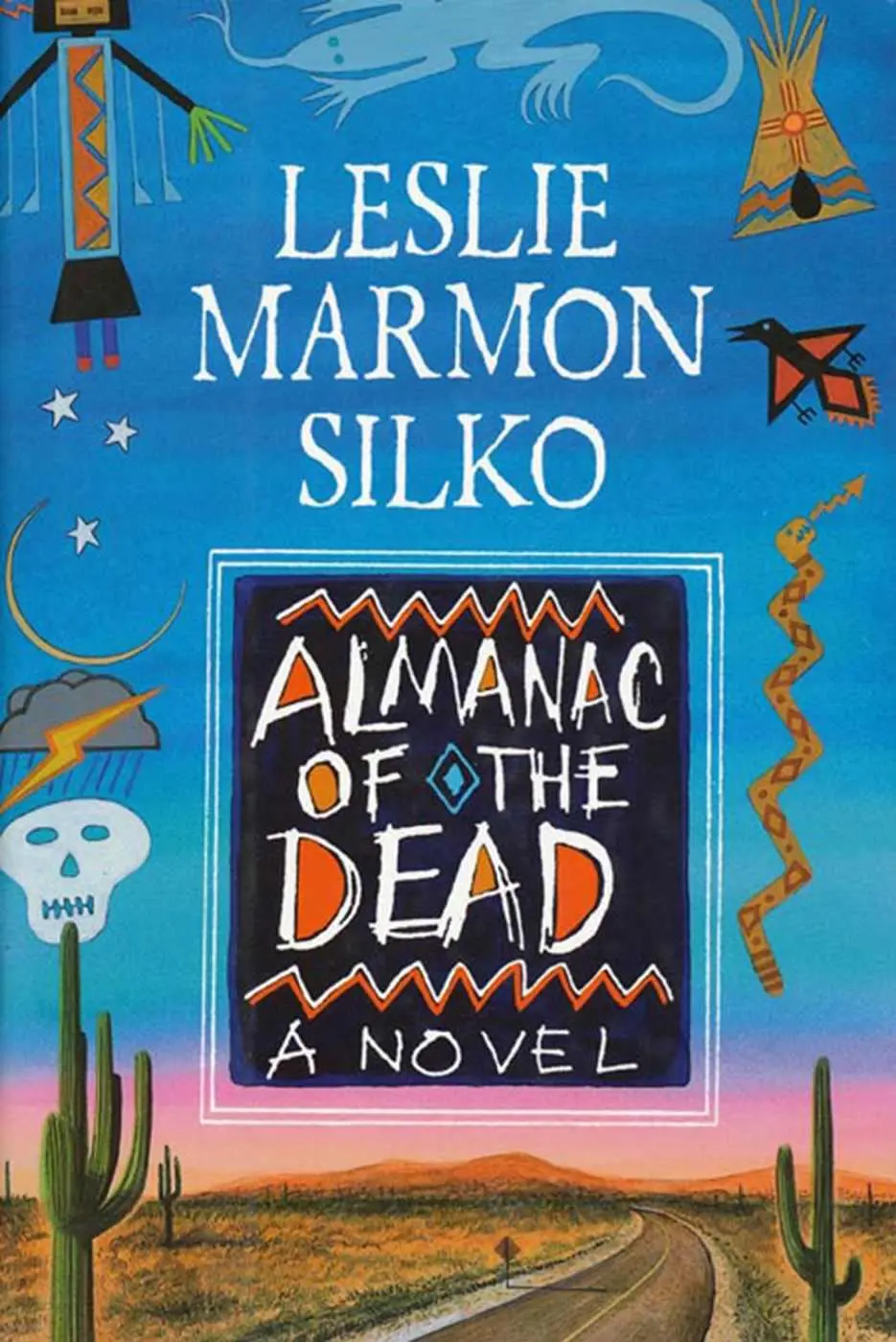
- Название:The Almanac of the Dead
- Автор:
- Издательство:Simon & Schuster
- Жанр:
- Год:2013
- ISBN:нет данных
- Рейтинг книги:3 / 5. Голосов: 1
-
Избранное:Добавить в избранное
- Отзывы:
-
Ваша оценка:
The Almanac of the Dead: краткое содержание, описание и аннотация
Предлагаем к чтению аннотацию, описание, краткое содержание или предисловие (зависит от того, что написал сам автор книги «The Almanac of the Dead»). Если вы не нашли необходимую информацию о книге — напишите в комментариях, мы постараемся отыскать её.
In this virtuoso symphony of character and culture, Leslie Marmon Silko’s breathtaking novel interweaves ideas and lives, fate and history, passion and conquest in an attempt to re-create the moral history of the Americas as told from the point of view of the conquered, not the conquerors. Touching on issues as disparate as the borderlands drug wars, ecological devastation committed for the benefit of agriculture, and the omnipresence of talking heads on American daytime television,
is fiction on the grand scale, a sweeping epic of displacement, intrigue, and violent redemption.
The Almanac of the Dead — читать онлайн бесплатно полную книгу (весь текст) целиком
Ниже представлен текст книги, разбитый по страницам. Система сохранения места последней прочитанной страницы, позволяет с удобством читать онлайн бесплатно книгу «The Almanac of the Dead», без необходимости каждый раз заново искать на чём Вы остановились. Поставьте закладку, и сможете в любой момент перейти на страницу, на которой закончили чтение.
Интервал:
Закладка:
Living away from Laguna all the years the other men his age were marrying had saved him from his old aunts, who did question him when he visited home at fiesta time or at Christmas. He was not against marriage or women. He was devoted to his old aunts, who were always cooking and sewing for him and sending birthday cards. He got them free passes to ride the train anywhere they wanted. His main trouble with marriage was that he was not used to telling anyone else what to do. He supposed that might be traced back to the way Aunt Marie had raised him when his parents were both gone. Sterling didn’t even feel he needed to trace it back anywhere. He was very happy going along on his own. He liked a simple life with his magazines, visits home to his old aunts, and the occasional vacation to Long Beach to ride the big roller coaster.
The years had gone along like that and there had even been young widows set up by his dear old aunts, who worried a great deal about who would care for Sterling after they were gone. But it didn’t take a genius to see that the young widows and their children would expect Sterling to tell them what to do next. Finally when all his old aunts assembled at one table for a deer dinner, Sterling had given them each long-fringed silk shawls of brilliant jewel colors. And then he had told them that unless they could find a woman as able, as wise, as strong as they were, they should not bother. Each of the old sisters spoke in turn, and by the time Aunt Nora had performed the ceremonial eating of the deer eyes, and Aunt Marie and Aunt Nita had finished the brains, Sterling was relieved and happy to realize that they agreed with him.
From that time on they pampered him even more, and Sterling was left in peace to enjoy dreaming “the deluxe.”
STERLING’S ROOM
 SOMETIMES IN THE MIDDLE of the night the sound of Ferro’s four-wheel-drive truck would awaken Sterling. They came and they went at all hours. Fortunately, Ferro and Paulie were seldom at the house for very long. The old boss woman was more difficult to figure out because only occasionally did she go with Ferro and Paulie. Yet sometimes she was gone for days. Her absence wasn’t something Sterling could have proven, but when he walked down the hall past her office or outside the bedroom windows with the shades pulled, he could sense the rooms were empty. Sterling finished a second cheese sandwich and helped himself to more potato chips. He had enjoyed the errands and the drive with Seese very much. He thought if everything would continue along this way, he might be content to stay here for a long time. He carried an extra can of 7-Up down the hill to his room. The sun had almost set. The desert birds were calling and moving the way they did before darkness. The wind off the mountain peak smelled fresh, almost as if rain might be coming. The sky to the west was clear, but clouds could be smelled long before they were seen. He remembered Aunt Marie teaching him that. Around sundown Sterling sometimes felt his mood change. He would begin to think about his life. He would think about all the dear old grandaunts now gone on to Cliff House where they had planned a great many of their favorite activities for all eternity. He missed all of them around a table teasing each other, joking about old lovers and sexual escapades. The younger generations of women had not really matched the likes of Aunt Marie and Aunt Nora. But Sterling was certain that he had not matched them either, although they had loved him and spoiled him so much their own children, his cousins, had become terribly jealous of him. And in the end, the jealousy had been what had worked against Sterling when it came down to the vote of the Tribal Council over the decision of the tribal court judge. Sterling knew that sending the children away to boarding schools was the main problem. He and the other children had to learn what they could about the kachinas and the ways to pray or greet the deer, other animals, and plants during summer vacations, which were too short. Sterling might not have been sent away so young if his parents had not died. Still, that had been the policy of the federal government with Indians. Aunt Marie used to say there was no use in getting upset over something that had happened fifty years ago. Education was the wave of the future.
Well, the wave of the future had carried him clear down here, to the Sonoran desert. Sterling tried to tell himself it wasn’t the end of the world. Look at Geronimo, who got tossed clear to Oklahoma.
The twilight was luminous pearl-gray. Sterling sat down on the five-gallon gas can by the corner of the toolshed. Something about ending up down here at this place was causing him to think more. Something really had happened to the world. It wasn’t just something his funny, wonderful, old aunts had made up. It wasn’t just the scarcity of eligible brides or dependable women. People now weren’t the same. What had become of that world which had faded a little more each time one of his dear little aunts had passed? Sterling dabbed at the tears with his shirttail. They ran down the tip of his nose and caused an itch.
The short time he had been in Tucson, Sterling had begun to realize that people he had been used to calling “Mexicans” were really remnants of different kinds of Indians. But what had remained of what was Indian was in appearance only — the skin and the hair and the eyes. The cheekbones and nose like eagles and hawks. They had lost contact with their tribes and their ancestors’ worlds.
Inside, he piled up pillows and pulled his reading lamp closer to the bed. He needed to get his mind off such thoughts — Indians flung across the world forever separated from their tribes and from their ancestral lands — that kind of thing had been happening to human beings since the beginning of time. African tribes had been sold into slavery all over the earth.
He needed to get his mind off this subject. All the magazine articles he had ever read on the subject of depression had urged this. So he rummaged under the bed for some magazines that he had found when he first moved into the room. The good thing was they were full of pictures. The not-so-good thing was the words were all Spanish. But he only needed something to look at until he fell asleep. The pictures were grainy and blurry black-and-white, and on some pages the smear of the ink on the newsprint gave them the appearance of cartoons or drawings. He could make out the date and the place; 1957, Culiacán, Sinaloa. Sterling could not make out who was who or why, but a beetle-back, gray ’49 Plymouth was skidding around a corner on two wheels in pursuit of a black ’51 Ford coupe sideswiping parked cars all along a narrow street. On other pages there were victims lying where they had fallen, but the blood looked more like motor oil or tar spreading under the corpses. Sterling fell asleep wondering if Mexico had produced any criminals as outstanding as John Dillinger or Pretty Boy Floyd. His knowledge of Mexican history was sketchy, but Sterling did not think they had had anyone like Geronimo since Montezuma. And then it got very confusing because it seemed as if the Mexicans were always having revolutions, and he knew that although the winning side usually executed and jailed the losers for being “criminals,” both Police Gazette and True Detective magazines disqualified crimes committed during wars and revolutions.
HOLLYWOOD MOVIE CREW
IN HIS DREAM Sterling was running after the big white Chevy Blazer, yelling for them to stop. And that was when the Mexican gangster magazines toppled to the floor and Sterling woke up with light bugs all over his pillow. He shook the collection of moths and flying ants and tiny hard-shelled insects onto the floor and snapped off the reading lamp. His heart was still pounding. He felt around on the floor by the bed and found the 7-Up. He didn’t care if it was lukewarm. He sat up, sipping 7-Up in the dark. He wished the Hollywood producer and his snotty cinematographer had gotten their heads blown off by the gate guards at the mine. Sterling’s sheets were soaked with sweat. At least the nightmare had truth in it: the entire incident was the fault of the dumb shits from Hollywood. Stupid assholes! He had learned a number of new cuss words during the weeks he had been around them. What horrible white people! Some of the worst white people on earth was what Sterling had concluded.
Интервал:
Закладка:
Похожие книги на «The Almanac of the Dead»
Представляем Вашему вниманию похожие книги на «The Almanac of the Dead» списком для выбора. Мы отобрали схожую по названию и смыслу литературу в надежде предоставить читателям больше вариантов отыскать новые, интересные, ещё непрочитанные произведения.









Обсуждение, отзывы о книге «The Almanac of the Dead» и просто собственные мнения читателей. Оставьте ваши комментарии, напишите, что Вы думаете о произведении, его смысле или главных героях. Укажите что конкретно понравилось, а что нет, и почему Вы так считаете.