Leslie Silko - The Almanac of the Dead
Здесь есть возможность читать онлайн «Leslie Silko - The Almanac of the Dead» весь текст электронной книги совершенно бесплатно (целиком полную версию без сокращений). В некоторых случаях можно слушать аудио, скачать через торрент в формате fb2 и присутствует краткое содержание. Год выпуска: 2013, Издательство: Simon & Schuster, Жанр: Современная проза, на английском языке. Описание произведения, (предисловие) а так же отзывы посетителей доступны на портале библиотеки ЛибКат.
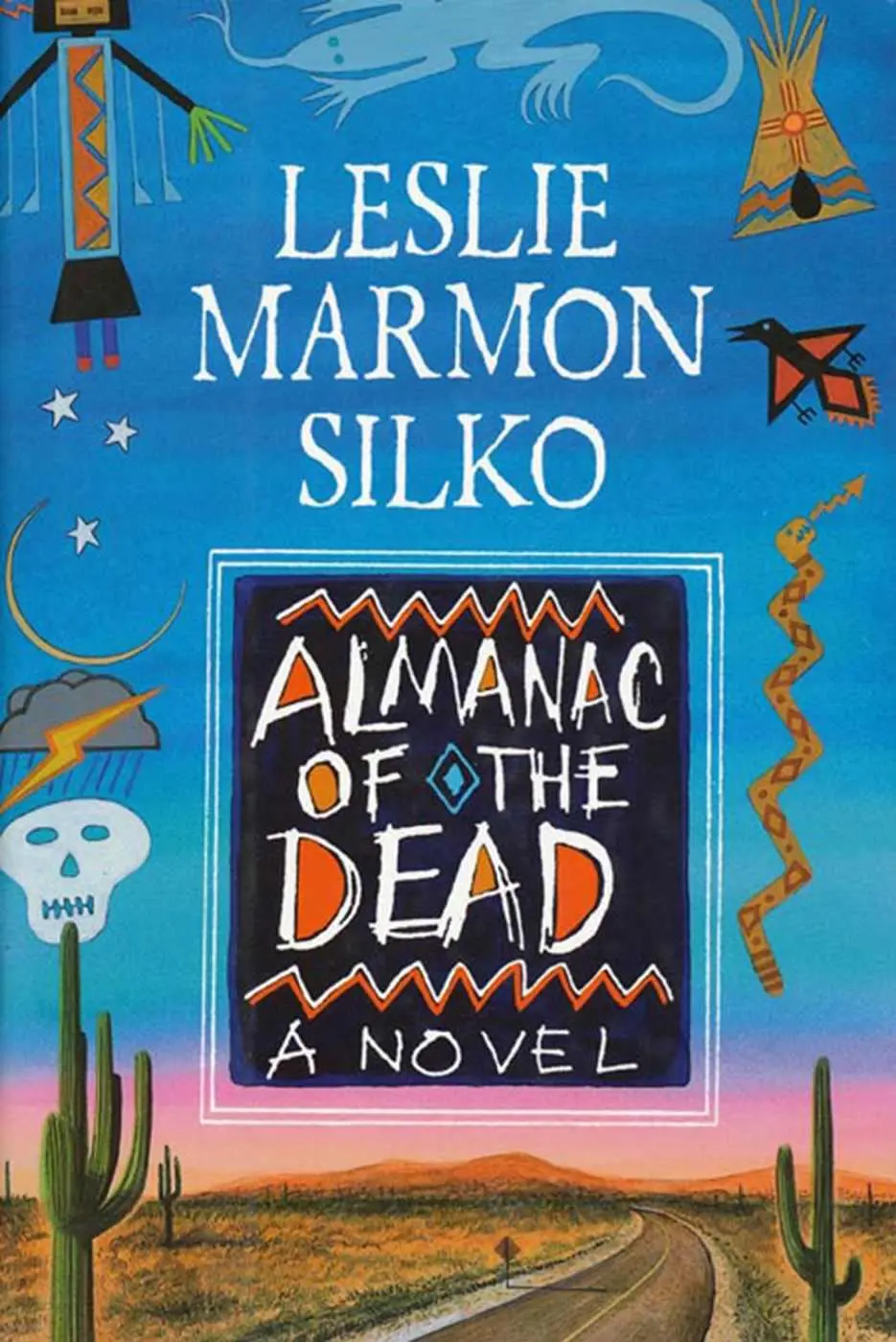
- Название:The Almanac of the Dead
- Автор:
- Издательство:Simon & Schuster
- Жанр:
- Год:2013
- ISBN:нет данных
- Рейтинг книги:3 / 5. Голосов: 1
-
Избранное:Добавить в избранное
- Отзывы:
-
Ваша оценка:
The Almanac of the Dead: краткое содержание, описание и аннотация
Предлагаем к чтению аннотацию, описание, краткое содержание или предисловие (зависит от того, что написал сам автор книги «The Almanac of the Dead»). Если вы не нашли необходимую информацию о книге — напишите в комментариях, мы постараемся отыскать её.
In this virtuoso symphony of character and culture, Leslie Marmon Silko’s breathtaking novel interweaves ideas and lives, fate and history, passion and conquest in an attempt to re-create the moral history of the Americas as told from the point of view of the conquered, not the conquerors. Touching on issues as disparate as the borderlands drug wars, ecological devastation committed for the benefit of agriculture, and the omnipresence of talking heads on American daytime television,
is fiction on the grand scale, a sweeping epic of displacement, intrigue, and violent redemption.
The Almanac of the Dead — читать онлайн бесплатно полную книгу (весь текст) целиком
Ниже представлен текст книги, разбитый по страницам. Система сохранения места последней прочитанной страницы, позволяет с удобством читать онлайн бесплатно книгу «The Almanac of the Dead», без необходимости каждый раз заново искать на чём Вы остановились. Поставьте закладку, и сможете в любой момент перейти на страницу, на которой закончили чтение.
Интервал:
Закладка:
The chrome-yellow hue of the light had been all that Seese could remember clearly about the abortion she had had before she conceived Monte. The light that afternoon had been creamy yellow, the color and texture of roses. She had never met Beaufrey, but Beaufrey had made all the arrangements. Seese had been so high and so happy in love with David and delighted with her friend Eric she had not wanted pregnancy to spoil it. Still, Seese had been disturbed by the urgency with which Beaufrey had got rid of her and David’s embryo.
FLYING
 SEESE ORDERED a double shot of rum at the San Diego airport bar. There had been two hours before the flight left for Tucson. “Anything from Haiti,” she told the bartender. “This is an airport, remember?” was all the bartender said. Once they had got drunk together — her, David, and Beaufrey — on 180-proof Haitian rum. Beaufrey had been in Haiti on business. They never talked business around her. With Haitian rum Seese saw “apparitions.” “You mean hallucinations,” David said. But apparitions had been the term the nuns used. Apparitions were full of beauty and wonder and holiness.
On the flight to Tucson there was a guy who looked so much like Eric that she had felt a pounding in her ears. Once the plane was in the air, she made a trip to the lavatory so she could take another look, so she could make sure. As she sat on the cold lid of the commode, her hands had been shaking so hard she could not get the tiny spoon to her nostril. She had to tell herself to breathe deep and to relax. The cocaine helped. When she moved down the aisle past the man, she saw that his face was not nearly as handsome or kind as Eric’s had been. When the flight attendants brought drinks, she bought two rum and Cokes although they warned the flight to Tucson would be short.
Seese could not remember seeing the hills and trees or the ocean after Eric’s suicide. They had done a lot of traveling after that, but she had no memory of it. She had tried to distract herself with new landscapes when they traveled, but after Eric died, Seese had been unable to remember anything except disjointed arrivals and departures in international airports.
She had not actually seen Eric’s body. Only the photographs. David’s photographs, but somehow that had been worse. All she knew was that something had happened to her eyes, something had diminished her vision.
In air turbulence the jet airliner alternately bucked and shuddered. Seese thought of children’s books with storm clouds illustrated as big horses — wild-eyed, tails streaming down into rain and mist. From the blue and black storm horses it was only a flicker of thought to Monte. The doctor had said it was better not to dwell on him — especially not to imagine him at times or in activities that had never happened. Of course it was all right to remember Monte as he had been. Seese let go of the idea of the children’s books. She did not think she had ever seen a book that turned thunderclouds into galloping wild horses. She looked around at the other passengers and at the back of the head of the Eric look-alike. She was proud of only a few things, but one of them was that she was as fearless as her father had been about flying in jets. He had flown navy jets and had been gone on carriers for months at a time. On his visits home, he rented single-engine planes and took her with him. He had to fly every day, he said. He didn’t care what kind of plane. He loved flying. What Seese remembered best was the moment the two of them had returned to the house. Her father had bragged to her mother, “Seese is a born flyer, just like her daddy.” Her mother had only shaken her head. Seese’s mother never liked to fly.
The thunderclouds near Tucson had caused turbulence. The other passengers were restless and some were airsick. The flight attendants were finally able to move through the cabin to take airsick bags to the lavatories. The captain was on the PA soothing the passengers. They had passed the storm. The captain used the slow, easy tones her father had used with her to announce his new assignment to the biggest, newest carrier in the Pacific fleet. That had been the good news. The bad news was the divorce. Everyone at her high school, well, nearly everyone, had had a divorce in the family. The school counselor said it was because their school had so many pupils from military families.
Out the window Seese saw long lines of blue landing lights outlining the runways. In the dim light she could see the grass and weeds between runways bent to the ground by strong winds. Ah, Tucson. What a nice welcome, she thought as she swallowed the last of the rum. The only places that had worse dust storms than Tucson were Albuquerque and El Paso. Her father used to tease her about going up and never coming down. Just flying and flying forever, so whatever bad weather there was down below, dust storms or even earthquakes, you wouldn’t be touched.
He had been flying bombing missions over the South China Sea when she asked him about the war. He said it wasn’t really a war. She asked him what it was like. They had been at a lobster restaurant in Orange County. He always came to see her when he was “back in the States,” as he put it. He described what it felt like flying very high and very fast. No earthquakes or dust storms could get him. Her father had laughed then, proud to have remembered one of their little jokes together. Seese had wanted to ask him questions so he could give her answers that would help her feel better. Every evening-news show had television coverage of U.S. planes and pilots shot down over enemy territory. Even after it happened, Seese imagined he was only away on a long cruise. Seese imagined him flying and flying forever: the aviator’s vision of heaven.
From the baggage claim area Seese paused a moment in front of the sliding glass doors. Traveling with David, Beaufrey, and Serlo had taught her not to appear anxious to leave with the luggage. It was also not good to rush to a rest room either. What she was carrying with her was actually a lot more cocaine than she had ever carried alone. It was the kilo of coke Beaufrey had used to “settle up” with her. Seese knew Beaufrey would have preferred to settle up with a.44-magnum slug, but Beaufrey had David to think of.
Tucson was only one of a number of Southwest hick towns that the drug enforcement people watched relentlessly. Peepholes in toilet stalls at the Tucson International Airport were one of the airport police’s big pastimes. Seese and Cherie used to flip fingers at the invisible spies in the toilets. That was when they had been traveling just for fun — her and Cherie — carrying nothing on them. Tonight Seese just wanted to get to a motel room and sleep. The automatic sliding glass doors opened, and she let the weight of the two suitcases and the heavy shoulder bag propel her out into the night where a cold, dusty wind surged in dark waves.
She told the cabdriver “Miracle Mile.” She’d decide which motel when they got near there. The cold wind had cleared the rum from her brain. The four years she had spent with Cherie had taught Seese about cheap motels. The cab went to the end of Miracle Mile and she still couldn’t decide. She had to be sure she didn’t stay at a place she and Cherie had ever stayed, even if it had been years ago. It was patterns they used when hunting for you. Your habits and routines.
Seese wasn’t taking unnecessary chances. She asked for a room that would be “quiet,” meaning far from Miracle Mile, behind the other units. The night clerk was reading a textbook on basic chemistry. He was marking significant passages with a pale yellow marker. Seese hated people who marked books. But the clerk had given her the key without questions or hassle, something unusual for night clerks on Miracle Mile when a woman alone checked in. So Seese did not wisecrack about students who defaced books with yellow markers or mutter that writing in books should be against the law. Rum and cocaine always loosened her tongue, but now, she would have to take it easy for a while. She needed to lie low.
Читать дальшеИнтервал:
Закладка:
Похожие книги на «The Almanac of the Dead»
Представляем Вашему вниманию похожие книги на «The Almanac of the Dead» списком для выбора. Мы отобрали схожую по названию и смыслу литературу в надежде предоставить читателям больше вариантов отыскать новые, интересные, ещё непрочитанные произведения.








Обсуждение, отзывы о книге «The Almanac of the Dead» и просто собственные мнения читателей. Оставьте ваши комментарии, напишите, что Вы думаете о произведении, его смысле или главных героях. Укажите что конкретно понравилось, а что нет, и почему Вы так считаете.