T. Boyle - When the Killing's Done
Здесь есть возможность читать онлайн «T. Boyle - When the Killing's Done» весь текст электронной книги совершенно бесплатно (целиком полную версию без сокращений). В некоторых случаях можно слушать аудио, скачать через торрент в формате fb2 и присутствует краткое содержание. Год выпуска: 2011, Издательство: Viking Adult, Жанр: Современная проза, на английском языке. Описание произведения, (предисловие) а так же отзывы посетителей доступны на портале библиотеки ЛибКат.
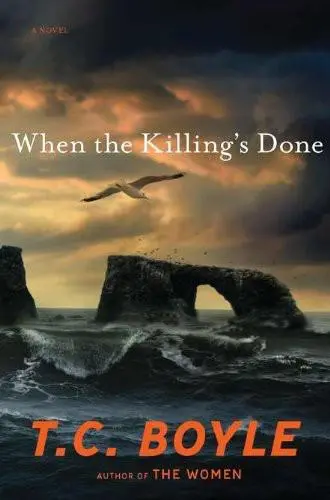
- Название:When the Killing's Done
- Автор:
- Издательство:Viking Adult
- Жанр:
- Год:2011
- ISBN:нет данных
- Рейтинг книги:5 / 5. Голосов: 1
-
Избранное:Добавить в избранное
- Отзывы:
-
Ваша оценка:
When the Killing's Done: краткое содержание, описание и аннотация
Предлагаем к чтению аннотацию, описание, краткое содержание или предисловие (зависит от того, что написал сам автор книги «When the Killing's Done»). Если вы не нашли необходимую информацию о книге — напишите в комментариях, мы постараемся отыскать её.
comes an action- packed adventure about endangered animals and those who protect them. Principally set on the wild and sparsely inhabited Channel Islands off the coast of Santa Barbara, T.C. Boyle's powerful new novel combines pulse-pounding adventure with a socially conscious, richly humane tale regarding the dominion we attempt to exert, for better or worse, over the natural world. Alma Boyd Takesue is a National Park Service biologist who is spearheading the efforts to save the island's endangered native creatures from invasive species like rats and feral pigs, which, in her view, must be eliminated. Her antagonist, Dave LaJoy, is a dreadlocked local businessman who, along with his lover, the folksinger Anise Reed, is fiercely opposed to the killing of any species whatsoever and will go to any lengths to subvert the plans of Alma and her colleagues.
Their confrontation plays out in a series of escalating scenes in which these characters violently confront one another, and tempt the awesome destructive power of nature itself. Boyle deepens his story by going back in time to relate the harrowing tale of Alma's grandmother Beverly, who was the sole survivor of a 1946 shipwreck in the channel, as well as the tragic story of Anise's mother, Rita, who in the late 1970s lived and worked on a sheep ranch on Santa Cruz Island. In dramatizing this collision between protectors of the environment and animal rights' activists, Boyle is, in his characteristic fashion, examining one of the essential questions of our time: Who has the right of possession of the land, the waters, the very lives of all the creatures who share this planet with us?
will offer no transparent answers, but like
, Boyle's classic take on illegal immigration, it will touch you deeply and put you in a position to decide.
When the Killing's Done — читать онлайн бесплатно полную книгу (весь текст) целиком
Ниже представлен текст книги, разбитый по страницам. Система сохранения места последней прочитанной страницы, позволяет с удобством читать онлайн бесплатно книгу «When the Killing's Done», без необходимости каждый раз заново искать на чём Вы остановились. Поставьте закладку, и сможете в любой момент перейти на страницу, на которой закончили чтение.
Интервал:
Закладка:
“I’m cooking.”
“But I wanted to take you out, my treat—”
“I said to Ed, ‘Ed, she’s overworked, and I want to make it nice for her today of all days, no stress, know what I mean’—just like when you were a girl, and Ed agreed with me.” A pause. “If you really want to, we can go out to that restaurant tomorrow, but it’s our treat, definitely our treat.” And then she muffles the phone with one hand and calls out to Ed for confirmation. “Right, Ed?”
“But tomorrow’s the concert. Remember? Tim got me tickets?”
No response.
“You said you’d go with me because Tim’s out on the island?”
“Who was it again?”
“Micah Stroud? I told you, I think you’ll like him. He’s”—she’s about to say Just like what you were listening to this morning, but not as soft-brained and poppy, because he sings with fire, real fire, and commitment , but catches herself—“I don’t know. But you’ll like him. Trust me.”
“Okay, fine. But forget the restaurant. The lasagna’s already in the oven — meatless. Homemade. And both Ed and me are fine with a quiet night at home. Okay?”
She’s about to chirp “Okay” into the receiver because it’s been a long day and the idea of letting her mother baby her is beginning to enlarge for her, since what’s the point of having your mother installed in your guest bedroom if you can’t let yourself go? when she reaches the car and suddenly loses the ability to form a coherent sentence, to speak even. Because the car, parked in the shadows facing the artificial lagoon with its tethered boats and strolling tourists, has been defaced all over again. The fact of it, the discovery of it, after Alicia and Wilson Gutierrez and the muffled chants of the protestors that kept breaking through the pianissimo passages of the string quartets on the classical channel so that it became a kind of static in itself, is as much a shock as a sudden fender bender or the savage propulsive snarls of the dog at the window of the car beside hers. From the phone, clutched in the hand she’s dropped to her side, the thin complaint of her mother’s voice, lost to circumstance: “Alma, are you there? Alma?”
This time the color of the paint is red, or at least it shows red under the streaming yellowish illumination of the arc lights running along the promenade, and the message, though its import is the same, aims at a more general application. What it says, in the ballooning continuous letters of spray-can fluidity that loop up over the hood to obscure the view out of the windshield, is: Pig Killer . Only that. An epithet and accusation wrapped up in a single compound noun, which is, she has to admit, in her case at least, incontestable.
For a long moment, she stands there, feeling the sting of it. She is a killer, of pigs, of rats, of fennel and star thistle and of the introduced turkeys that will have to be removed in good time, a killer in the service of something higher, of restoration, redemption, salvation, but a killer all the same. Sadness, with its rotten edges, fills her — and weariness, weariness too, an exhaustion that saps her like the first withering assault of a winter cold — as she leans forward, and with the raised plastic wedge of her cell phone, begins to scrape the dark red paint from the glass.
The concert is at the Lobero, a restored downtown theater that ticks and groans with the decelerated rhythm of life three-quarters of a century ago, when the world was a bigger place with fewer people in it. Standing there with her mother on the Spanish tiles outside the tall wooden doors, Alma can’t help thinking about that, about a world in which the population was less than a third of what it is now, all these surplus people absent, blown away like pollen to the far ends of the earth to let the rivers recover, the forests, the animals. Nineteen twenty-four, that’s what the plaque out front says. She tries to picture it. Not the flappers and gangsters and all the rest, but people living close to the bone in the aftermath of war and the influenza it gestated and delivered, populations confined by geography and the limits of food production, jungles standing tall, mountaintops unconquered, the seas swarming with fish, mammals and invertebrates — that was the way it was when this theater was erected on the site of the old one, which dated back to 1873, when the world was bigger yet.
“You want another glass of wine?” her mother asks. She’s dressed for the occasion in a powder-blue pantsuit and she’s done her eyes and appropriated a pair of dangling earrings from the jewelry box in the bedroom. She’s wearing heels and she’s teased out her hair and sprayed it in place. She looks nice. And she’s radiant in her pleasure over the evening out. Which is nice too.
“No, I don’t think so,” Alma says, shaking her head for emphasis. They each had a glass at home, to get in the mood, and a second glass — or plastic cup, which is what the wine is served in at the booth outside the theater — when they arrived. Alma likes to be on time, likes to be ahead of time in a way she’ll be the first to admit is just a shade neurotic — she’s not comfortable at the airport unless she’s sitting at the gate with a newspaper before the display announcing her flight even appears on the monitor above the check-in desk — and she and her mother are first in line. Which is not to say that she isn’t ready to unwind, enjoying the faint out-of-body sensation the second glass gives her while the cool of the night breathes around her, and more than happy to chat with the people behind them, two college girls who’ve come up from L.A. on the train because they’re rabid Micah Stroud fans, but she’s thinking ahead to the concert itself and the pressure on her bladder five or six songs in. So, no — no more wine now. “Maybe later,” she says, even as her mother, with a restrained smile, ducks away to get a refill, mouthing (redundantly: the seats are reserved), “Save a seat for me.”
At quarter of eight, the ushers push open the doors and she takes her mother’s arm to guide her across the carpeted foyer. There’s a small contretemps about the wine — one of the ushers gliding up to inform them that no drinks are allowed inside even as her mother drains the cup and hands it over — and then they’re in the auditorium itself, her mother giving a little chirp of surprise over how elegant the theater is, as if she’d expected some barren rave hall or bottle-strewn dive. They stand there in back a moment, silently gazing out on the graduated rows of plush burgundy seats and the darkened stage beyond, before her mother excuses herself and heads off in the direction of the ladies’ room. Alma finds her way to their seats on her own — decent seats, fifteen rows back, center section — and settles in to study the program in the pre-concert hush.
She feels herself relaxing, relishing the moment. The lights glow softly from the wall sconces, people’s voices thrum with anticipation. She’s seen Micah Stroud six times now, twice in San Francisco, three times in L.A. and once in Phoenix. This will be the first time for the girls who were behind her in line, and she envies them that, the rush of experience, the way the lights dim even as the hovering forms of the band members begin to take shape and drift through the shadows and then the spot comes up full on the naked mike and the drummer skims the hi-hat with his brushes and suddenly Micah’s there, his voice floating up and over the anchor of his guitar till it insinuates itself into every last crevice of the house and all the people in it. That’s how it’s been every time. And now, expectantly, she leans forward, studying the stage. Taps one foot idly. Resists worrying about her mother.
Читать дальшеИнтервал:
Закладка:
Похожие книги на «When the Killing's Done»
Представляем Вашему вниманию похожие книги на «When the Killing's Done» списком для выбора. Мы отобрали схожую по названию и смыслу литературу в надежде предоставить читателям больше вариантов отыскать новые, интересные, ещё непрочитанные произведения.








Обсуждение, отзывы о книге «When the Killing's Done» и просто собственные мнения читателей. Оставьте ваши комментарии, напишите, что Вы думаете о произведении, его смысле или главных героях. Укажите что конкретно понравилось, а что нет, и почему Вы так считаете.