Mary Keane - Fever
Здесь есть возможность читать онлайн «Mary Keane - Fever» весь текст электронной книги совершенно бесплатно (целиком полную версию без сокращений). В некоторых случаях можно слушать аудио, скачать через торрент в формате fb2 и присутствует краткое содержание. Год выпуска: 2013, Издательство: Scribner, Жанр: Современная проза, на английском языке. Описание произведения, (предисловие) а так же отзывы посетителей доступны на портале библиотеки ЛибКат.
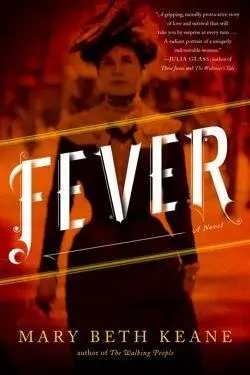
- Название:Fever
- Автор:
- Издательство:Scribner
- Жанр:
- Год:2013
- ISBN:нет данных
- Рейтинг книги:3 / 5. Голосов: 1
-
Избранное:Добавить в избранное
- Отзывы:
-
Ваша оценка:
Fever: краткое содержание, описание и аннотация
Предлагаем к чтению аннотацию, описание, краткое содержание или предисловие (зависит от того, что написал сам автор книги «Fever»). Если вы не нашли необходимую информацию о книге — напишите в комментариях, мы постараемся отыскать её.
In order to keep New York’s citizens safe from Mallon, the Department of Health sent her to North Brother Island where she was kept in isolation from 1907–1910. She was released under the condition that she never work as a cook again. Yet for Mary — spoiled by her status and income and genuinely passionate about cooking — most domestic and factory jobs were heinous. She defied the edict.
Bringing early twentieth-century New York alive — the neighborhoods, the bars, the park being carved out of upper Manhattan, the emerging skyscrapers, the boat traffic — Fever is as fiercely compelling as Typhoid Mary herself, an ambitious retelling of a forgotten life. In the hands of Mary Beth Keane, Mary Mallon becomes an extraordinarily dramatic, vexing, sympathetic, uncompromising, and unforgettable character.
Fever — читать онлайн бесплатно полную книгу (весь текст) целиком
Ниже представлен текст книги, разбитый по страницам. Система сохранения места последней прочитанной страницы, позволяет с удобством читать онлайн бесплатно книгу «Fever», без необходимости каждый раз заново искать на чём Вы остановились. Поставьте закладку, и сможете в любой момент перейти на страницу, на которой закончили чтение.
Интервал:
Закладка:
“I couldn’t possibly go back. You don’t know what it was like that day.”
“Ah,” the man said, looking again at the address. “I see.” Everyone had an opinion about the Triangle Waist Company tragedy, but relatively few, considering the size of the city, had been there to witness it. “Go home now,” Mary had said to a pair of boys who had stopped to watch. They reminded her of the Borriello boys. But they didn’t move, only stared up at the burning Asch Building like everyone else, until Mary took the smaller one by the shoulders, turned him around, put her forehead against his, and shouted “Go home! Do you hear me? Go home!” He blinked at her, and then, taking the older boy’s hand, they ran away together.
The man riffled through some papers. “How have you been making ends meet since leaving the laundry?”
None of your business, Mary wanted to shout, but instead she counted to ten. “The woman I board with takes in lacework for a milliner. She’s been showing me how.”
“But no cooking, correct? I see here that that is the agreement you came to when you left custody. You understand that?”
Mary could tell by the change in his face, the sudden light, that he had not realized until that moment who she was. Her file said Mary Mallon, but she could guess what he was thinking: Typhoid Mary.
“It says here that you risk infecting others if you cook for them.”
“I know what it says.”
He closed the file, pushed back from his desk.
“It will take a while to get you a position at another laundry,” the man said. He brought his hands together and regarded her for a moment. “Have you considered factory work?”
“Factory work?” Mary blinked, thought of herself among the throngs of women who waited outside the glassworks or the clocks manufacturer for the starting bell. They had to ask permission to use the lav. They had to punch in and out with time cards. At night, when they left, they had to be patted down in case they’d pocketed the small parts, just like the girls in the Triangle fire had been checked for scraps of silk and velvet.
“Do you realize I’ve cooked for the Blackhouses? For the Gillespies? I’ve cooked for Henry and Adelaide Frick and several of their friends.” She crossed her arms. “I won’t be working in any factory.”
“You’re not in a position to be haughty, Miss Mallon. We’re not an employment agency, so we have to assign someone the job of getting new work for you. I just don’t have the time. Truthfully, you might have better luck going through an agency. They might know of vacancies at private homes.”
Mary wondered how old he was. If he still went home to his mama for supper.
“I’ve been finding work since I was born. Put that in your file. I don’t need any help from you, and I certainly don’t need to be helped into another situation as wrangler.”
The man sighed. “Fine. Whenever you get something make sure to stop again and let us know the details.”
“I look forward to it.” She slammed his office door on her way out.
For the first time since leaving North Brother more than a year earlier, Mary felt unobserved as she made her way down the avenue. The man had forgotten to send her for a sample, and she smiled, quickening her step in case he might remember and run after her. Why had she never considered quitting before, finding something with better terms? She stopped in on the fishmonger on First Avenue and bought a pound of mussels. She stopped again for white wine, parsley, butter, a pair of shallots, a loaf of bread. It would be a treat for Mila, supper ready when she came home, and lately she’d been doing more and more of the cooking, and Mila had agreed that she could take the price of the groceries out of her board. No one had ever said anything about cooking for herself, or cooking for friends without being paid for it, but still, before she cooked for them the first time she reminded Mila of what Dr. Soper had said about her, why she’d spent almost three years on North Brother. She loved cooking, and would like to help, but if Mila didn’t want her boys to eat what she made she would understand.
“Did you have the fever?” Mila asked.
“No,” Mary said. The truth. More truth: “They say that doesn’t matter.”
“How could it not matter? And you cooked for Alfred? When you were living here before? And for other people?”
“Yes. Of course. It’s how I made my living.”
“Well then, you cook. I trust you.”
Mary made that first pot of stew with the boys in mind, and hummed as she chopped the carrots and the celery. Only when it came time to ladle it into bowls did she feel something nagging her, a sharp chill that started behind her neck and traveled down her back. She hesitated, but they were already lusting after the bits of tender meat, the steam rising up to their cheeks as the snow floated down the airshaft. They reached for their bowls and she handed them over, and after, for several weeks after, even after telling herself it was fine, it was completely fine, they’d gotten into her head, was all, they’d made her nervous of herself without true cause, she found herself observing them for signs of illness, and wondered if this was a sign of her guilt, a sign of admitting that she knew something that she could not face. But they never did get sick, not even a head cold, so she kept cooking for them: shepherd’s pies and roasts and coq au vin, quiche with bacon and leeks, and she felt both happier than she’d felt since 1907, and angry once more that she’d signed the paper promising to never cook for hire again.
“So what will you get?” Mila asked that evening when they finished supper, the blue-black shells in a pile at the center of the table. “You’re still not allowed to cook?”
“No.” She’d been wondering since leaving the DOH if baking counted as cooking or if it was a different category altogether. She thought of the dairyman upstate who was allowed to stay on and supervise his dairy. There was a bakery looking for help not five blocks away. “Ah,” Mila said. “And they would know, I suppose.”
Mary nodded.
“How would they know?”
Mary didn’t know how they would ever find out, but she had signed the paper. They would return her to North Brother if she lied to them and was caught.
“Do you think baking counts as cooking? Or is it a separate category?”
Mila considered the question very seriously.
“Baking is a different thing. And anyone who says otherwise doesn’t know about either one.”
“That’s what I think, too,” Mary said.
The next morning, she walked to the bakery that had advertised for help. The man who managed the place showed her their equipment, explained how many rolls, buns, cakes, and pies they made and sold daily. There was a front counter where people could come in and order from what was displayed behind the glass, but most of the business was in the large orders that went directly to grocers nearby. He quizzed Mary about her experience, and then, leaving her alone in the kitchen with the other baker, instructed her to make something that showed them what level of skill she had.
“Where’s the cocoa?” Mary asked, opening and closing cabinet doors, pulling and pushing drawers. “Do you have a double boiler?” The other baker, an older woman named Evelyn, pointed to a corner of the counter. She stayed silent but watched closely as Mary gathered ingredients. Mary saw her looking from the corner of her eye as she folded and poured and whipped and mixed. When the timer dinged, Evelyn dropped the pretense and turned from her work to watch Mary remove the soufflés from the oven.
“Wait. They might fall still.”
“They won’t fall,” Mary said, and they didn’t. The manager took her name without showing any sign of recognition, and told her to report first thing in the morning. Mondays were mostly rolls and buns, Fridays mostly cakes and pies, in between was a free-for-all — from cranberry-nut bread to fried dough to custom cakes decorated with sugar flowers. He sent her home with two-day-old apple strudel, and she held the box flat in her palm all the way, thinking of what the boys would say when she showed them, thinking how they’d rush through their dinners with their eyes on the oil-dotted box.
Читать дальшеИнтервал:
Закладка:
Похожие книги на «Fever»
Представляем Вашему вниманию похожие книги на «Fever» списком для выбора. Мы отобрали схожую по названию и смыслу литературу в надежде предоставить читателям больше вариантов отыскать новые, интересные, ещё непрочитанные произведения.










Обсуждение, отзывы о книге «Fever» и просто собственные мнения читателей. Оставьте ваши комментарии, напишите, что Вы думаете о произведении, его смысле или главных героях. Укажите что конкретно понравилось, а что нет, и почему Вы так считаете.