Mary Keane - Fever
Здесь есть возможность читать онлайн «Mary Keane - Fever» весь текст электронной книги совершенно бесплатно (целиком полную версию без сокращений). В некоторых случаях можно слушать аудио, скачать через торрент в формате fb2 и присутствует краткое содержание. Год выпуска: 2013, Издательство: Scribner, Жанр: Современная проза, на английском языке. Описание произведения, (предисловие) а так же отзывы посетителей доступны на портале библиотеки ЛибКат.
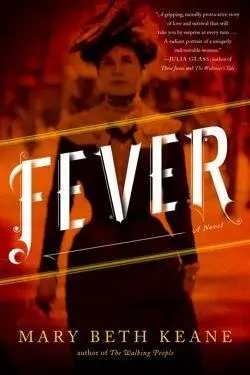
- Название:Fever
- Автор:
- Издательство:Scribner
- Жанр:
- Год:2013
- ISBN:нет данных
- Рейтинг книги:3 / 5. Голосов: 1
-
Избранное:Добавить в избранное
- Отзывы:
-
Ваша оценка:
Fever: краткое содержание, описание и аннотация
Предлагаем к чтению аннотацию, описание, краткое содержание или предисловие (зависит от того, что написал сам автор книги «Fever»). Если вы не нашли необходимую информацию о книге — напишите в комментариях, мы постараемся отыскать её.
In order to keep New York’s citizens safe from Mallon, the Department of Health sent her to North Brother Island where she was kept in isolation from 1907–1910. She was released under the condition that she never work as a cook again. Yet for Mary — spoiled by her status and income and genuinely passionate about cooking — most domestic and factory jobs were heinous. She defied the edict.
Bringing early twentieth-century New York alive — the neighborhoods, the bars, the park being carved out of upper Manhattan, the emerging skyscrapers, the boat traffic — Fever is as fiercely compelling as Typhoid Mary herself, an ambitious retelling of a forgotten life. In the hands of Mary Beth Keane, Mary Mallon becomes an extraordinarily dramatic, vexing, sympathetic, uncompromising, and unforgettable character.
Fever — читать онлайн бесплатно полную книгу (весь текст) целиком
Ниже представлен текст книги, разбитый по страницам. Система сохранения места последней прочитанной страницы, позволяет с удобством читать онлайн бесплатно книгу «Fever», без необходимости каждый раз заново искать на чём Вы остановились. Поставьте закладку, и сможете в любой момент перейти на страницу, на которой закончили чтение.
Интервал:
Закладка:
“I’ll take that for my trouble,” Mary said. Smelling the inside of that body was like smelling Ireland again, and she remembered being a girl, bringing the cow’s stomach and intestines to the river, and the chill that ran through her to see the eels shoot out from under rocks the very same instant, it seemed, as the first drop of filth hit the water.
By the time Mary arrived at the heart, the neighbors had begun to line up with their pots and bowls. Mila was there, and both boys, each with a vessel to carry a part home.
Late that night, much later than her usual bedtime hour, after deciding that her clothes could not be saved, she scrubbed her body in the tub, pressed her knuckles into her aching arms, cleaned underneath her fingernails, and noted that she felt wide-awake. Mrs. O’Malley had pressed money into her hand, and Mary had taken it, but it wouldn’t have mattered to her if she’d gotten nothing. All day long, and even now so many hours after helping Mrs. O’Malley wrap up those bits and pieces she wanted to keep for herself, Mary felt like someone had finally turned on a proper light after living for so long in a dim room. She smiled at the snout peeking up over the rim of Mila’s largest pot.
• • •
“You haven’t seen him yet?” Jimmy Tiernan called from across the street one early morning in March. Mary pretended she didn’t hear. He caught her again coming into the building a few days later. “I think it’s the strangest thing,” he commented, as if he and Mary were a pair of abandoned children, together in their hurt. She tried to let it in one ear and out the other, but once again, she began looking for Alfred when she stepped out of the building in the mornings. Michael Driscoll had not survived and several of them from the building had gone to the funeral Mass, but Alfred did not show. The first anniversary of her release from North Brother came and went without anyone noticing, and by herself she took the IRT uptown, walked over to the river, and stared across. She had never looked up John Cane. They’d never taken their walk together in Central Park.
She’d felt less patience at the laundry ever since butchering the pig. What she’d told herself to accept, what she’d tried to face as permanent, could not continue. She was not a laundress and she never would be. It was no different from being on North Brother, looking out over the churning water at the life she was missing on the other shore.
And then one warm Saturday afternoon in late March, when she was working the cash register and insisting to a gentleman that they’d done their absolute best with the ink stain on his shirt pocket but that it simply could not be removed, she stopped to sniff the air. The gentleman also sniffed, and followed his nose to the door. For the first time in more than a year, the Lithuanians put down their garments, dried their hands, and came to the front of the store. Everyone heard the alarm bell sound next door.
“What is it?” Mary asked. From somewhere over their heads came a sound like thunder that grew louder every second until one of the street doors of the Asch Building swung open and people, mostly young women, began to run out to the street. Leaving the gentleman’s shirt on the counter and clutching the key to the register in her fist, Mary left her post, walked out to Washington Place, around the corner to Greene Street, and when she saw the crowds looking up she also looked up, and saw what appeared to be a heap of clothes falling from an upper-floor window. Saving their materials, Mary thought, but she wondered at the moaning from the crowd as another bundle was sent down. A man fainted and the people beside him barely noticed. Mary moved closer to the outer fringe of the crowd. The fire truck’s siren could be heard in the distance, moving closer. Coins rained from above along with the bundles of clothing, and Mary wondered that no one was reaching for them. No one was moving except for one woman who was wailing and thrashing and calling out for God, and Mary worked her way closer, excusing herself and pushing forward through the police officers who did nothing, the gentlemen and ladies, the bakers from across the street, the passersby, a pair of children who were looking up with open mouths. Finally, when Mary got through the crowd, she saw that the bundles had legs and arms and faces, many of which had been singed black. She looked up and saw framed in a ninth-floor window a trio of girls holding hands. The girl on the left was swatting her hair, which had caught fire, and all three were shouting something that no one on the sidewalk could understand. They jumped at the same time, and two of the three held hands until they hit the sidewalk. The third, the one with the burning hair, covered her face with her hands and as she fell her body became piked, her head almost touching her knees, like children do sometimes when they are jumping off rocks into water and want to impress one another. It took Mary a second to understand that there was no water, this was no game. These girls were jumping to their deaths, and far above their heads the crowd could glimpse a man’s arm as he helped them to the ledge as easily as he might have assisted them up the boarding step of the trolley. Two more followed. Then two more. They jumped from other windows as well, in singles, and pairs, and groups of three. The man who had come into the laundry with the ink-stained shirt shouted at them to wait, please wait, the fire trucks were coming and they would be saved. Wait! he commanded, even after they were already falling.
Finally, a fire truck arrived, and then another. The crowd made way for them. The trucks pulled up close to the building, the firemen unwound their hoses, stretched their ladders up, up, up as high as they would go, and after looking hard at those folded-up ladders, and looking again at the distance to the eighth, ninth, tenth floors, Mary dropped to a crouch and prayed.
“They’re not going to reach,” a nearby man’s voice said. “By God, they’re too short by three stories.” The collective moan grew louder and louder and swallowed everything. Two more jumped. Then another. Another. When they hit the ground it was as loud as an automobile crashing into a wall. Through the forest of legs at the base of the Asch Building, Mary could make out the back of a woman’s head on the sidewalk, the careful braid threaded through her curls.
• • •
The laundry was closed for a week as the bodies were lined up in makeshift coffins on the sidewalk, and families tried to identify their loved ones by a watch or locket, by a pattern of stitches on a stocking, a particular ribbon in the hair. The line went on and on, hundreds of bewildered people in their mourning clothes, while the charred and broken bodies waited to be claimed in the crisp, late March sun. In the days after the fire it seemed to Mary that everyone in the city, from the Upper West Side to the quays of Lower Manhattan, moved about in grief. Papers were sold. Cafés were open. But the world went silent. In another week or so the accusations would begin. Why was the exit door locked? Why hadn’t the alarm sounded on the upper floors? But in those first few days, when people spoke, it was of one subject only. All those girls. All those beautiful girls.
TWENTY
“How could I go back?” Mary asked her caseworker at the Department of Health. It was a busy place, and among the clicking of heels on the polished wood floor, the scrape of chairs, the racket of a ringing telephone, and the blusterous arguments spilling out from behind half-open office doors, Mary had to raise her voice to be heard. It was the end of May 1911, and Mary had been checking in with them every three months, as required. The first time she’d checked in, the whole office seemed to halt when she announced her name. Every man or woman behind a desk paused to watch her approach. They’d glanced at one another as she took a seat in the waiting area, and when her name was called their eyes followed her across the room. Now, at her fourth visit, a different caseworker each time, they barely noticed her, and most didn’t look up from the stacks of paperwork on their desks. The staccato music of struck typewriter keys, the zip and ding of carriages returned, never ceased. The office was sinking under all the paperwork — file drawers left open, envelopes, writing pads, stationery, ribbons of ink loosened from spools and piled on chairs, on windowsills, heaped in corners. She wondered if she could talk them into letting her check in every six months instead of every three. She debated telling them about quitting the laundry, but there was nothing to feel guilty about, and if she was as free as they claimed she was, then there was nothing they could do to her for it.
Читать дальшеИнтервал:
Закладка:
Похожие книги на «Fever»
Представляем Вашему вниманию похожие книги на «Fever» списком для выбора. Мы отобрали схожую по названию и смыслу литературу в надежде предоставить читателям больше вариантов отыскать новые, интересные, ещё непрочитанные произведения.












Обсуждение, отзывы о книге «Fever» и просто собственные мнения читателей. Оставьте ваши комментарии, напишите, что Вы думаете о произведении, его смысле или главных героях. Укажите что конкретно понравилось, а что нет, и почему Вы так считаете.