Mary Keane - Fever
Здесь есть возможность читать онлайн «Mary Keane - Fever» весь текст электронной книги совершенно бесплатно (целиком полную версию без сокращений). В некоторых случаях можно слушать аудио, скачать через торрент в формате fb2 и присутствует краткое содержание. Год выпуска: 2013, Издательство: Scribner, Жанр: Современная проза, на английском языке. Описание произведения, (предисловие) а так же отзывы посетителей доступны на портале библиотеки ЛибКат.
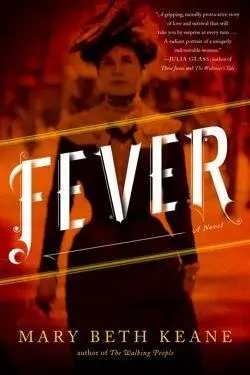
- Название:Fever
- Автор:
- Издательство:Scribner
- Жанр:
- Год:2013
- ISBN:нет данных
- Рейтинг книги:3 / 5. Голосов: 1
-
Избранное:Добавить в избранное
- Отзывы:
-
Ваша оценка:
Fever: краткое содержание, описание и аннотация
Предлагаем к чтению аннотацию, описание, краткое содержание или предисловие (зависит от того, что написал сам автор книги «Fever»). Если вы не нашли необходимую информацию о книге — напишите в комментариях, мы постараемся отыскать её.
In order to keep New York’s citizens safe from Mallon, the Department of Health sent her to North Brother Island where she was kept in isolation from 1907–1910. She was released under the condition that she never work as a cook again. Yet for Mary — spoiled by her status and income and genuinely passionate about cooking — most domestic and factory jobs were heinous. She defied the edict.
Bringing early twentieth-century New York alive — the neighborhoods, the bars, the park being carved out of upper Manhattan, the emerging skyscrapers, the boat traffic — Fever is as fiercely compelling as Typhoid Mary herself, an ambitious retelling of a forgotten life. In the hands of Mary Beth Keane, Mary Mallon becomes an extraordinarily dramatic, vexing, sympathetic, uncompromising, and unforgettable character.
Fever — читать онлайн бесплатно полную книгу (весь текст) целиком
Ниже представлен текст книги, разбитый по страницам. Система сохранения места последней прочитанной страницы, позволяет с удобством читать онлайн бесплатно книгу «Fever», без необходимости каждый раз заново искать на чём Вы остановились. Поставьте закладку, и сможете в любой момент перейти на страницу, на которой закончили чтение.
Интервал:
Закладка:
One day in January, she saw a cook she recognized leaving from the side door of a restaurant, and the thought of that woman basting and chopping and sautéing in there felt to Mary like a hand closed over her throat. For the first time in all those months of her new life she didn’t return to the laundry after her lunch break. Only at home, at Mila Borriello’s table, did she feel some peace. She watched the boys do their figures. She took the scrub brush from her friend and helped her wash the floor.
Jimmy Tiernan came upstairs and knocked one evening when his Patricia was out. Mila and the boys were also out. “Come in,” Mary said, pointing at an empty chair.
“Nah,” Jimmy said, and leaned against the jamb of the door. “I was just wondering if you’ve seen Alfred.”
Mary turned to the counter and made herself busy with the coffeepot, measuring out spoonfuls and cups of water. “No. Why?”
“Well, a little while back I told him about a job starting up — you know, the new skyscraper being built down across from City Hall. He seemed interested, said he was getting bored at the stable, and told me to get him on. Then I don’t hear nothing from him. Not a peep. I told the boss I had a guy I wanted to get on but he can’t hold it much longer.”
Mary turned and leaned against the counter. “I haven’t seen him, Jimmy. I don’t know.”
“Well, where is he?”
“I said I don’t know.”
“Okay, okay,” Jimmy held up his hands. “I just wondered because I tried that address down on Orchard and the lady acted like she didn’t know who I was talking about. He hasn’t been around there, either.”
Mary brought her fingertips to her temples and rubbed. “You know how he is. You tried at Nation’s?”
“Yeah, I tried Nation’s. They haven’t seen him, neither. Tommy says he came in like a king a little before Christmas but they haven’t seen him since.”
Mary put her hand on the door. Inch by inch she moved it, and inch by inch Jimmy Tiernan retreated back into the hall.
“Well, if you see him, Mary, tell him thanks for nothing because I went out on a limb here, you know?”
Mary shut the door and Jimmy shouted from the other side. “But tell him check in with me anyway, will ya, Mary? When you see him? Tell him I’m not mad! Just wondering is all.”
Mary curled up on her cot and closed her eyes.
• • •
One Sunday in February 1911, an Irishwoman named Mrs. O’Malley, whom Mary knew a little and who lived in the building across the street, came looking for her to help with a hog her husband had won in a round of cards up on 102nd Street. Drunk and cocky, the husband had shown up at home with the two-hundred-pound beast on a tether, and could not explain to his wife’s satisfaction how he’d gotten the animal so far downtown. She told Mary that he presented the hog to her like he was giving her a basket full of money, or a room full of red roses, something beautiful or practical that she should appreciate, but instead it had been up to her to guard the animal where it now lived in the alley behind their tenement, tied to a piece of fence beside the common privy. He’d been there almost a week.
“And now I guess it’s time to do something with him,” Mary said.
“It is,” Mrs. O’Malley said. “And I’m useless.”
There was no sense asking if she’d consulted with a butcher, because Mary knew, if the tables were turned, she wouldn’t have sought out a butcher, either. He would charge more than the pig was worth, and keep the best parts for himself.
“I’ve a good mind to turn him out and pretend it never happened, because where in God’s name will I store the meat, but every time I go to do it, it nags me that someone else will get him. I’d rather keep some of the meat and give the rest away. My neighbors will pay me something for it.” The woman clasped her hands together. “I’d be very grateful to you.”
It was not cooking, it was butchering. All the cooking would be done by those lucky ones who got a part. Still, Mary hesitated. She rubbed her eyes. She tried to think about it clearly while also wondering if she was still strong enough to butcher a full-grown hog.
“Show him to me,” she said finally, and Mrs. O’Malley clapped once before grabbing Mary’s hand and thanking her.
Full of purpose now, Mrs. O’Malley led Mary down the stairs, across the avenue, in through her building’s front door, out through the back door, and down four rickety wooden steps. There in the frost-bitten and muddy yard was the hog, rooting at the base of the fence. Mary crouched beside him, put her hand on his back. At least it’s winter, she thought. They wouldn’t have to worry about flies. She took off a glove and tested the dexterity of her fingers in the cold. The animal grunted and stamped. The fog of his breath rose up to meet Mary’s throat and she felt the same suspicion she always did when she was around animals, that they knew their fate, that they were born knowing it, that they were wiser than any human gave them credit for. She felt tenderness for him.
“What floor are you on?”
“Fifth.” Mrs. O’Malley turned and pointed up to a distant window.
“We’ll do it here,” Mary said, without taking her eyes from the hog. “I have good knives at my place, but you find me a long, thin one for sticking him. Get me a saw if you can find one. A hammer. As many clean buckets as you can manage. Twine. I’m going to search out a few bits of wood to raise him up. When we have everything I’ll need boiling water. A lot of it, and quickly. When you’ve gathered everything and put on the water, go around and ask the neighbors who wants some of the meat. Tell a few of them to come down to help us turn him. Then come straight back to me.”
By the time Mrs. O’Malley returned, Mary had led the hog to a shaded patch of clean-looking grass in the farthest corner of the yard. Mrs. O’Malley handed over the hammer and the knives Mary had instructed her to bring, and the four buckets she’d scrubbed — three borrowed, one her own — and when she was ready, when both women had removed their coats and gloves and hung them carefully on the fence, Mary told Mrs. O’Malley to get up on the pig’s back and brace him for the blow. It had been eight or ten years, at least, but her aim was still perfect, and the animal fell heavily.
“Now,” Mary said, grabbing him by his massive head and using every drop of strength in her body to stick him. As she pressed the knife deeper, Mrs. O’Malley held the first bucket against him to catch what she could. Mary’s heart pounded and she felt the heat from her body form a barrier against the cold of the day. Both women looked troubled as they watched so much of the sweet blood run into the grass, under the fence, down the gentle dirt slope toward the privy.
“Did you put on water?” Mary asked, and Mrs. O’Malley jumped up, ran into the building and up five flights of stairs. When she came back a few minutes later she was holding a pot full of boiling water, and poured it over the animal from head to hoof. “I’ve another,” she said, breathless, when the pot was empty, and came down a moment later with a second pot. Mary went to work with the blade of her knife, removing the hair.
An hour later, Mary ran her hand gently over the pink skin to feel for an errant hair, and felt something move inside her as she looked at the animal, its blank eyes staring at an old metal bucket. He was a pathetic creature, had probably had a miserable life, and here he was. Mary pushed the knife into the pig’s belly, feeling with her fingers that the intestines were still intact. She pulled out the guts and tossed them toward the second bucket. Moving back up toward the head, she felt the hem of her skirt heavy with blood. She twisted and pulled the hog’s head free, and dropped it in the third bucket.
Читать дальшеИнтервал:
Закладка:
Похожие книги на «Fever»
Представляем Вашему вниманию похожие книги на «Fever» списком для выбора. Мы отобрали схожую по названию и смыслу литературу в надежде предоставить читателям больше вариантов отыскать новые, интересные, ещё непрочитанные произведения.












Обсуждение, отзывы о книге «Fever» и просто собственные мнения читателей. Оставьте ваши комментарии, напишите, что Вы думаете о произведении, его смысле или главных героях. Укажите что конкретно понравилось, а что нет, и почему Вы так считаете.