Tahmima Anam - The Good Muslim
Здесь есть возможность читать онлайн «Tahmima Anam - The Good Muslim» весь текст электронной книги совершенно бесплатно (целиком полную версию без сокращений). В некоторых случаях можно слушать аудио, скачать через торрент в формате fb2 и присутствует краткое содержание. Год выпуска: 2011, Издательство: Harper, Жанр: Современная проза, на английском языке. Описание произведения, (предисловие) а так же отзывы посетителей доступны на портале библиотеки ЛибКат.
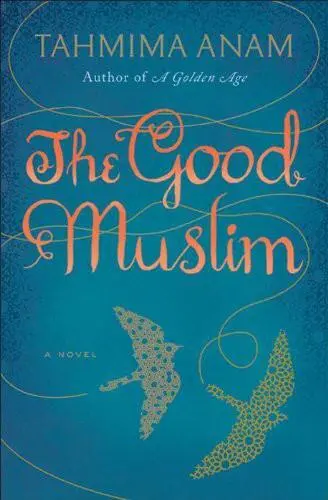
- Название:The Good Muslim
- Автор:
- Издательство:Harper
- Жанр:
- Год:2011
- ISBN:нет данных
- Рейтинг книги:5 / 5. Голосов: 1
-
Избранное:Добавить в избранное
- Отзывы:
-
Ваша оценка:
The Good Muslim: краткое содержание, описание и аннотация
Предлагаем к чтению аннотацию, описание, краткое содержание или предисловие (зависит от того, что написал сам автор книги «The Good Muslim»). Если вы не нашли необходимую информацию о книге — напишите в комментариях, мы постараемся отыскать её.
Pankaj Mishra praised
, Tahmima Anam's debut novel, as a "startlingly accomplished and gripping novel that describes not only the tumult of a great historical event. . but also the small but heroic struggles of individuals living in the shadow of revolution and war." In her new novel,
, Anam again deftly weaves the personal and the political, evoking with great skill and urgency the lasting ravages of war and the competing loyalties of love and belief.
In the dying days of a brutal civil war, Sohail Haque stumbles upon an abandoned building. Inside he finds a young woman whose story will haunt him for a lifetime to come. . Almost a decade later, Sohail's sister, Maya, returns home after a long absence to find her beloved brother transformed. While Maya has stuck to her revolutionary ideals, Sohail has shunned his old life to become a charismatic religious leader. And when Sohail decides to send his son to a madrasa, the conflict between brother and sister comes to a devastating climax. Set in Bangladesh at a time when religious fundamentalism is on the rise,
is an epic story about faith, family, and the long shadow of war.
The Good Muslim — читать онлайн бесплатно полную книгу (весь текст) целиком
Ниже представлен текст книги, разбитый по страницам. Система сохранения места последней прочитанной страницы, позволяет с удобством читать онлайн бесплатно книгу «The Good Muslim», без необходимости каждый раз заново искать на чём Вы остановились. Поставьте закладку, и сможете в любой момент перейти на страницу, на которой закончили чтение.
Интервал:
Закладка:
Occasionally she had stood at the edge of a concert, mesmerised by the voice of the Baul. But she could not bring herself to step inside, because of the boys on the roadside, and all the things she had witnessed, committed in the name of God.
The men filed silently out of the room. Only Sohail remained, stroking his mother’s forehead, whispering to her. Maya sat beside him and he reached out to her with his free hand. The room began to grow dark, the light finally changing to blue-black, and in the breeze was a hint of cold. Winter is here, she thought. Clementines will scent the city. Ammoo has planted a few vegetables this year: shim beans, cauliflower, tomatoes. Her cooking was always best in winter, suited to the bounty of the colder months. In the morning she would boil cauliflower and peas, and they would eat them just like that, with a few slices of boiled egg crumbled on top. Sohail, she remembered, would sometimes douse his plate with ketchup. Her grip on his hand tightened, and he returned her grasp, and they played this game, an old one, a Morse code of squeezes, until she was too cold to sit up and climbed into the bed with Ammoo, curling around her, resting her face against the outline of her shoulder, careful not to touch.
Maya slept, dreamed. In her dream her mother was very thirsty. Water, she said. Water. Then Sohail said it. Water. She’s asking for water.
Maya opened her eyes to see him pouring the Zamzam into Ammoo’s mouth. Her mouth was open. She swallowed. Maybe he would spoil the moment now by declaring it a miracle, but he just stood up and kissed his mother gently on her forehead. Then he collected his cap from the table and walked away without looking back, as though this was the only way the day could have ended.
She didn’t remember to look for Zaid until it had all passed. Searched under the desk and in the garden shed and behind the curtain of cobwebs at the foot of the stairs. He was gone. She asked Khadija if she knew where he was. ‘At the madrasa,’ she replied. ‘The Huzoor sent him back.’
Book Three. God wrongs no one, Not even by the weight of an atom
1985 February
In winter, the rivers retreated. They sucked themselves back from the floodplain, and what was water became land once more.
The bungalow sank back into its habits. Downstairs, Rehana prepared the garden for winter and took up knitting; Sufia emptied the kitchen of all its contents and scrubbed each surface until it mirrored her hard hands and the sharp line of her jaw. And Maya returned to her columns, attacking the Dictator, the clergy, the Jamaat Party, Ghulam Azam, Nizami. Shafaat told her the letters had multiplied. Who is S. M. Haque , they asked. At the medical college, Dr Sattar told Maya that the students had organised a bet to guess which of their professors it might be. But he had a feeling he knew who it was. As she was leading her mother out of his office after her last check-up (I can’t see any signs of the disease, my dear. Your brother seems to have frightened it away), he said, with a tender wink, Be careful, won’t you ? And he offered her a job, if she wanted one. No point in wasting all that training.
Upstairs, too, life continued as before. Maya stopped attending the taleem. Khadija did not call down to her, and she did not go up. She thought of ten of those visits, of Khadija’s warm lap, the enveloping sound of the recitation. She knew she had been seduced, knew she had betrayed something in herself by accepting the solace it had given her. She carried a small wedge of guilt, for her own falsity, the fraud of it. As for Sohail’s act, his words into Ammoo’s ear, tipping the zamzam into her mouth — she had no way of cataloguing this, of putting a name to his act. The name that came to her — miracle — was not one she could believe.
Joy persuaded Maya to attend another meeting. Jahanara Imam was going to bring up something important, something Maya would regret not having heard. Ali Rahman, the tall actor who had played Hamlet in all the Bailey Road productions, opened the meeting with a recitation from Gitanjali. Beside her, Joy was a solid presence, his hands placed carefully on his knees. She noticed the bigness of him, the great pads of his fingers, the abundant eyebrows. Everything was verdant within this man, ample, alive. She suddenly had the urge to listen to the speeches with her arm woven through his.
After the poetry they all sang. ‘Amar Sonar Bangla’. Jahanara Imam pulled herself to the stage and they stood and cheered. She spoke again about the war criminals. This time, Maya listened. Mujib and Zia had failed to punish the killers, and now the Dictator would never push for a trial. The collaborators will continue to live among us, she said, if we don’t do something. She had made a decision.
If the state wouldn’t give them justice, they would find it for themselves. They would hold a people’s tribunal in which the killers and collaborators would be tried and sentenced. It took a moment for people to realise what she meant. A cheer went up in the room. Clapping. The people will pronounce their verdict on Ghulam Azam, and Nizami, and the Razakars who raped our country in ’71. They would hold a trial for the killers — a citizens’ trial. Not just for the boys who died in the battlefield, but for the women who were raped.
‘Right now, across the country, thousands of women live with the memory of their shame. The men who shamed them roam free in the villages. No one reminds them of the sin they have committed. For those women, this trial. For them, justice must be done. If the courts of this nation will not bear witness to their grief, we will bear witness. We will bring them justice. It is our duty, our most solemn duty as citizens, as survivors.’
Maya had only one thought.
Piya.
Jahanara Imam finished her speech. A discussion began about the details. Who would stand trial? What would the witnesses say? Would there be real victims, real testimony? How would they convince people to take the stand?
She remembered what Piya said about her ordeal. I have done something. Something I regret. Something very bad. I have done. How could she have allowed Piya to put it that way? The memory of it came back to Maya, pointed and sharp. She forced herself to remember the moment at the clinic, the desperate look in her eye as she asked her to finish it. Take away the bad thing . Maya shook her head, trying to evict the memory, and before she knew it her shoulders began to shake and her cheeks to burn with the heat of tears, and she remembered her mother in the hospital, believing she would die, and Piya, who had turned to her for help, whom she had failed.
The meeting broke up, people rising from their seats and circling Jahanara Imam. Maya sat frozen, water falling hard and quick out of her nose. She tried to wipe her face with the back of her hand. ‘Let’s go,’ Joy said. ‘I’ll take you home.’
She didn’t want to go home. He packed her into the car and they sped out of the neighbourhood. Maya rubbed roughly at her face with the end of her sari until her cheeks were raw. Joy turned on Elephant Road and parked in front of a two-storey building. ‘Will you stop with me, have a cup of tea?’
There was a café on the first floor, large panes of glass revealing a view of the shoe shops on Elephant Road. They sat opposite one another in a green leather booth. For a long time neither said anything. Joy allowed her to gaze out of the window for a few minutes, to smooth her hands over her face until she was sure the tears had stopped. Then he fixed her with a light, teasing stare.
‘So, now that I’ve got you,’ he said, ‘perhaps you can satisfy my curiosity about something.’
Читать дальшеИнтервал:
Закладка:
Похожие книги на «The Good Muslim»
Представляем Вашему вниманию похожие книги на «The Good Muslim» списком для выбора. Мы отобрали схожую по названию и смыслу литературу в надежде предоставить читателям больше вариантов отыскать новые, интересные, ещё непрочитанные произведения.









Обсуждение, отзывы о книге «The Good Muslim» и просто собственные мнения читателей. Оставьте ваши комментарии, напишите, что Вы думаете о произведении, его смысле или главных героях. Укажите что конкретно понравилось, а что нет, и почему Вы так считаете.