Tahmima Anam - The Good Muslim
Здесь есть возможность читать онлайн «Tahmima Anam - The Good Muslim» весь текст электронной книги совершенно бесплатно (целиком полную версию без сокращений). В некоторых случаях можно слушать аудио, скачать через торрент в формате fb2 и присутствует краткое содержание. Год выпуска: 2011, Издательство: Harper, Жанр: Современная проза, на английском языке. Описание произведения, (предисловие) а так же отзывы посетителей доступны на портале библиотеки ЛибКат.
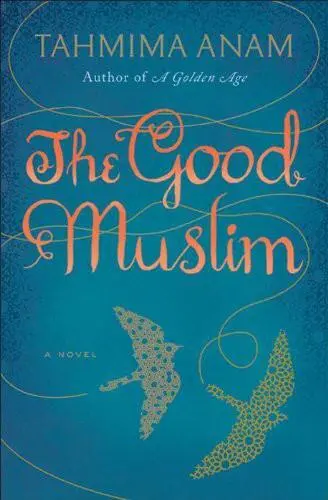
- Название:The Good Muslim
- Автор:
- Издательство:Harper
- Жанр:
- Год:2011
- ISBN:нет данных
- Рейтинг книги:5 / 5. Голосов: 1
-
Избранное:Добавить в избранное
- Отзывы:
-
Ваша оценка:
The Good Muslim: краткое содержание, описание и аннотация
Предлагаем к чтению аннотацию, описание, краткое содержание или предисловие (зависит от того, что написал сам автор книги «The Good Muslim»). Если вы не нашли необходимую информацию о книге — напишите в комментариях, мы постараемся отыскать её.
Pankaj Mishra praised
, Tahmima Anam's debut novel, as a "startlingly accomplished and gripping novel that describes not only the tumult of a great historical event. . but also the small but heroic struggles of individuals living in the shadow of revolution and war." In her new novel,
, Anam again deftly weaves the personal and the political, evoking with great skill and urgency the lasting ravages of war and the competing loyalties of love and belief.
In the dying days of a brutal civil war, Sohail Haque stumbles upon an abandoned building. Inside he finds a young woman whose story will haunt him for a lifetime to come. . Almost a decade later, Sohail's sister, Maya, returns home after a long absence to find her beloved brother transformed. While Maya has stuck to her revolutionary ideals, Sohail has shunned his old life to become a charismatic religious leader. And when Sohail decides to send his son to a madrasa, the conflict between brother and sister comes to a devastating climax. Set in Bangladesh at a time when religious fundamentalism is on the rise,
is an epic story about faith, family, and the long shadow of war.
The Good Muslim — читать онлайн бесплатно полную книгу (весь текст) целиком
Ниже представлен текст книги, разбитый по страницам. Система сохранения места последней прочитанной страницы, позволяет с удобством читать онлайн бесплатно книгу «The Good Muslim», без необходимости каждый раз заново искать на чём Вы остановились. Поставьте закладку, и сможете в любой момент перейти на страницу, на которой закончили чтение.
Интервал:
Закладка:
wish, and that even if this wish were to be accompanied by a deeper longing, there was no saying if she would ever keep her promises.
*
In the morning Maya found Zaid curled up under the small wooden desk. She peered underneath and saw his knees, wedged tight against his chest.
He opened his eyes. Held out his hands and she pulled him out from under the desk. ‘How did you come?’ she asked.
‘The bus,’ he said.
‘All by yourself?’ He couldn’t have chosen a worse time. She had to help Ammoo pack her things for the hospital. He stank of sweat and God knew what else, and his head was shaved so close she could see the pale veins of his neck as they climbed, creeper-like, over the dome of his head. She had waited all these weeks for him, and here he was, dirty and bald and breaking her heart.
He nodded, eyes rimmed with water. ‘It’s a holiday,’ he mumbled.
‘Are you hungry?’ she said, sounding rougher than she meant. She had known her mother’s treatment wasn’t working; she knew what it meant, the spread to the liver. Zaid was crying now, his hands pressed tightly to his face.
She grabbed him, and squeezed the breath out of his lungs. ‘I’ve been waiting for you,’ she said. ‘Did you know that?’
She brought him a piece of toast and a fried egg, which he ate slowly, his mouth trembling as he chewed. Ammoo was awake, calling out to remind her to pack the prayer mat into her bag. She turned to Zaid. ‘I have to take Dadu to the hospital.’
‘It’s a holiday,’ he repeated. ‘Huzoor let us go home.’
Because she had to, she believed him.
‘I’ll be back as soon as I can.’
He handed her the empty plate and crawled across the room, tucking himself under the desk again. ‘I’ll stay here. I’m just going to stay here.’
She told herself he would be all right. She would come back from the hospital and fetch him and they would go to the park and Ammoo would recover and they would all play Ludo together and he would cheat, like he always did.
*
Maya counted the hours of her mother’s sleep. Twenty-two. Thirty-seven. Forty. On the third day, Dr Sattar asked Maya to call her brother. And anyone else who might want to see her. She made the telephone calls, and they came, people she remembered from her childhood, neighbours and friends. They brought their children, who tugged at the bedsheets and complained about the hospital smell. They said innalillah, as though she were already dead. Maya called the bungalow, begged for Sohail. Ammoo is going , she said into the telephone, do something .
‘I’ve done all I can,’ Dr Sattar had said; ‘now we just wait.’
Rehana breathed, but she hadn’t regained consciousness. Her kidneys were failing. Her fingertips had begun to turn blue.
They had put her in a private cubicle, away from the ward and the other patients. Maya greeted the guests, repeated the lines about cancer, her uterus, the liver resection. She was polite; she didn’t protest when Mrs Rahman brought a piece of thread from the Saint of Eight Ropes and tied it around Rehana’s wrist.
On the fourth day, Dr Sattar pleaded with Maya to go home. Just for a few hours. Freshen up. Change her clothes. When she refused, he offered to let her rest in the doctors’ lounge. He held her elbow and led her down the stairs and across the courtyard. She knew the way, through the green corridors, the patients lining up outside, holding ragged bits of paper and files with worn, blackened edges.
‘I’ll send someone to fetch you. Sleep now.’ Dr Sattar shut the door behind him, and Maya focused her eyes on a line of light under the door. Yellow and gold, it glowed steadily, lying about the other side, where her mother lay, blue-fingertipped, dying out of herself. She told the line of light she would stare at it until its colour changed, until it turned from gold to blue, day to night, but her eyes must have closed, because when she opened them the light was there again, steady, unflinching, casting its narrow length into the room, and she thought, then, of her father, of the short line of his life, and of all the boys who had bled into the dust, and of her brother, and his child, and she suddenly remembered Zaid, wondered whether he was still hiding under the desk — how could she have left him there? — and then she worried whether she would ever have a boy of her own, because she might never be able to love anyone enough, love them enough to swallow their loneliness and make it her own.
The line of light shone steadily. Day remained day. Then it lengthened, acquired shadows. She held up her hand to shield her eyes. A nurse in the doorway.
‘How long has it been?’
‘A few hours. Not long.’
She returned to a roomful of strangers, a ring of men in long white coats. Were they ready to write it up? Fifty-two-year-old woman with stage four metastatic uterine cancer. Hysterectomy. Liver resection. Through the crowd, she saw her mother’s feet sticking out from under the sheet, her neat, organised toes, a dark spot under her ankle bone.
Dr Sattar separated from the others. ‘Come, Maya, join us.’ The circle opened to let her in. Did they want her medical opinion? Now they raised their arms, palms to the sky. She understood all at once, that gesture. Not doctors after all. I put my palms up to you, and ask. O Allah, I beg. I entreat you. Her arms went up. She turned around and saw her brother at the end of the bed, where her mother’s feet lay open and lonely, whispering words she didn’t recognise. The men in white repeated after him, raised their voices in chorus. Ameen. She knew it was wrong, standing in a circle, facing this way and that, appealing to God. It wasn’t done like this. This world, he had told her, was only temporary. Ammoo would reap her heavenly reward. It was selfish to keep her here. He was doing it for Maya, because she had begged him not to let her mother die. He had come, he had brought these men, and they had stood in a circle, not in a line facing Mecca. They knew the words. They had decided to use them.
She caught his eye, and she moved to embrace him, but his face told her to keep apart, that their keeping apart was part of the spell, so she stepped back and concentrated on believing that this was the cure.
Sohail lifted a plastic container of water, poured a small measure into a glass. Water from the Well of Zamzam. He lifted his mother’s head and raised the glass to her mouth, tipping it slowly through the slight part in her lips. The drops that spilled on to her chin he did not wipe away. The men continued to recite. Dr Sattar brushed his eyes with a handkerchief.
During the war, the Pakistani soldiers would ask a boy, any boy on the street, to unwrap his lungi. Prove it, they would say. Prove you are one of us. The boy would fumble with the knot of his lungi and hold it open for the soldier to peer inside. It might be night. It’s too dark to see, the soldier would say. Take it out and show us. Show us your cut, you dirty Bengali.
Maya had taught herself away from faith. She had unlearned the surahs her mother had recited aloud, forgotten the soft feather of air across her forehead when Ammoo whispered a prayer and blew the blessing out of her mouth. She had erased from her memory all knowledge of the sacred, returned her body to a time before it had been taught to kneel, to prostrate itself.
In her seven years of roaming the countryside, she had witnessed an altogether different form of the faith. The mosques were few and far between; the city, proclaiming itself newly pious, was even further away. In villages the people worshipped saints and the Prophet in equal measure. They worshipped by prayer, yes, and like everyone else they fasted during the month of Ramzaan and kept a section of land aside, if they had it, to sell someday and embark on the trip to Mecca. But in the forest they prayed to Bon-Bibi, the goddess of the trees, and they invited Bauls to their villages — thin, reedy-voiced men who sang the songs of Lalon, turning the words of the Qur’an into song, a tryst between lovers, casting the divine as the beloved, the poet as His supplicant.
Читать дальшеИнтервал:
Закладка:
Похожие книги на «The Good Muslim»
Представляем Вашему вниманию похожие книги на «The Good Muslim» списком для выбора. Мы отобрали схожую по названию и смыслу литературу в надежде предоставить читателям больше вариантов отыскать новые, интересные, ещё непрочитанные произведения.









Обсуждение, отзывы о книге «The Good Muslim» и просто собственные мнения читателей. Оставьте ваши комментарии, напишите, что Вы думаете о произведении, его смысле или главных героях. Укажите что конкретно понравилось, а что нет, и почему Вы так считаете.