Tahmima Anam - The Good Muslim
Здесь есть возможность читать онлайн «Tahmima Anam - The Good Muslim» весь текст электронной книги совершенно бесплатно (целиком полную версию без сокращений). В некоторых случаях можно слушать аудио, скачать через торрент в формате fb2 и присутствует краткое содержание. Год выпуска: 2011, Издательство: Harper, Жанр: Современная проза, на английском языке. Описание произведения, (предисловие) а так же отзывы посетителей доступны на портале библиотеки ЛибКат.
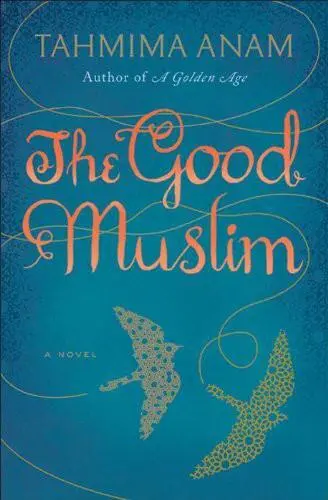
- Название:The Good Muslim
- Автор:
- Издательство:Harper
- Жанр:
- Год:2011
- ISBN:нет данных
- Рейтинг книги:5 / 5. Голосов: 1
-
Избранное:Добавить в избранное
- Отзывы:
-
Ваша оценка:
The Good Muslim: краткое содержание, описание и аннотация
Предлагаем к чтению аннотацию, описание, краткое содержание или предисловие (зависит от того, что написал сам автор книги «The Good Muslim»). Если вы не нашли необходимую информацию о книге — напишите в комментариях, мы постараемся отыскать её.
Pankaj Mishra praised
, Tahmima Anam's debut novel, as a "startlingly accomplished and gripping novel that describes not only the tumult of a great historical event. . but also the small but heroic struggles of individuals living in the shadow of revolution and war." In her new novel,
, Anam again deftly weaves the personal and the political, evoking with great skill and urgency the lasting ravages of war and the competing loyalties of love and belief.
In the dying days of a brutal civil war, Sohail Haque stumbles upon an abandoned building. Inside he finds a young woman whose story will haunt him for a lifetime to come. . Almost a decade later, Sohail's sister, Maya, returns home after a long absence to find her beloved brother transformed. While Maya has stuck to her revolutionary ideals, Sohail has shunned his old life to become a charismatic religious leader. And when Sohail decides to send his son to a madrasa, the conflict between brother and sister comes to a devastating climax. Set in Bangladesh at a time when religious fundamentalism is on the rise,
is an epic story about faith, family, and the long shadow of war.
The Good Muslim — читать онлайн бесплатно полную книгу (весь текст) целиком
Ниже представлен текст книги, разбитый по страницам. Система сохранения места последней прочитанной страницы, позволяет с удобством читать онлайн бесплатно книгу «The Good Muslim», без необходимости каждый раз заново искать на чём Вы остановились. Поставьте закладку, и сможете в любой момент перейти на страницу, на которой закончили чтение.
Интервал:
Закладка:
1984 December
‘The treatment hasn’t worked,’ Dr Sattar said. He would have to take out a piece of her liver. Rehana laughed at this news, and they all knew immediately what she found so funny. Kolijar tukra, piece-of-my-liver , was a common form of endearment; she had applied it many times to her children. My sweet, my heart, piece-of-my-liver. In all those years, she had never thought that she had promised to give an actual piece of the organ away. She said, ‘Make sure you leave enough of it in there, Dr Sattar. I believe it’s my only one.’
The surgery was scheduled immediately. That night, as she was helping her mother with her bag, packing toothbrush, comb, prayer mat, Maya had the feeling she should have come up with a list of things to say, words stored up in the event of this very occurrence. In the months since her mother had told her about the tumour, she should have been preparing herself. Instead, what had she done? Shaved her mother’s hair, sorted through her medication, ferried her back and forth from the hospital, made short, abrupt phone calls to her friends to give them the news: yes, Ammoo is feeling better, yes, she’s been eating. I gave her the food you sent, she liked it, yes, I agree, she needs to keep up her strength. Can you come around ten? She is better in the morning.
And she had nurtured a fragile alliance with the upstairs. She could think of her brother without that piercing anger, she could behold the serene, remote man he had become, and she could lie in her bed and listen to the chaotic footsteps above, and she could watch the clouds of men and women go up and down the stairs, and yes, she could even bear to witness the ragged condition of the boy, and tell herself it was all a casualty of the past.
She told herself she was growing up. There was her mother, and there was readjusting to the city, and the lack of politics, and maybe, just maybe, the beginning of a truce with Sohail. But that was all. Silently she folded Rehana’s clothes, listening for the rustle of rain in the trees so that she would have something to remark on, so she could make some comment about the garden, how it would flood if they had another downpour. She started a few sentences in her head, but none of them sounded right. She remembered something Dr Sattar had said. ‘The disease hasn’t won yet.’ She clung to this.
Rehana was sitting up in bed, cross-legged, with her right hand on the Qur’an. ‘You need your rest, Ammoo, you know how the ward is.’ It had finally begun to rain, soft sheets casting grey shadows into the room.
‘It says here your lord has prescribed for himself mercy. Do you know what that means?’
‘No.’
She closed the Book. ‘You never did pay any attention to your ustani.’
Maya flopped down on the bed beside her mother. ‘She never explained anything to me. And she told me to shave between my legs.’
Rehana’s eyes widened. ‘I don’t believe you.’
‘I’m not joking. She said it was cleaner that way. But you remember, Ammoo, she was always scratching herself there?’
‘No, I don’t remember.’
‘I swear, I thought there was a man hiding under that burkha. Or a hive of mosquitoes.’
‘Chi!’ Rehana slapped Maya gently on the cheek, but she was laughing now, shaking her head. ‘You’re still that little girl who pretended to be ill every time the teacher came. You told her you had your period, remember, when you were only eight.’
‘She ran out of the house so fast!’
‘When will my little girl grow up, hmm? Give me some grandchildren?’
‘I’d have to get married first, you know.’
She placed her hand on the cover of her Qur’an, her fingers tracing the gold lettering. ‘I hardly knew your father when we married. After it was arranged there was a photograph going around the house, but I didn’t have the courage to ask for it. Marzia brought it to me one night, and we examined it by candlelight.’
‘What did you think?’
‘That I wished I hadn’t seen it. I had to marry him anyway.’
‘Would it be so bad, if I never married?’
‘No, it wouldn’t be so bad. Look at me, I’ve spent most of my life without a husband.’
‘Men can be so horrible.’ She was thinking about Nazia now, the baby that came out with narrow eyes and a foreign cast, and Saima and Chottu, and all the cruelties that might be inflicted on her if she agreed to be someone’s wife.
‘That’s true,’ Rehana said, stretching her legs slowly and leaning back on her pillow. ‘But to whom will you utter your sorrows, my little girl?’
‘I don’t know.’ Maya found her mother’s foot under the blanket and began to knead it. ‘I’ll do what you did.’
Rehana smiled. ‘I am taking comfort from the love of my child.’
Maya felt it stirring then, the need, deeply buried, for love. The chemo had made Rehana’s circulation sluggish; her feet were cold, and Maya heard her sigh as she scrubbed the arch with the palm of her hand. Outside, the rain softened the other sounds of the evening. The crickets and the lizards chirped, the high notes of their calls swallowed by the fall of water. Only the leaves increased their volume, making themselves heard as they clapped against the raindrops.
She had told herself many times that marriage could not be for her. Or children. She saw them coming into the world every day, selfish and lonely and powerful; she watched as they devoured those around them, and then witnessed the slow sapping of their strength as the world showed itself to be far poorer than it had once promised to be.
Rehana closed her eyes, suddenly appearing very tired. ‘Say Aytul Kursi with me,’ she said.
‘All right.’ Despite telling herself it was for the sake of her mother, the same thing she told herself of the visits upstairs, Maya felt relief flooding through her as she recited the prayer. The words stumbled out of her at first, then came to her smoothly, like the memories of childhood, her favourite foods, the marigolds on the lawn.
Allahu la ilaha illa Huwa, Al-Haiyul-Qaiyum.
There is no God but He, the Living, the Self-subsisting, Eternal.
La ta’khudhuhu sinatun wa la nawm.
No slumber can seize Him, nor sleep.
‘I would like you to pray, Maya. Just once a day, at Maghreb.’
Maya shook her head. ‘You know I can’t do that, Ma, it wouldn’t be fair.’
‘To who?’
‘To all the believers.’ She was crying now, the tears landing hot and soft on her cheek.
‘God is greater than your belief,’ Rehana said. ‘I’m asking you because you might need something, if I am gone.’
‘Ma, please, don’t say that.’
‘You act so independent. You left home, you made your own life. You’re a strong girl. But who will take care of you when I am not here? I wish you had something of your own. Your father would have wanted that.’
Something of her own. What could she have? A marriage, a family, a God? She had prepared herself for none of these. And then she realised Ammoo had been encumbered by her daughter’s loneliness all this time. She has had to bear me all alone. All my burdens. Perhaps, Maya thought, she should tell her mother that it was all right for her to die now, that she would find a way to make up for the space that would be left behind. But she couldn’t do it, she wasn’t ready. ‘Let’s pray some more, Ammoo, if that will make you feel better.’
‘I’m tired now, jaan. Let’s go to sleep.’
Maya kept vigil beside Ammoo, listening for her breath, her hands ready to shake her if she faltered, if she showed any signs of giving in to her forehead, her fate, or her sense that she had completed what she had come to do.
And she thought about what Ammoo was asking for, a prayer once a day, at dusk, that holy hour. She thought about giving in, and wished somehow she had done it long ago, surrendered to the practicality of religion. If she chose it now, it would be a hollow bargain, shallow and insubstantial. No God she could respect would enter into such a pact, knowing the believer knocking at the door wanted nothing more than a genie, a single
Читать дальшеИнтервал:
Закладка:
Похожие книги на «The Good Muslim»
Представляем Вашему вниманию похожие книги на «The Good Muslim» списком для выбора. Мы отобрали схожую по названию и смыслу литературу в надежде предоставить читателям больше вариантов отыскать новые, интересные, ещё непрочитанные произведения.









Обсуждение, отзывы о книге «The Good Muslim» и просто собственные мнения читателей. Оставьте ваши комментарии, напишите, что Вы думаете о произведении, его смысле или главных героях. Укажите что конкретно понравилось, а что нет, и почему Вы так считаете.