Rabih Alameddine - The Hakawati
Здесь есть возможность читать онлайн «Rabih Alameddine - The Hakawati» весь текст электронной книги совершенно бесплатно (целиком полную версию без сокращений). В некоторых случаях можно слушать аудио, скачать через торрент в формате fb2 и присутствует краткое содержание. Год выпуска: 2009, Издательство: Anchor, Жанр: Современная проза, на английском языке. Описание произведения, (предисловие) а так же отзывы посетителей доступны на портале библиотеки ЛибКат.
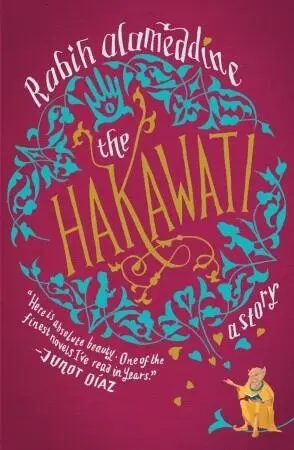
- Название:The Hakawati
- Автор:
- Издательство:Anchor
- Жанр:
- Год:2009
- ISBN:нет данных
- Рейтинг книги:4 / 5. Голосов: 1
-
Избранное:Добавить в избранное
- Отзывы:
-
Ваша оценка:
The Hakawati: краткое содержание, описание и аннотация
Предлагаем к чтению аннотацию, описание, краткое содержание или предисловие (зависит от того, что написал сам автор книги «The Hakawati»). Если вы не нашли необходимую информацию о книге — напишите в комментариях, мы постараемся отыскать её.
, or storyteller, and his bewitching tales are interwoven with classic stories of the Middle East. Here are Abraham and Isaac; Ishmael, father of the Arab tribes; the beautiful Fatima; Baybars, the slave prince who vanquished the Crusaders; and a host of mischievous imps. Through Osama, we also enter the world of the contemporary Lebanese men and women whose stories tell a larger, heartbreaking tale of seemingly endless war, conflicted identity, and survival. With
, Rabih Alameddine has given us an
for this century.
The Hakawati — читать онлайн бесплатно полную книгу (весь текст) целиком
Ниже представлен текст книги, разбитый по страницам. Система сохранения места последней прочитанной страницы, позволяет с удобством читать онлайн бесплатно книгу «The Hakawati», без необходимости каждый раз заново искать на чём Вы остановились. Поставьте закладку, и сможете в любой момент перейти на страницу, на которой закончили чтение.
Интервал:
Закладка:
“Tubular Bells” repeated itself. Crumbs of tortilla chips remained in the crystal bowl. I pushed the bowl until it fell off the table and cracked.
Melanie emerged from the bedroom adjusting her skirt, hobbling on one shoe, the other in her hand. “It’s midnight,” she said cheerfully. “We don’t want to be too late.” Mike followed her out, wearing only boxer shorts.
I stood up while Melanie applied her lipstick, fixed her hair at the mirror. “It was nice meeting you,” Mike said. I walked out the door without replying.
Melanie drove the Cadillac back to the hotel. I pulled down the visor and looked at myself in the mirror. “Are you okay?” she asked.
“I’m fine,” I lied. “Do you think I have ugly teeth?”
“No, they’re not ugly. If you think they are, they can be fixed, but I think they’re cute — sexy, even.”
“Not sexy enough for you to have sex with me,” I said, staring straight ahead. I felt her hesitation. “Don’t worry,” I added. “I don’t want to have sex with you anyway.”
“I know,” she said, shyly and evenly. “I didn’t think you did.”

One minute my sister was talking to me, whispering quietly about nothing in particular, and the next her voice faded. Even in sleep, she seemed tense, her breathing more hamsterish than restful. I slowly lifted myself off the floor. The muscles of my lower back and hamstrings groaned and objected. I walked around the bed toward my father. He seemed to be incrementally imploding, as if his wan skin were unhurriedly devouring his insides, and his body would soon collapse upon itself once the meal was finished.
When it would get to be my time to leave, I hoped I’d go quickly, suddenly and unexpectedly, like Uncle Jihad, not like my father, and not like my mother.
I held my father’s hand and stroked his dry hair, willing myself to imagine a reflex, an indication of responsiveness to my touch. I wanted to believe. I bent down and kissed his forehead, and my shirt grazed the ventilator tube. I felt an urge to take an iron bar, smite the machine, crush it. The pathetic rage of the impotent.
I kept praying for some form of movement from my father. I bent my face into the slit of his line of sight, hoping my dimly lit familiar and familial face would comfort him.
Once, when I was eight or nine, my parents took me to London, my first visit to the brooding city. My mother had wanted to walk in Hyde Park. My father, who never understood why people still walked, decades after the automobile had been invented, said he’d come along because he didn’t want to stay in the hotel by himself. We left the lobby through the revolving doors and were inundated by a weaving multitude of people. My mother turned back into the hotel, but my father stood his ground, mesmerized. He held my hand and watched as a sea of pale skin engulfed him. He looked confused for a moment, and then he smiled and said good morning in Lebanese to a passerby in a suit. The man smiled and replied in Lebanese as well. He bowed his head, and his palm sought his heart in an exaggerated gesture. He nodded toward me in acknowledgment and continued on his way. The Lebanese face, unknown yet familiar, had moored my father. Happy again, he led me back into the hotel.
Uncle Jihad didn’t answer my knock on the locked bathroom door. I walked around to his room, still early-morning groggy. He wasn’t there. I knocked on his bathroom door, then tried it. It was unlocked. Uncle Jihad sat on the toilet, his pajama pants around his ankles, his head slumped, his eyes staring at a spot on the carpet. The bathroom smelled of shit. I suppressed an urge to scream. I rushed over, shook him by the shoulder. His skin felt cold. I recoiled. I bent down to look at his face. His eyes were lifeless. I searched for a pulse on his wrist. None. I broke into silent tears. Shaking, I walked out of the bathroom into the orange corridor, held on to the metal railing for support. My father sat at the dinette table, drinking his coffee and reading the paper. Melanie sat opposite, already dressed and made up.
“Dad,” I said, my voice distorted. “Uncle Jihad is dead in the bathroom.”
He looked up at me disbelievingly. I watched his face gradually change; his eyes grew whiter, his jaw dropped. He ran up the stairs, followed by Melanie. I let them pass me. I heard my father wail. I had never seen my father cry before, never seen him so distraught. He knelt on the floor and rocked Uncle Jihad in his arms. I couldn’t understand a word my father said. I stood in the doorway in shock. My father wouldn’t stop. He wept, the bathroom reverberating with the sound. In between sobs, my father kissed Uncle Jihad’s bald head. Melanie, tears flowing down her face, tried unsuccessfully to calm him. I no longer recognized the man in front of me. I called my mother. “Listen to me,” she said. “Put your father on the phone. Then you go to his room and get his travel pack. In it, you’ll find a pillbox. Take out a Valium and give it to him. Do you understand?”
In the bathroom, Melanie held my father, who held Uncle Jihad. I gave my father the bathroom phone and watched his face as he began to calm down. I ran downstairs and came back up with the tranquilizer. I watched him nod in acquiescence to my mother’s instructions. He handed me the phone. My mother told me to put him to bed and said she would call back in ten minutes, after she called the hotel management.
Melanie and I helped my father down the stairs, his arms draped over both of us. I put him in bed, under the covers. Melanie drew the curtains, darkening the room. I stroked his head, just as I had seen my mother do many times before. He promptly drifted into sleep.
I went back up to check on Uncle Jihad. I didn’t want anybody to see him naked with his pajama bottoms down. When I entered the bathroom, I held my nose and flushed the toilet.
“Do you want to carry him to his bed?” Melanie asked.
I nodded. I was pulling his pants up when I realized his bottom was soiled. I wiped his behind with a damp washcloth. My stomach felt queasy again.
I tried to lift Uncle Jihad from his shoulders while Melanie took his feet, but he was too heavy. We ended up dragging him slowly. The carpet kept pulling his pants down, exposing his genitals. By the time we got him onto the bed, I was dripping sweat. I covered him with the comforter and closed his eyes. His skin already felt leathery.
Uncle Jihad used to tell me an Iraqi story about whom to mourn.
It seems the great Caliph Haroun al-Rashid was traveling among his people when he came across a woman weeping. He asked the cause of her immense sorrow, and she replied that she was mourning her beloved son, who had just died. He asked her what her son did while he was alive. She said he worked for her. She was poor, and her son kept her alive. She no longer had anyone to take care of her and no one to make her a living. “Cry no more,” said the caliph. “I will give you a sturdy mule. He will work hard for you and help you earn a living. You shall not miss your son. You will be as comfortable as you were before.”
Haroun al-Rashid moved on. He came across another woman crying next to the grave of her son. The caliph asked her the same question, “What did your son do while he was alive?”
“My son? He used to gather honest nobles and men of good repute to his feasts. He would serve them the most delicious of meals. He would entertain them with the most ambrosial of music, regale them with the greatest of tales. When these men left his feasts, he would ride with them, keeping them company until they lost sight of his tent.”
Читать дальшеИнтервал:
Закладка:
Похожие книги на «The Hakawati»
Представляем Вашему вниманию похожие книги на «The Hakawati» списком для выбора. Мы отобрали схожую по названию и смыслу литературу в надежде предоставить читателям больше вариантов отыскать новые, интересные, ещё непрочитанные произведения.








Обсуждение, отзывы о книге «The Hakawati» и просто собственные мнения читателей. Оставьте ваши комментарии, напишите, что Вы думаете о произведении, его смысле или главных героях. Укажите что конкретно понравилось, а что нет, и почему Вы так считаете.