Rabih Alameddine - The Hakawati
Здесь есть возможность читать онлайн «Rabih Alameddine - The Hakawati» весь текст электронной книги совершенно бесплатно (целиком полную версию без сокращений). В некоторых случаях можно слушать аудио, скачать через торрент в формате fb2 и присутствует краткое содержание. Год выпуска: 2009, Издательство: Anchor, Жанр: Современная проза, на английском языке. Описание произведения, (предисловие) а так же отзывы посетителей доступны на портале библиотеки ЛибКат.
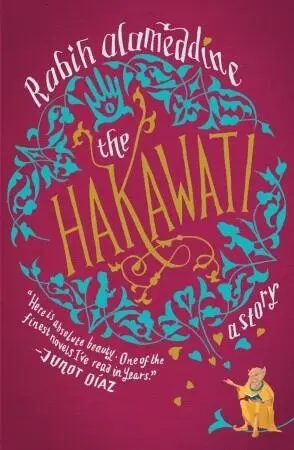
- Название:The Hakawati
- Автор:
- Издательство:Anchor
- Жанр:
- Год:2009
- ISBN:нет данных
- Рейтинг книги:4 / 5. Голосов: 1
-
Избранное:Добавить в избранное
- Отзывы:
-
Ваша оценка:
The Hakawati: краткое содержание, описание и аннотация
Предлагаем к чтению аннотацию, описание, краткое содержание или предисловие (зависит от того, что написал сам автор книги «The Hakawati»). Если вы не нашли необходимую информацию о книге — напишите в комментариях, мы постараемся отыскать её.
, or storyteller, and his bewitching tales are interwoven with classic stories of the Middle East. Here are Abraham and Isaac; Ishmael, father of the Arab tribes; the beautiful Fatima; Baybars, the slave prince who vanquished the Crusaders; and a host of mischievous imps. Through Osama, we also enter the world of the contemporary Lebanese men and women whose stories tell a larger, heartbreaking tale of seemingly endless war, conflicted identity, and survival. With
, Rabih Alameddine has given us an
for this century.
The Hakawati — читать онлайн бесплатно полную книгу (весь текст) целиком
Ниже представлен текст книги, разбитый по страницам. Система сохранения места последней прочитанной страницы, позволяет с удобством читать онлайн бесплатно книгу «The Hakawati», без необходимости каждый раз заново искать на чём Вы остановились. Поставьте закладку, и сможете в любой момент перейти на страницу, на которой закончили чтение.
Интервал:
Закладка:
“This is not our boy,” said Isaac as soon as the assistant left.
“This is not my nephew,” said Noah.
“This is not your son,” said Ishmael.
“He is my son,” replied Fatima. “Both boys are.” She kissed the baby’s forehead.
The emir’s face brightened when he saw his light-faced heir. His wife extended her arms to take the baby. “He is so beautiful, my husband. The most perfect boy.”
“Yes, it is all my doing. My tale of Baybars worked its magic, and I shall delight in regaling him with the rest of it.” The emir leaned over the mother and child. “He is indeed a worthy son,” he said. “Bright like the day, glorious like the sun, after which he will be named. Welcome into what will soon be your world, Shams.”
In the other room, the imp Ishmael held the baby. “What shall your name be?” He kissed the boy and passed him to Isaac, who said, “Welcome, my master,” and kissed the boy as well.
“In darkness and in light,” said Ezra.
“In devotion and in fickleness,” said Jacob.
“In obscurity and in clarity,” said Job.
“In sun and in rain,” said Noah.
“In sorrow and in rapture,” said Elijah.
“In profusion and in paucity,” said Adam. “We will follow you and stand by your side.”
“We are family,” said Isaac.
And Fatima whispered to her boy, “As beautiful as an onyx, as dark as the darkest night, after which I name you. Welcome to what has always been your world, Layl.”
“Rise, son,” said Ishmael, “and greet your own.”
And Layl opened his eyes, and in the emir’s room, Shams opened his.

The king’s judge, Arbusto, sent a letter to Khodr al-Bohairi in Giza. “My dear fellow, I wish to inform you of the appearance of a king’s favorite, a much-hated slave who goes by the accursed name of Baybars, upon whom the king has bestowed much power and honor. I ask you, my son, to help me do away with the usurper and rid the people of this slave’s rule. Send your Arabs out to cause trouble, to steal from the people of Giza, to rob travelers and elicit havoc in your area. I will advise the king to send out the slave boy to control the situation, and you will kill him once he arrives. As a reward, I will recommend that you become the mayor of Giza.” Upon reading the note, Khodr al-Bohairi saw bright gold in his future.
That evening, he and his men waylaid the mayor of Giza and killed him. Within a fortnight, the king received news of chaos and upheaval in Giza — a mayor murdered, officials slain, tax collectors ambushed, merchants burgled. Arbusto said, “The only man who can purify Giza and exorcise its evil is the man who purified our Cairo, its mayor, Prince Baybars.”
Giza’s high judge cried, “Help me, Prince Baybars. Khodr al-Bohairi has kidnapped my virgin daughter with the intent of selling her. We have no heroes in Giza who can face him but you. No one has been able to find the criminal or his hideout.” Baybars said, “I cannot rescue her or kill Khodr al-Bohairi if I do not know where they are,” and the high judge moaned, “Ah, my daughter, if we do not find you tonight, your life will be forfeit.”
“We will find her tonight,” Othman said, and Harhash added, “Before the sun rises.”
This story comes from the Bedouin tribes of Arabia. Pay attention.
Once there was a wise and important Bedouin who took his young son with him to the camel market. While the man haggled with a merchant, his boy was abducted. The Bedouin searched everywhere, but could not find his son. He hired a crier, who walked up and down the market shouting, “My patron will pay one hundred rials for the safe return of his son.” Greed blossomed in the kidnapper’s heart. He decided to wait for the price to rise. But the next day, the crier shouted, “My patron will pay fifty rials for the safe return of his son.” The abductor assumed it was a mistake. The third day, the announcement was “My patron will pay ten rials for the safe return of his son.” The kidnapper quickly returned the boy and claimed the reward. He asked the Bedouin why the price had dropped so drastically, and the father said, “On the first day, my son was angry and refused your food. On the second day, he ate a little of what you offered to assuage his hunger. On the third day, he probably asked for the food. On the first day, my boy had his honor and pride, and on the second, hunger bargained with honor. By the third day, when he humbly had to beg his captor for food, his pride was lost and his worth was less.”
By the time the moon rose in Giza, Othman and Harhash had burgled eight houses, broken into five stores, and relieved a money merchant of a large bundle of cash as he returned home with two incompetent guards. They turned the loot over to the high judge and went back at it. By midnight, they had attacked three more stores, including a wine shop, where they tied the owner upside down from the ceiling by his ankles.
“This is ridiculous,” said Othman. “These people are inept.”
“They are bunglers,” replied Harhash. “We have to make more mistakes. I am losing interest.” And Othman said, “Women. The women must be smarter.” They broke into a brothel. Through the window they entered, avoiding the busy main hall, and ascended the back stairs. Half-naked women with drawn scimitars and daggers awaited them inside an upstairs room.
“Most men come in through the front,” said the leader of the women.
“But that is not always satisfying,” replied Othman. “We are finally captured, and stand helplessly before you.”
“News of your exploits this evening has preceded you,” she said. “I certainly did not expect only two of you.”
“We are ambidextrous,” said Harhash.
“And much too clever by half,” she said. “Still, I must play my part in the drama and turn you over to Khodr al-Bohairi. Come visit after you are done with the fool. I am sure we can come up with many mutually beneficial arrangements.”
Khodr stomped and ranted. “I should cut off both your heads right this instant. How dare you come into my city without permission? What made you think you could steal from me?”
“We assumed no one was running the city since the mayor got himself killed,” said Othman. “We have just arrived from Cairo, and had we known you were the chief, we would have come and paid our respects first.”
“You are from Cairo?” Khodr al-Bohairi asked. “What luck. Can you recognize a slave who goes by the name of Baybars?”
“But of course,” said Othman. “He is a mere boy. I have stolen his allowance many times, yet he still trusts me. If you wish, I can deliver him in less than an hour.”
“This is most fortunate,” Khodr al-Bohairi said. “Bring me the boy.”
Othman and Harhash returned to the hideout accompanied by Baybars, the Africans, and the Uzbeks. The ensuing melee lasted all of minutes. The warriors killed forty-three bandits but kept the vanquished Khodr al-Bohairi alive briefly. “Where are you holding the daughter of the high judge?” asked Baybars. The bandit chief pointed to a door, and Harhash escorted the unharmed girl out. “You must pay for the heinous crimes you have committed,” announced Baybars, and cut off the bandit’s head.
Baybars returned the girl to her father the next day, and the high judge restored all the stolen goods to their rightful owners. And the heroic deeds were celebrated.
Fatima felt stronger. She got out of bed, picked up her baby, and visited the emir and his wife. The emir’s twelve daughters made way for her to see their pristine brother, a boy who more than matched their famous beauty. “You look divine,” the emir told Fatima, “as if you had just returned from the baths and had never been pregnant.”
Читать дальшеИнтервал:
Закладка:
Похожие книги на «The Hakawati»
Представляем Вашему вниманию похожие книги на «The Hakawati» списком для выбора. Мы отобрали схожую по названию и смыслу литературу в надежде предоставить читателям больше вариантов отыскать новые, интересные, ещё непрочитанные произведения.












Обсуждение, отзывы о книге «The Hakawati» и просто собственные мнения читателей. Оставьте ваши комментарии, напишите, что Вы думаете о произведении, его смысле или главных героях. Укажите что конкретно понравилось, а что нет, и почему Вы так считаете.